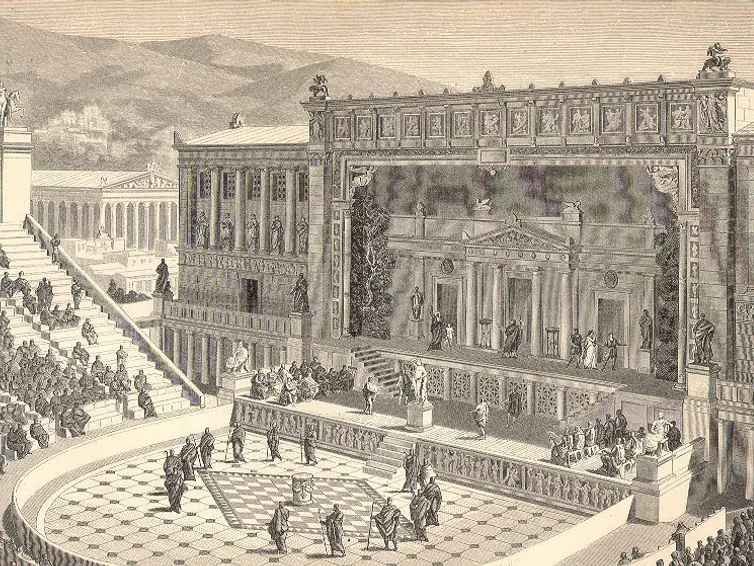
Theatre of Dionysus, Athens
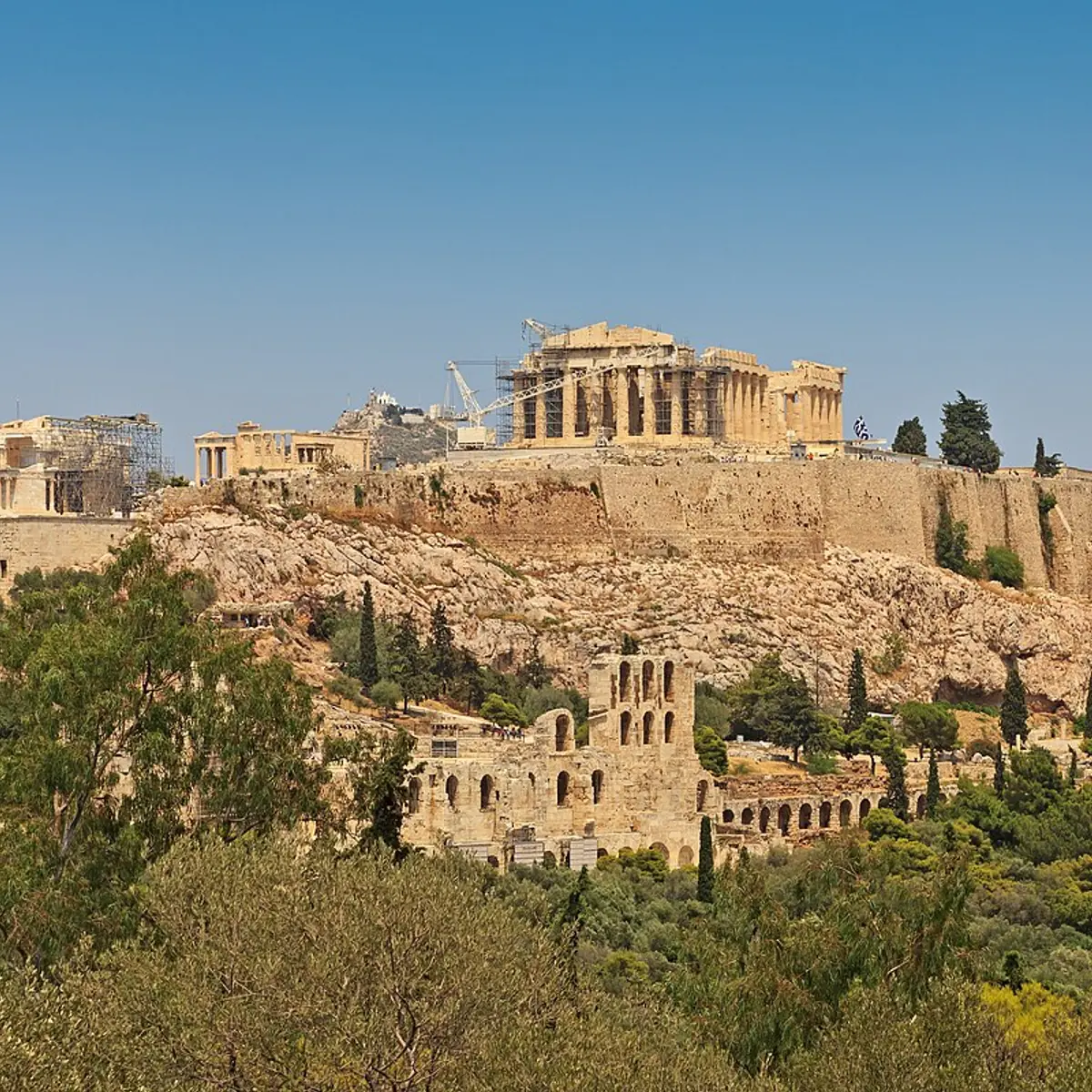
The Theatre of Dionysus is an ancient Greek theatre set into the south slope of the Acropolis, and this is where the City Dionysia unfolded. Its beginnings reach back to the mid- to late-sixth century BC, when an orchestra terrace was formed within the sanctuary of Dionysus Eleuthereus, the Liberator. The place became a working stage for the plays of Sophocles, Aristophanes and Euripides.
In the fourth century BC, Lycurgus directed its transformation into a stone-built theatre, giving the auditorium the broad, carved form visible here. At its fullest extent, it could hold up to 25,000 people. The preserved seating includes the prohedria, the honour seats made from Pentelic stone, while stairways divide the auditorium into wedge-shaped sections.
Performances continued into the Roman period, but the theatre later declined during the Byzantine era. Archaeologists identified, excavated and restored it in the nineteenth century. As you take in the open auditorium and its surviving stone seats, you are looking at a place where the dramatic tradition of classical Athens was performed in its original setting.