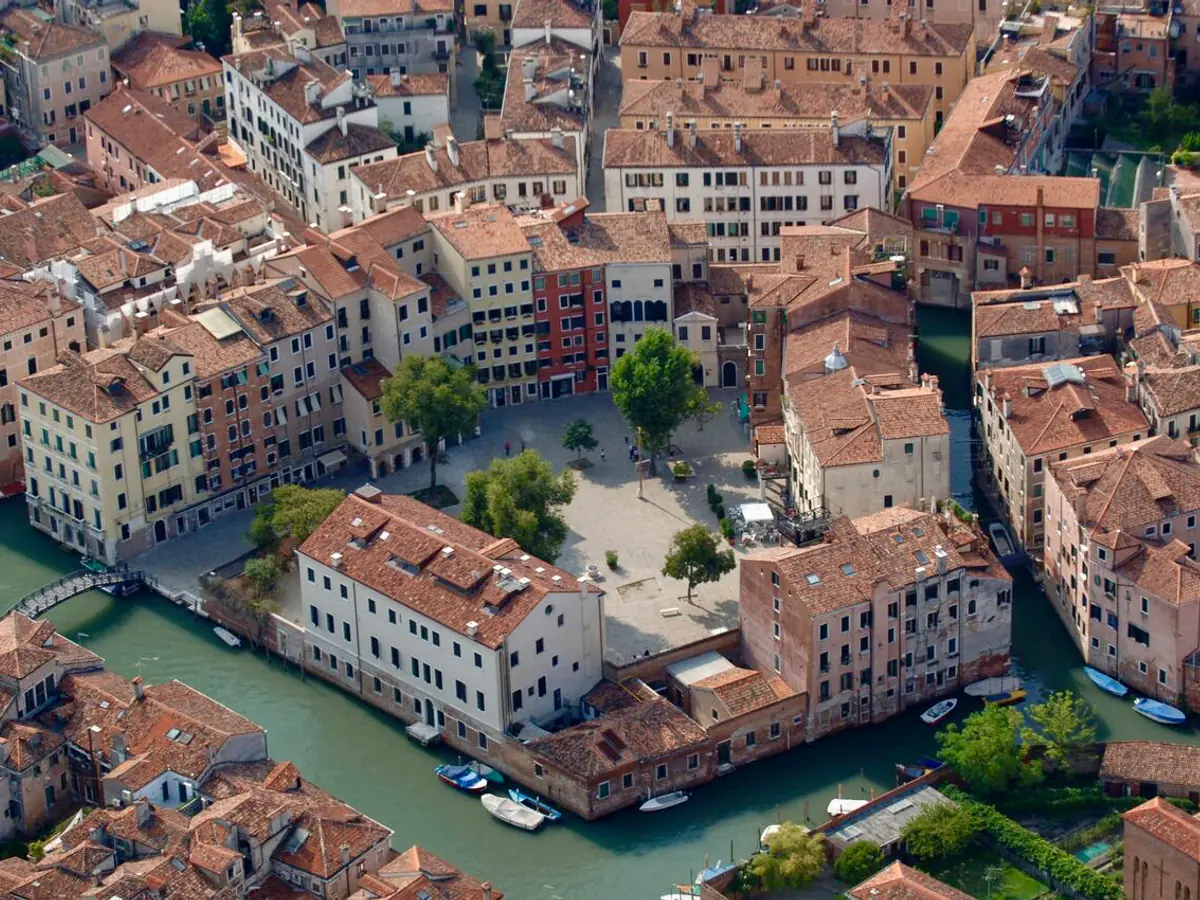
Ghetto di Venezia, Venice
The Venetian Ghetto is the historic Jewish quarter of Venice, in the Cannaregio district, and it remains a focal point for the city’s Jewish community. Its story reaches far beyond this neighbourhood: the English word “ghetto” comes from the name of this place. The Venetian government created the enclosure by decree on 29 March 1516, under Doge Leonardo Loredan and the Senate.
Jewish residents were compelled to live here, and the gates connecting the area with the rest of Venice opened by day but were secured at night. The community paid for continuous surveillance, while strict rules limited movement beyond the enclosure. The area contains the Ghetto Nuovo and Ghetto Vecchio, names linked to former foundry sites; intriguingly, the place called New Ghetto is older as a Jewish residential area than the Old Ghetto.
Its religious life developed through distinct communities, with synagogues serving German, Italian, Spanish and Portuguese, and Levantine Sephardi worshippers. Languages once heard here included Venetian, Judeo-Italian, Judeo-Spanish, French and Yiddish. The surrounding walls and narrow entrances preserve the physical setting of a community shaped by confinement, faith and remarkable cultural variety.