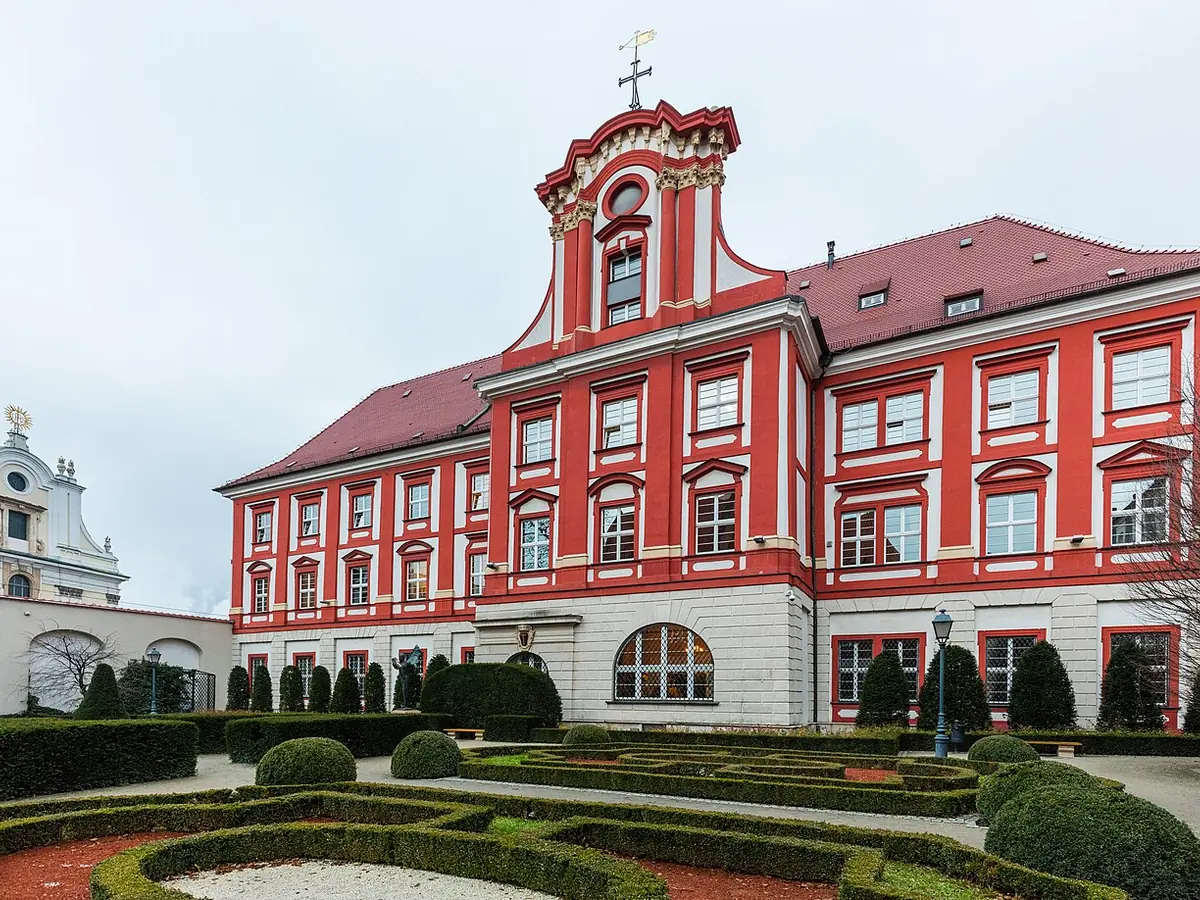
Zakład Narodowy imienia Ossolińskich, Wrocław
The remarkable thing about the Ossolineum is that only about a third of its pre-war treasures reached Wrocław. You are meeting a Polish cultural institution whose beginnings lie in Lwów in 1817, when Poland had no sovereign state of its own. Count Józef Maksymilian Ossoliński created it as a home for books, archives and publishing, helping sustain Polish intellectual life through print.
War tore that inheritance apart. Collections were seized, dispersed and destroyed; the portion saved for Wrocław after the Second World War survived through the determined work of staff, especially Mieczysław Gębarowicz. Since 1947, this has been the Ossolineum’s home, and its Polish holdings have grown into the country’s most comprehensive body of scientific and literary material.
Its shelves and archives preserve work connected with figures including Copernicus, Mickiewicz, Słowacki and Sienkiewicz. The publishing house matters too: it has issued Polish books continuously since the early nineteenth century, making it the nation’s longest-running imprint. As you take in the entrance, think of this place as a cultural archive that crossed a changed border, carrying part of Lwów’s Polish scholarly world into Wrocław.