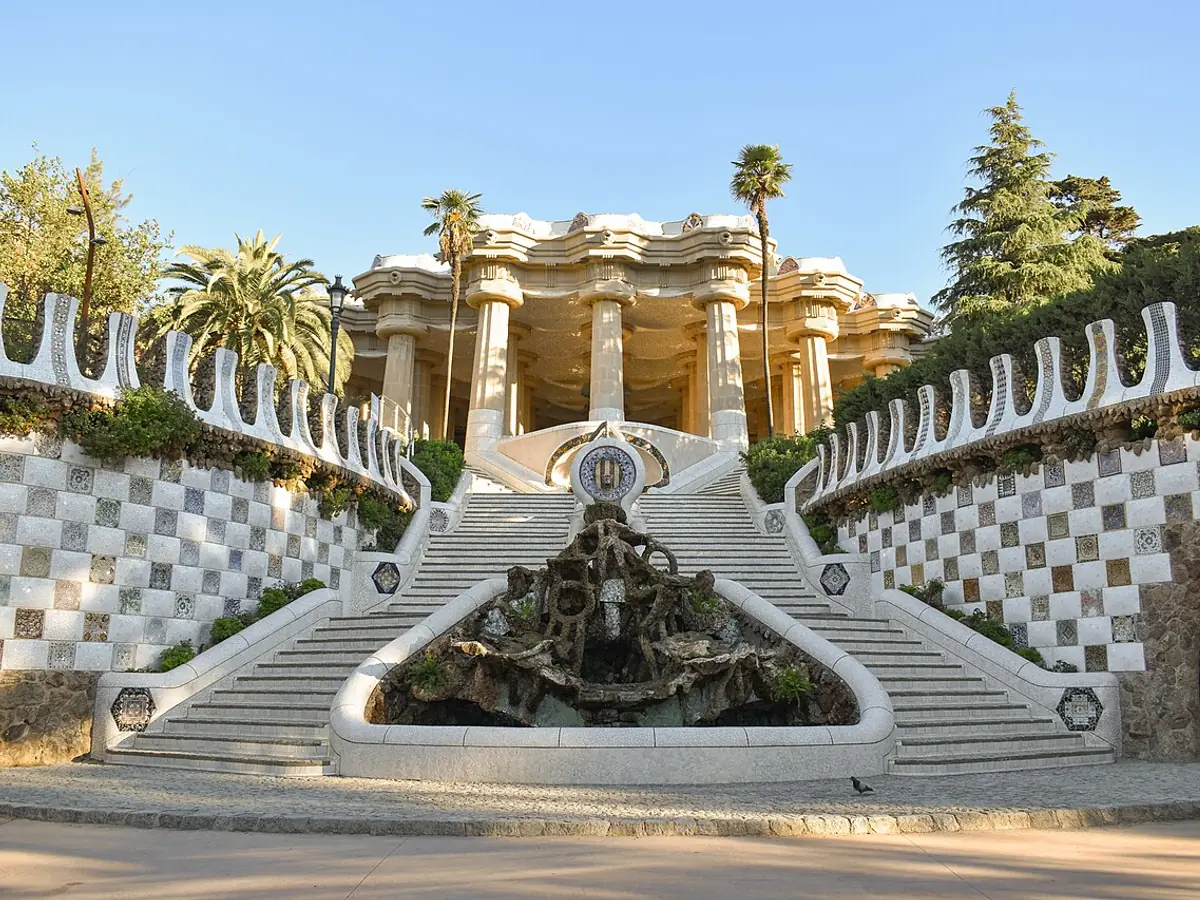
Parc Güell, Barcelona
Parc Güell is a vast garden threaded with architecture, created by Antoni Gaudí on Barcelona’s Carmel hill. Its story begins as an unrealised residential project: Eusebi Güell commissioned Gaudí in 1900 to plan an exclusive garden city with sixty home plots, but only two houses were built. Construction ran from 1900 to 1914, and the site opened as a public park in 1926.
The park’s most memorable feature is the long ceramic-covered bench that coils around its great terrace like a serpent. Josep Maria Jujol designed it from small pieces of ceramic and glass, giving the seating an undulating shape. Beneath the terrace, the Hall of a Hundred Columns forms a vaulted space with 86 columns, while coloured mosaic medallions decorate the ceiling.
Follow the main stairway with your eyes to the salamander sculpture, the garden’s emblem and a symbol of fire in alchemy. Around the entrance, the gatehouses wear intricate mosaic roofs. Stone viaducts cross the grounds, with supports shaped to suggest tree trunks, caves, and stalactites. Güell’s project failed as a development, yet the unfinished estate became a public garden and, in 1984, a UNESCO World Heritage Site.