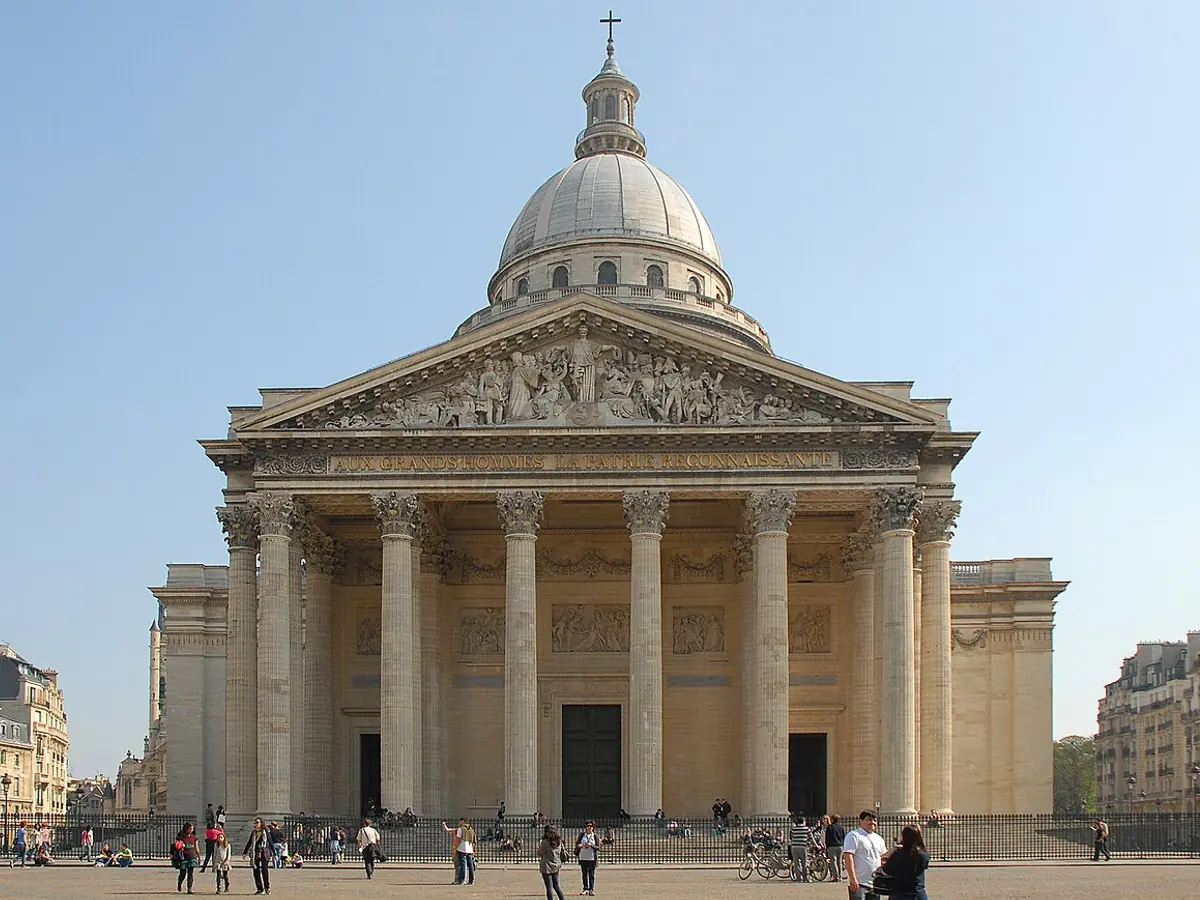

Panthéon, Paris
The Panthéon is a national mausoleum, and its monumental façade gives you a powerful sense of the building’s public purpose. The structure was conceived as a church for Saint Genevieve, then became a burial place for distinguished figures in French history during the Revolution. Its construction ran from 1758 to 1790, under designs by Jacques-Germain Soufflot, with Jean-Baptiste Rondelet continuing the work after Soufflot’s death.
You can read the building’s scale in its portico, immense dome, and severe classical geometry: this is an early expression of neoclassical architecture. The dome is not a single shell but a system of three domes fitted within one another. Inside, a painting of Saint Genevieve’s apotheosis by Antoine Gros can be seen through the opening in the inner dome.
The building also carries a remarkable scientific story. In 1851, Léon Foucault suspended a pendulum from the dome to demonstrate the daily motion of Earth; a copy remains visible here. The crypt contains the remains of figures including Voltaire, Rousseau, Victor Hugo, Louis Braille, Marie and Pierre Curie, Alexandre Dumas, and Simone Veil. Above the entrance, the inscription presents the building as a grateful nation’s tribute to its great people.
More places in Paris
See everything in Paris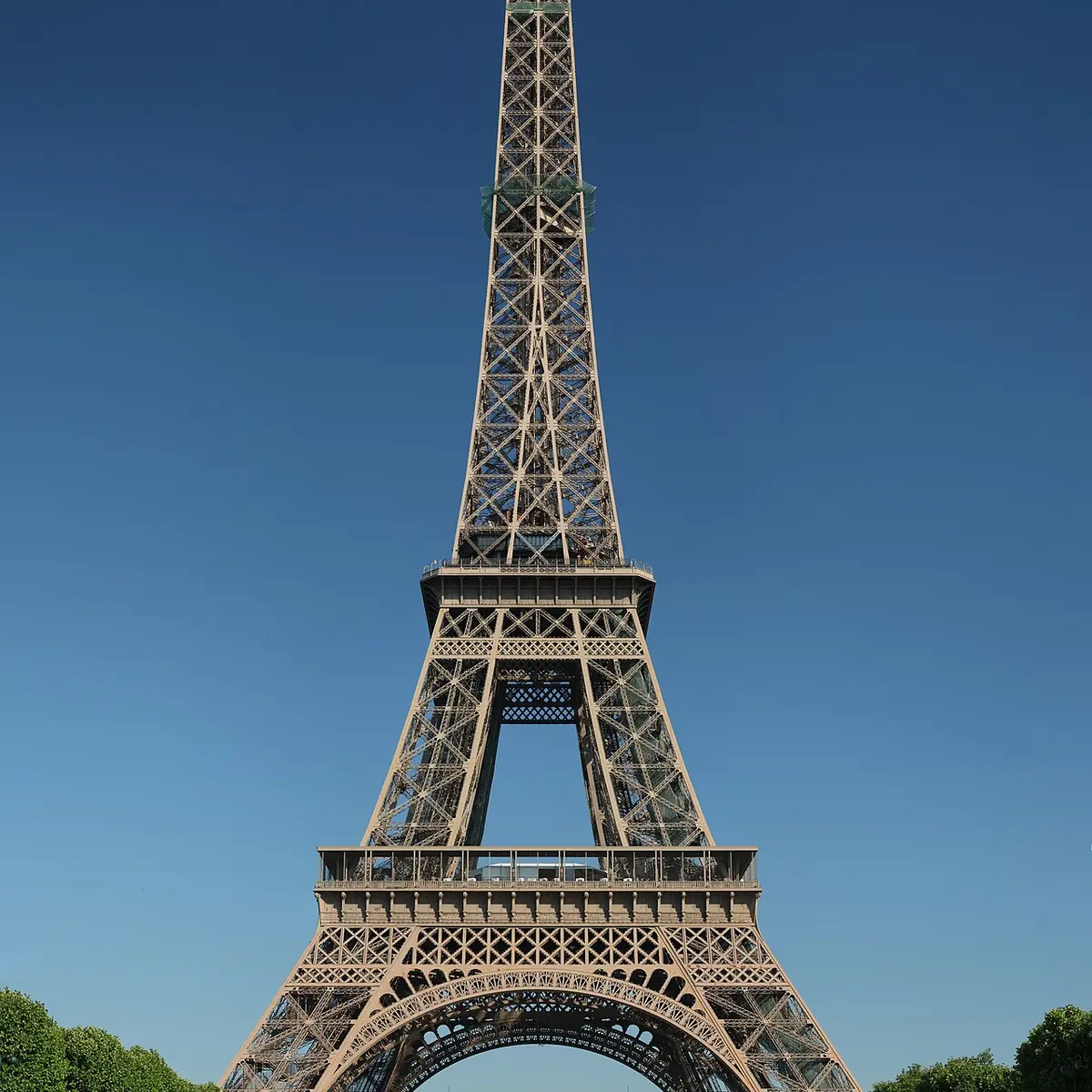
iBenh LIEU SONG (Public domain) Tour Eiffel
famous landmarks
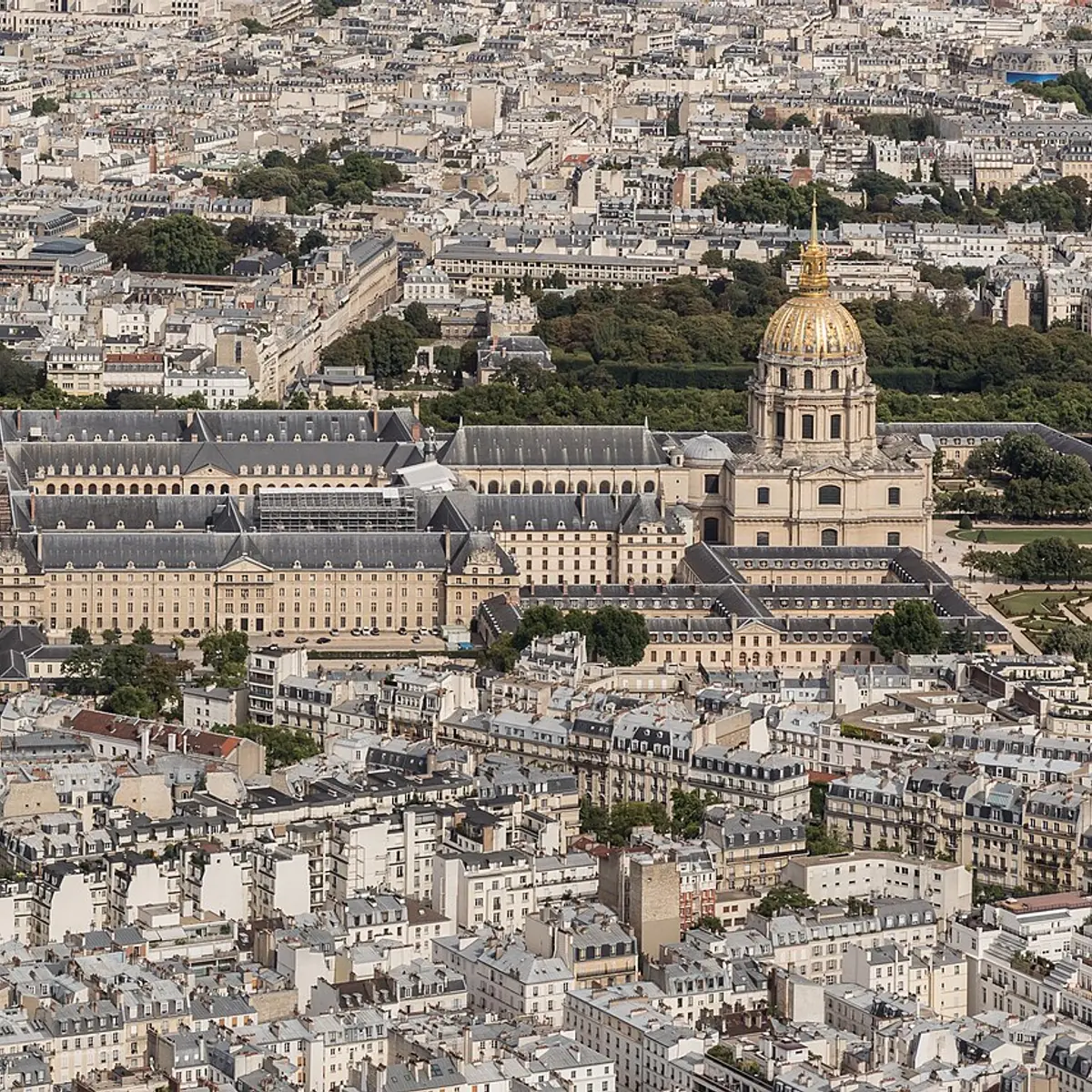
iAnother one of my pictures: This photograph was taken by Medium69 (William Crochot) and released under the license stated below. You are free to use it for any purpose as long as you credit the author (William Crochot), the Source (Wikimedia Commons) and the license (CC-BY-SA 4.0) in close relation to the image. Please do not upload an updated image here without consultation with the Author. The author would like to make corrections only at his own source RAW. This ensures that the changes are preserved.Please if you think that any changes should be required, please inform the author.Otherwise you can upload a new image with a new name. Please use one of the templates derivative or extract. (CC BY-SA 4.0) Hôtel des Invalides
history
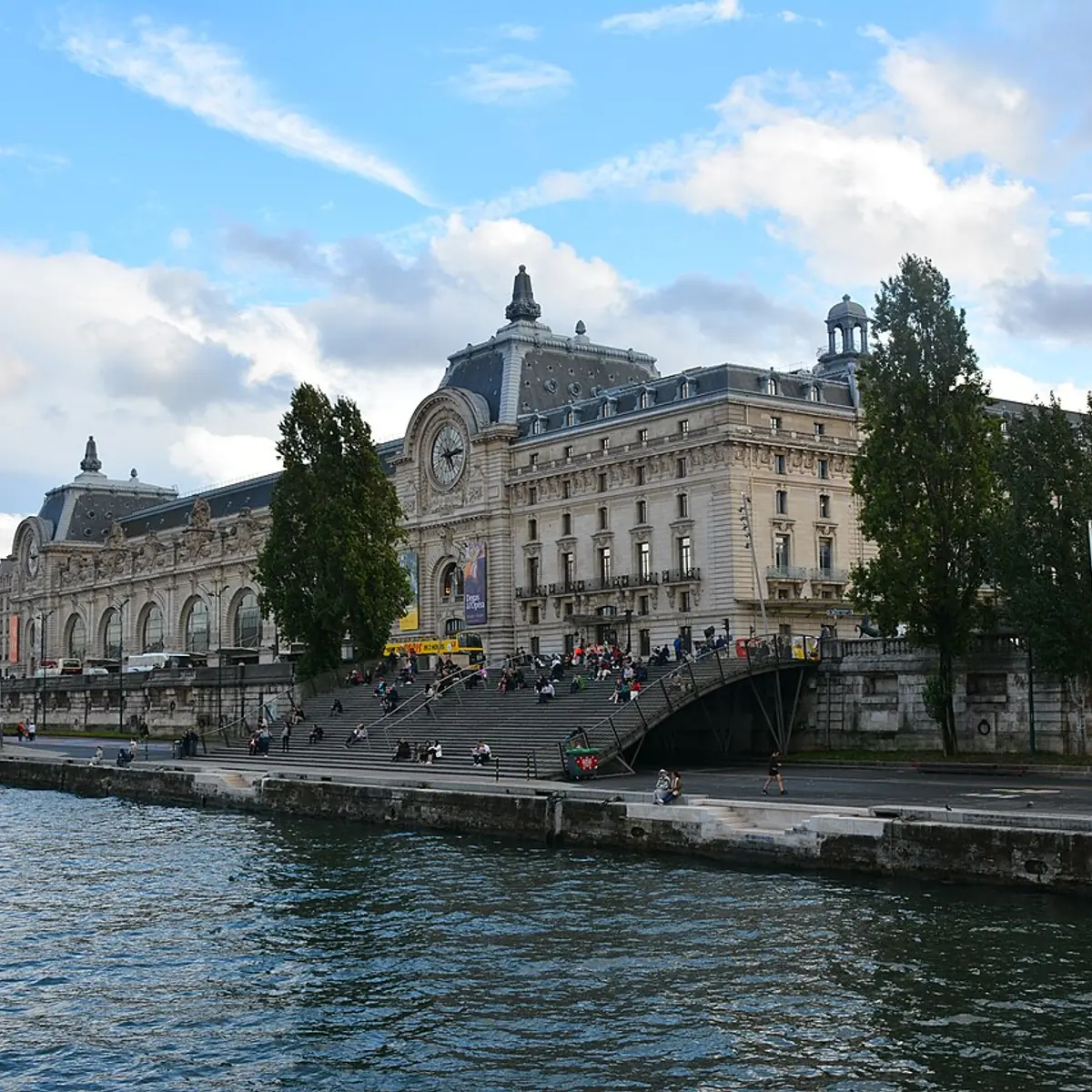
iCheng-en Cheng from Taichung City, Taiwan (CC BY-SA 2.0) Musée d'Orsay
culture
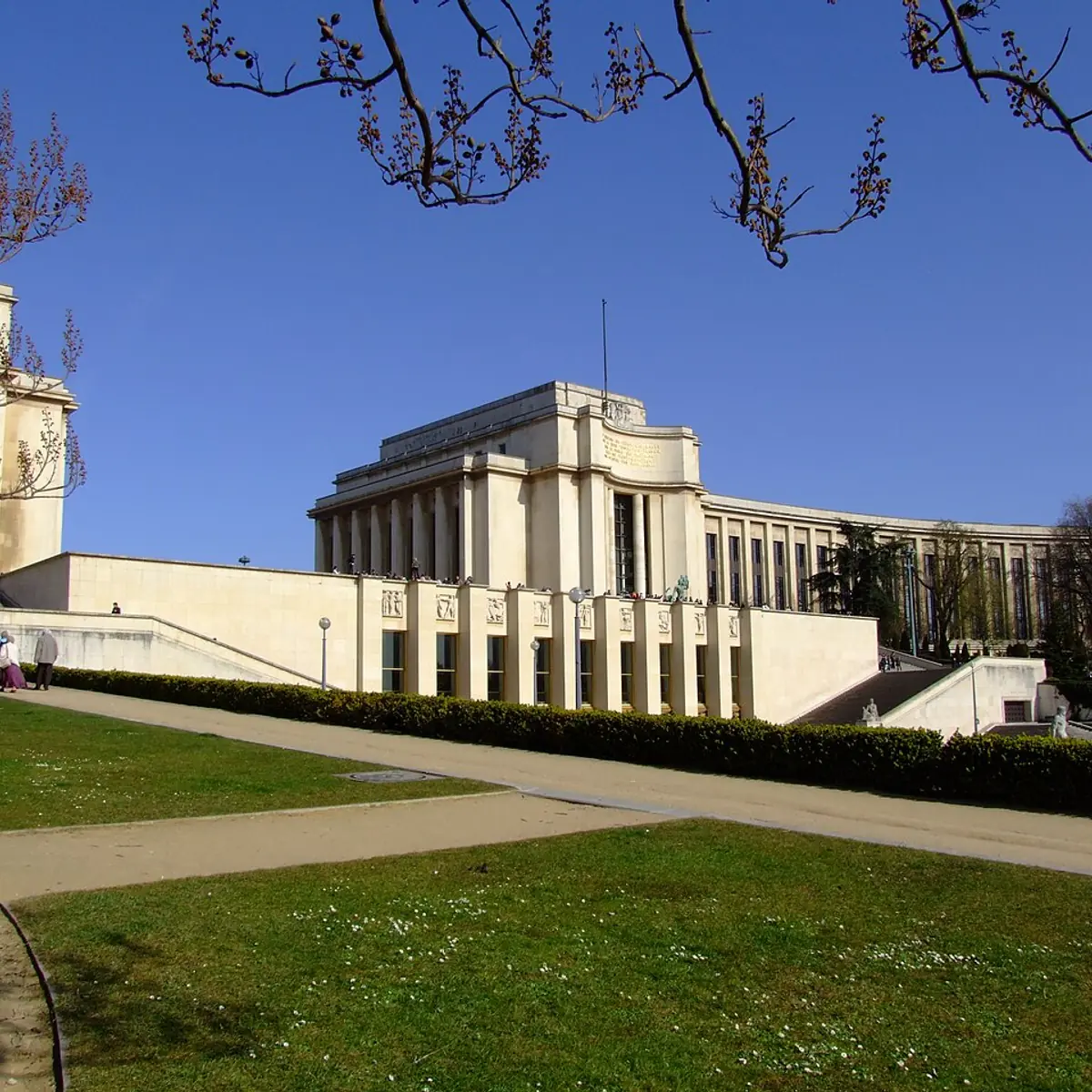
iAlfvanBeem (CC0) Palais de Chaillot
history