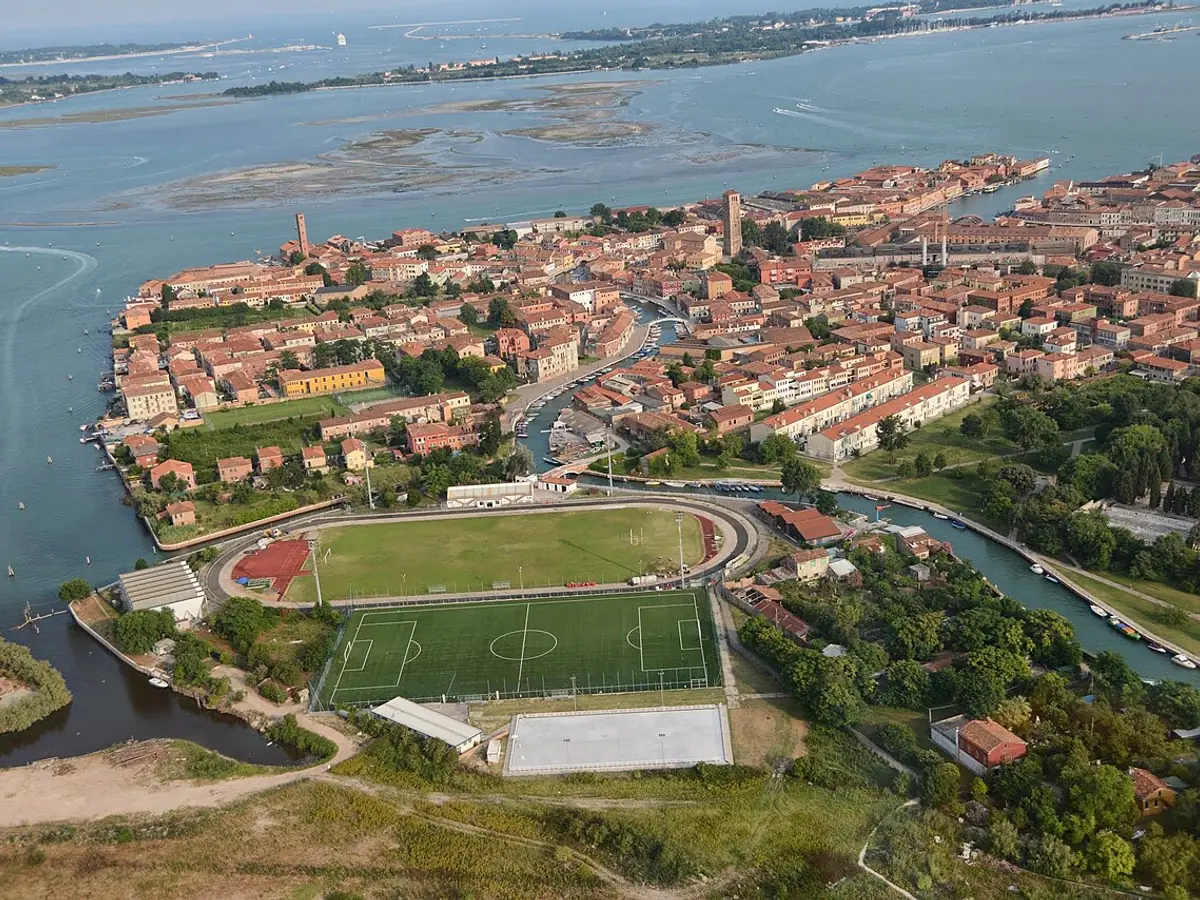
Murano, Venice
Murano is a group of lagoon islands joined by bridges, celebrated for the glass made here. Its glassmaking history took a decisive turn in 1291, when Venice ordered its glass furnaces to move onto the islands after repeated fires threatened the wooden city. That relocation turned Murano into a guarded centre of expertise, where makers developed clear glass, enamelled surfaces, millefiori, milk glass and glass designed to imitate gemstones.
Murano’s artisans still work with techniques passed down across centuries, producing artistic glass, jewellery, chandeliers and small objects for everyday use. The settlement consists of seven islands divided by channels and connected by bridges. You can also visit the Murano Glass Museum in Palazzo Giustinian, where the displays follow glassmaking through history and include examples from ancient Egypt to the present.
Murano once had its own political institutions and even minted coins, an unusual privilege within the lagoon. Today it belongs to the municipality of Venice, while glass remains the island’s defining industry. The remarkable story here is that a measure intended to protect Venice from furnace fires created a new home for an art that became famous across the world.