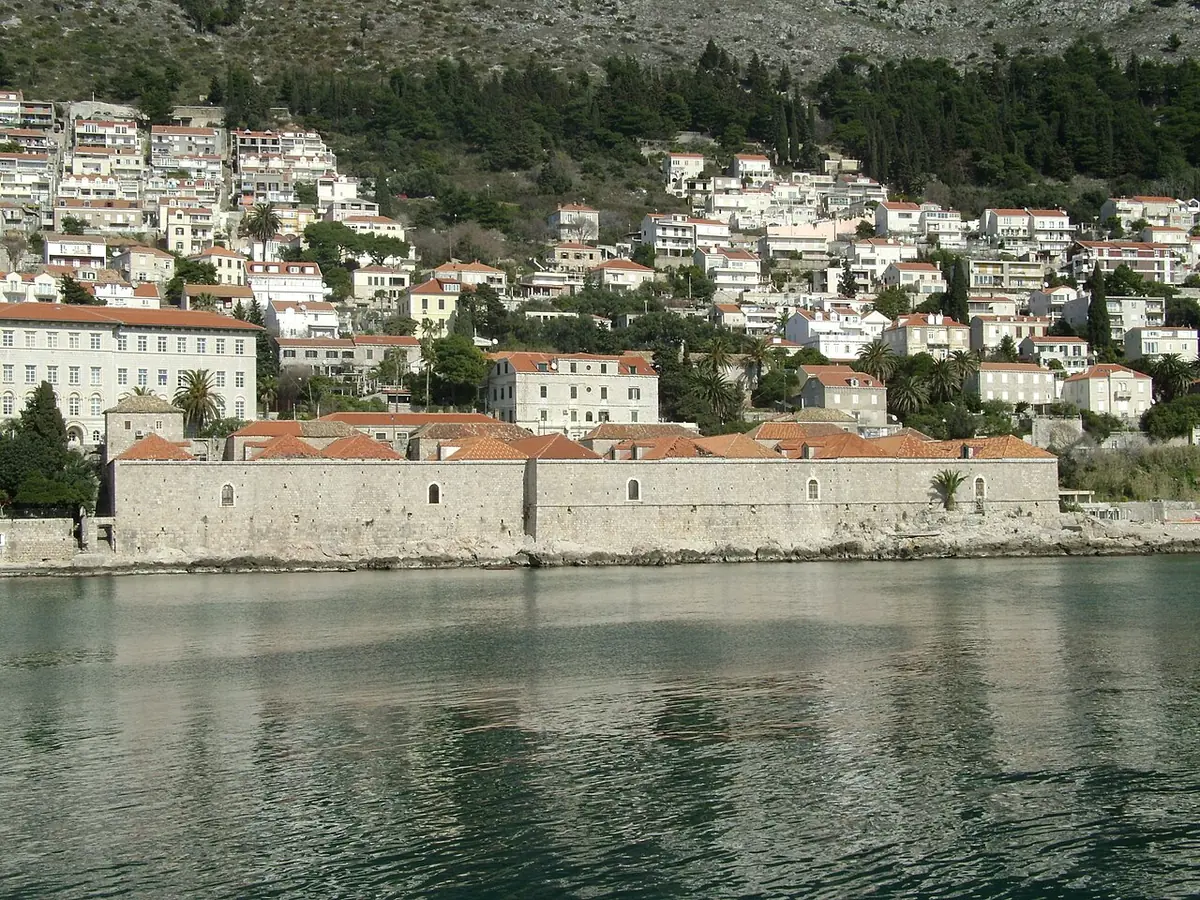
Lazareti, Dubrovnik
Lazareti is a connected group of buildings that served as Dubrovnik’s quarantine station, set 300 meters from the city walls. Its purpose grew from Dubrovnik’s role as a busy merchant republic, receiving people and cargo from across the Mediterranean and the Balkans. On 27 July 1377, the Republic introduced quarantine as a public-health measure: arrivals from places considered infected had to remain outside the city for a month before entry.
The earliest holding places were the islands of Mrkan, Bobara and Supetar; later, the facilities moved closer to Dubrovnik. The complex you see here was built at Ploče between 1590 and 1642. It contains 10 buildings arranged around 5 interior courtyards, with covered arcades where goods could be kept and living quarters for passengers undergoing quarantine.
Each courtyard had an opening toward the sea for unloading cargo. Look at the repeated courtyards and arcades: this layout separated people, merchandise and movement without abandoning the city’s trading life. Quarantine later lasted 40 days and was supervised by officials known as kacamorti. Today, Lazareti accommodates recreation, commerce and entertainment, giving this former health station a lively modern use.