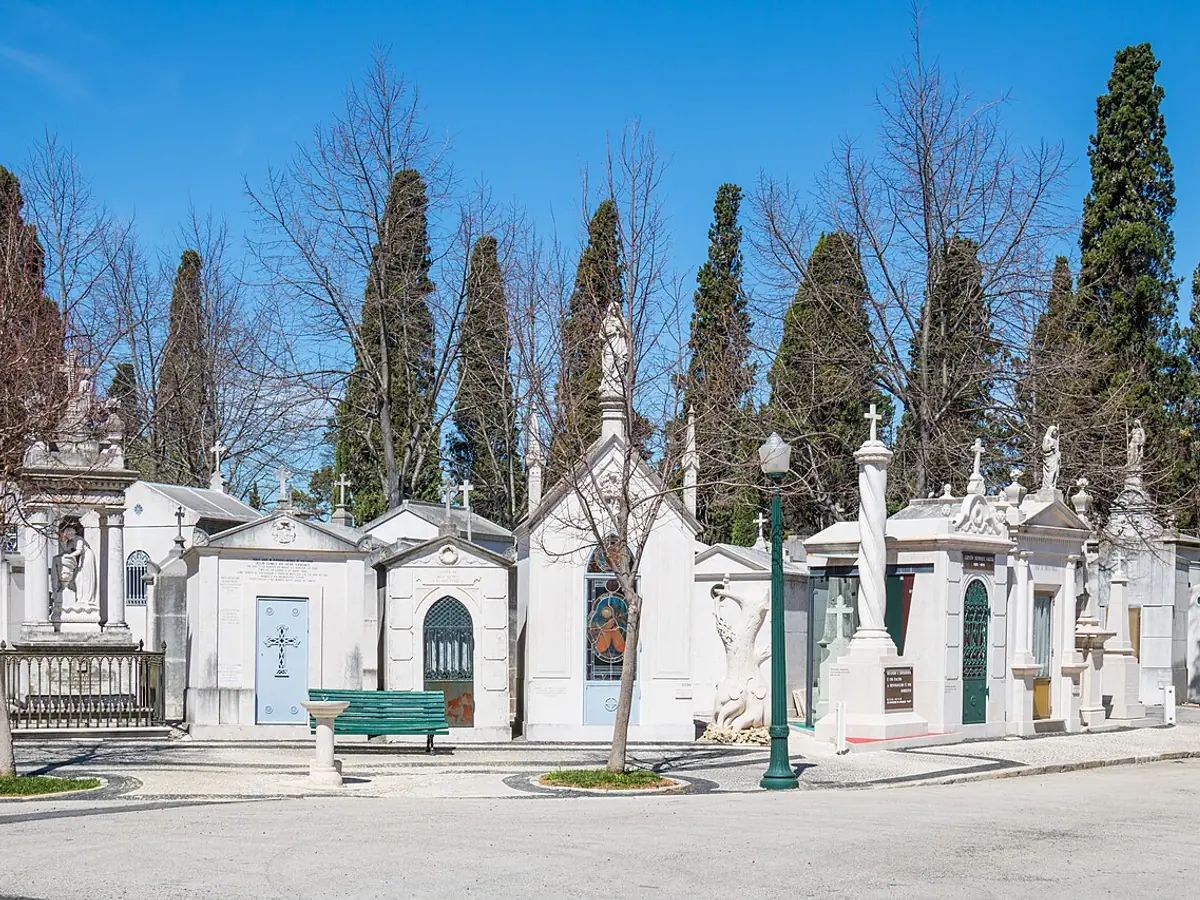
Cemitério dos Prazeres, Lisbon
Cemitério dos Prazeres is a cemetery whose character comes from its mausoleums: burial here is arranged through enclosed memorial buildings rather than ordinary open graves. Founded in 1833 during a cholera outbreak in Lisbon, it began life as the city’s Western Cemetery, alongside Alto de São João Cemetery. The most imposing landmark is the Mausoleum of the Dukes of Palmela, identified as the largest mausoleum in Europe.
The cemetery is also the final resting place of Portuguese prime ministers and presidents, writers including Fernando Namora, painters such as Columbano Bordalo Pinheiro and Roque Gameiro, and musicians including Alexandre Rey Colaço and João Domingos Bomtempo. Its connection with cultural memory reaches beyond the people buried here now: Amália Rodrigues and Aquilino Ribeiro were interred here before moving to the National Pantheon, while Fernando Pessoa was later reinterred at Jerónimos Monastery. Since 2001, part of the auxiliary buildings has served as a museum. Look for the mausoleum architecture itself: the cemetery brings together work by unknown makers, celebrated nineteenth-century architects, and major Portuguese sculptors, turning private tombs into a concentrated gallery of memorial art.
.jpg)