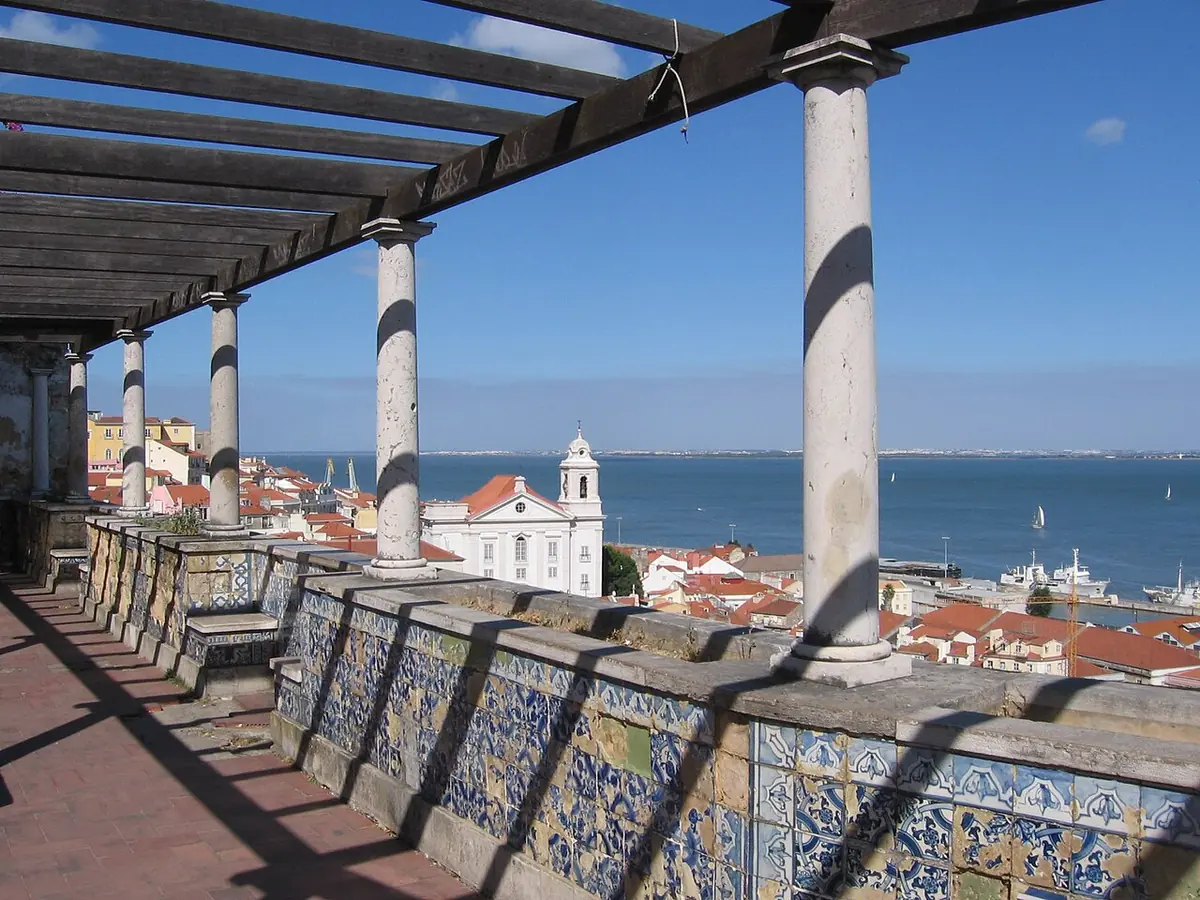
Alfama, Lisbon
Alfama is Lisbon’s oldest neighbourhood, spread along the slope between São Jorge Castle and the Tagus. Its name comes from the Arabic al-hamma, a term for hot or beneficial springs. As you move through the narrow lanes and small squares, the district feels almost village-like, with compact passages, stairways, and washing hung from windows.
The neighbourhood survived the 1755 earthquake, preserving this intricate pattern of streets. During Muslim rule, Alfama covered the city’s settled area; later, as Lisbon expanded westward, it became home to fishermen and poorer residents. Today, its historic character lives alongside restaurants and Fado houses.
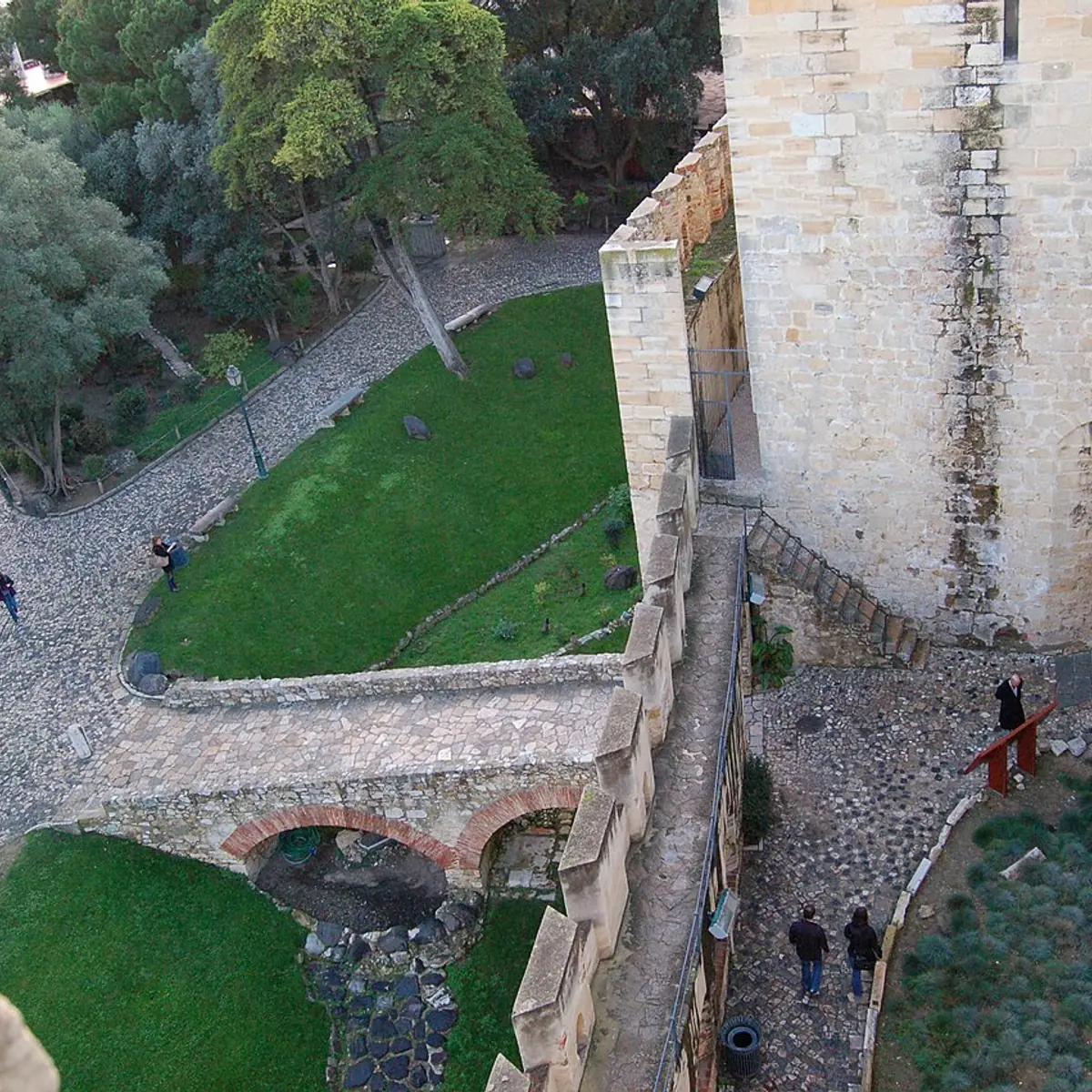
The springs are not just part of the name: water from local mineral sources once fed public fountains and baths, with some springs reaching temperatures above 20 °C. The former reservoir connected with this water supply now lies beneath the Museu do Fado. For landmarks, the district gathers around São Jorge Castle, Lisbon Cathedral, Santa Luzia, and the Portas do Sol viewpoint. Let your attention rest on the lanes themselves: their winding shape is the clearest reminder that Alfama was not rebuilt into a regular grid after the earthquake.