Kraków
The Dragon of Kraków
Every city needs an origin story, and Kraków's is a monster. The tale of the Wawel Dragon — Smok Wawelski — is legend rather than recorded history, first written down centuries after it supposedly took place, but it's the story locals tell first and the one every visitor ends up hearing whether they ask for it or not. It has also outlived every version of the city that told it: through partitions, occupation, and the near-total destruction of most of Poland's other historic centers in the Second World War, Kraków kept both its Old Town and its dragon.
The legend, told plainly — and its two different endings
The story goes that a dragon made its home in a cave beneath Wawel Hill, long before the stone castle that stands there now was ever built. It terrorized the settlement below, and in the most common version of the tale, demanded a regular tribute of livestock — or, in the grimmer tellings, young women — to keep from attacking the town outright. Knights rode out to fight it and did not come back.
The version most people know today isn't a story of combat at all. A young shoemaker named Skuba stuffed a sheepskin with sulfur and left it outside the cave as bait. The dragon swallowed it whole, and the burning in its stomach sent it to the river to drink. It drank and drank, trying to put the fire out, until it drank so much Vistula water that it burst. The town was free, and Skuba — depending on which telling you hear — was rewarded with the king's daughter, a fortune, or simply the town's gratitude.
That's the popular version, but it isn't the oldest one on record, and it's worth knowing the difference. The earliest surviving written account of the story, from the twelfth-century chronicles, doesn't feature a clever cobbler at all — it gives the victory to Krakus II and Lech II, the sons of the legendary King Krak, who defeat the dragon directly rather than outwitting it with a trick. The sulfur-and-sheepskin version, the one told to children and printed on souvenir tea towels today, is a later, more folkloric layer added on top of an older, more heroic one. Both versions agree on one thing: the dragon is gone, the town survived, and the hill above the river was worth defending either way.
It's worth being direct about what this is: a founding myth in the classic European mold, the same shape as dozens of other city-slaying-monster stories across the continent, not a record of an actual event. What IS historically real is that Wawel Hill has been continuously settled and fortified for well over a thousand years — some of the surviving stone structures on the hill date back to about the year 970 — long enough for a story like this to have accreted around it the way founding legends do around any old and important place.
The castle the legend guards
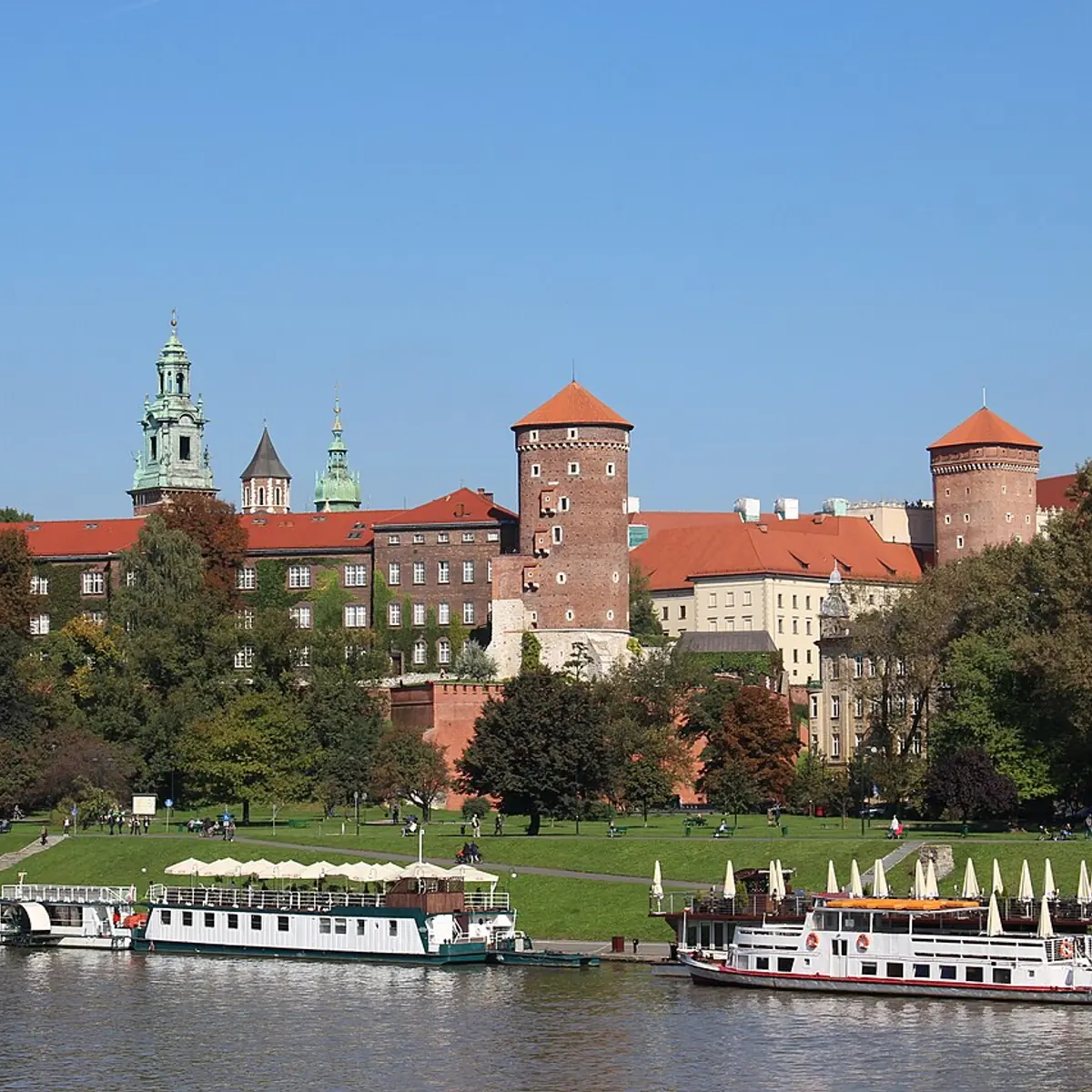
Wawel Castle itself is where the dragon story and the documented history of the hill meet. The castle you see today dates from the fourteenth century and was rebuilt repeatedly afterward — the architect Franciszek Florentczyk began reshaping its western wing in 1504, and after his death Bartolommeo Berrecci and Benedykt of Sandomierz carried the Renaissance transformation forward, which is why the castle's arcaded courtyard reads as one confident architectural statement even though it was decades and several different builders in the making. A fire in 1595 damaged the northern and eastern wings badly enough that Giovanni Trevano was brought in to direct their repair, finishing in 1603.
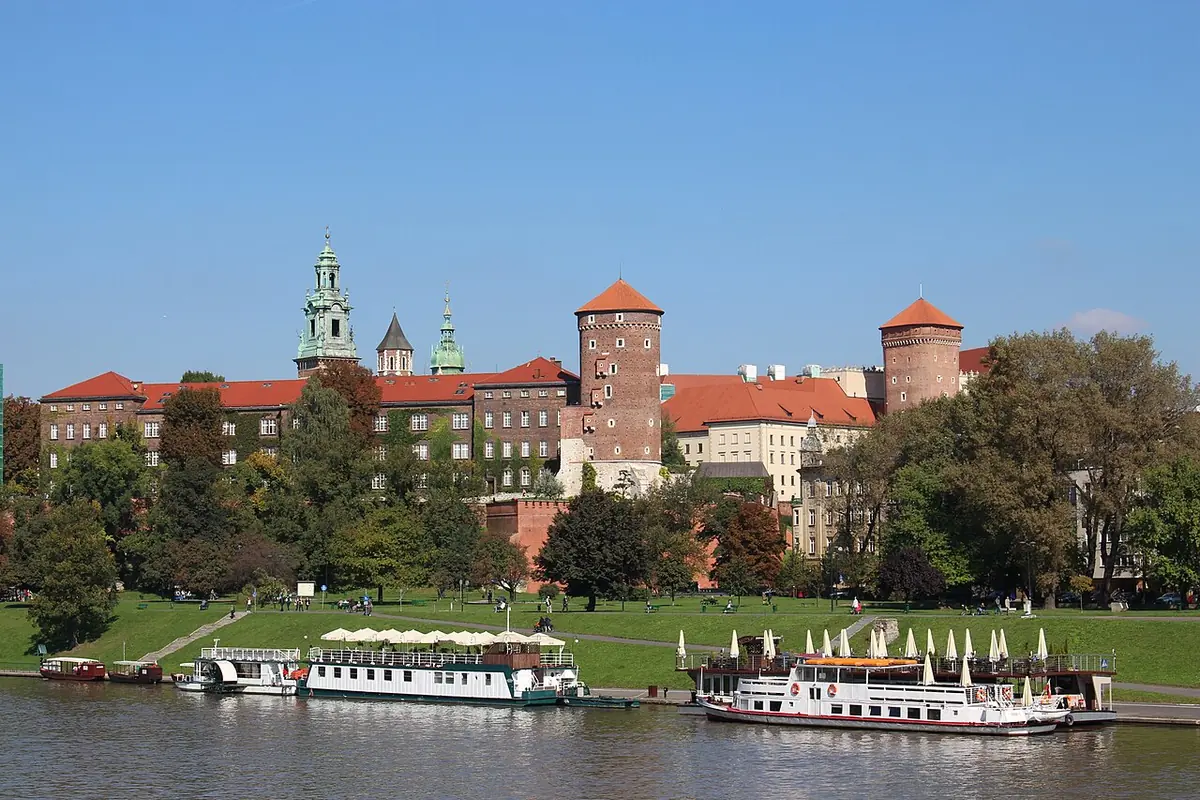
For most of the Middle Ages and the Renaissance, Polish kings lived on this hill, and it also housed the national government and the Diet — Poland's assembly — until the capital itself moved to Warsaw in 1596. That's the layer of Wawel most history books focus on. The dragon cave is the layer that gets told first, to children, on school trips, and to nearly every visitor before they've learned a single king's name — which says something about how founding myths actually work in a place: they're the on-ramp, not the destination.
The cave beneath the hill
The cave the legend describes is real and can still be visited, cut into the limestone at the base of Wawel facing the Vistula. It's a genuine karst cave, not a purpose-built tourist feature, though its current entrance and exit were adapted for visitors in the twentieth century. Whatever its original use by the hill's earliest inhabitants — and there's reasonable archaeological basis for thinking caves like it were used well before the medieval period — its association with the dragon story is what has kept it a fixture of every Kraków visit for generations.
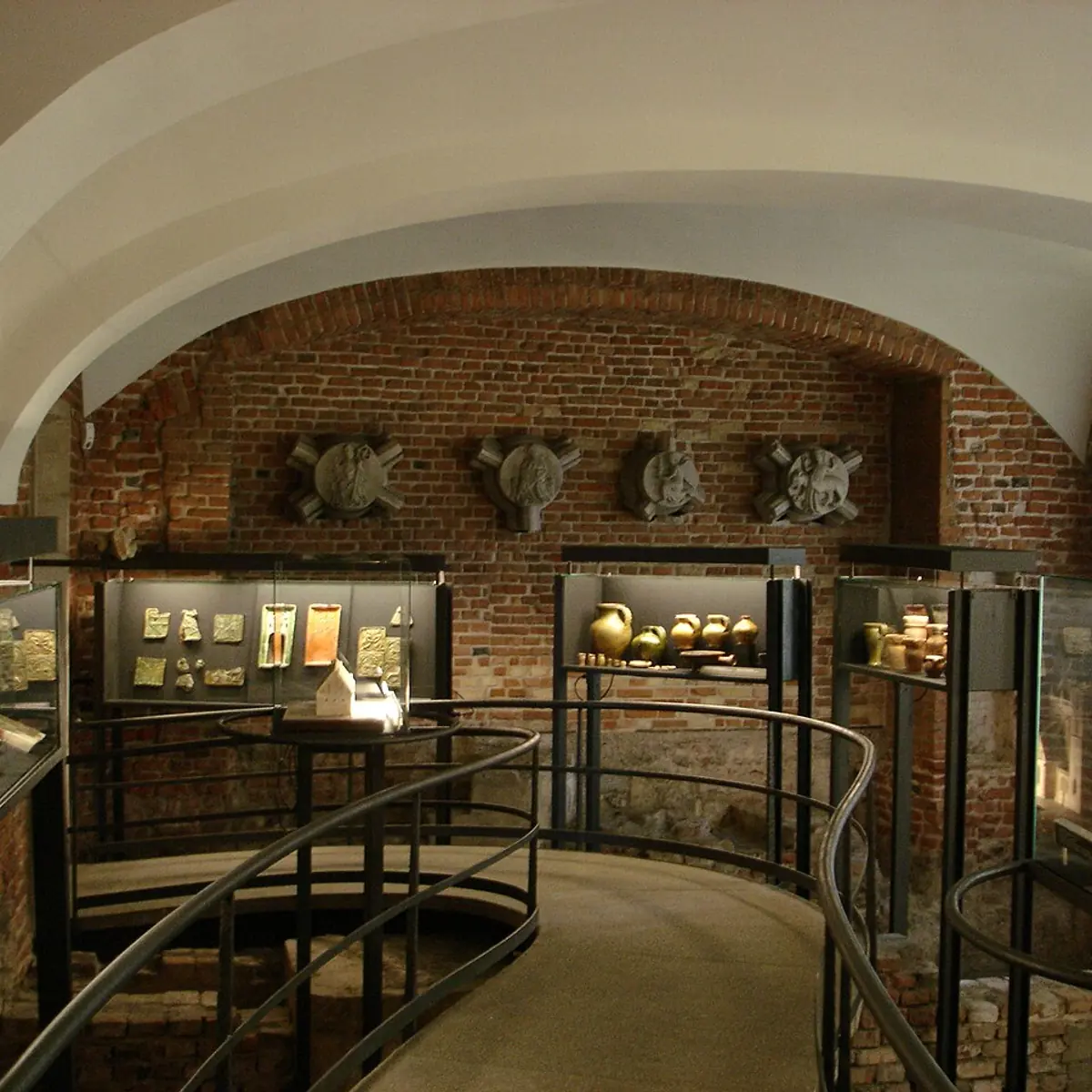
Nearby, deeper explorations of the hill's substructure are covered by Wawel Zaginiony — "Lost Wawel" — an archaeological reserve and permanent exhibition built inside a building from the 1940s, erected on the site of the former royal kitchens. Inside, the ground itself is part of the exhibit: surviving walls and foundations reveal buildings that vanished centuries ago, alongside display cases holding genuine finds recovered from excavations on the hill. The centerpiece is a model of Wawel as it looked in the eighteenth century, and one of the oldest surviving structures shown is the rotunda of the Blessed Virgin Mary, built around the year 1000 — from an elevated walkway inside the exhibit, you can actually see its original sandy floor and the wall of an early medieval burial mausoleum that still contains a skeleton.
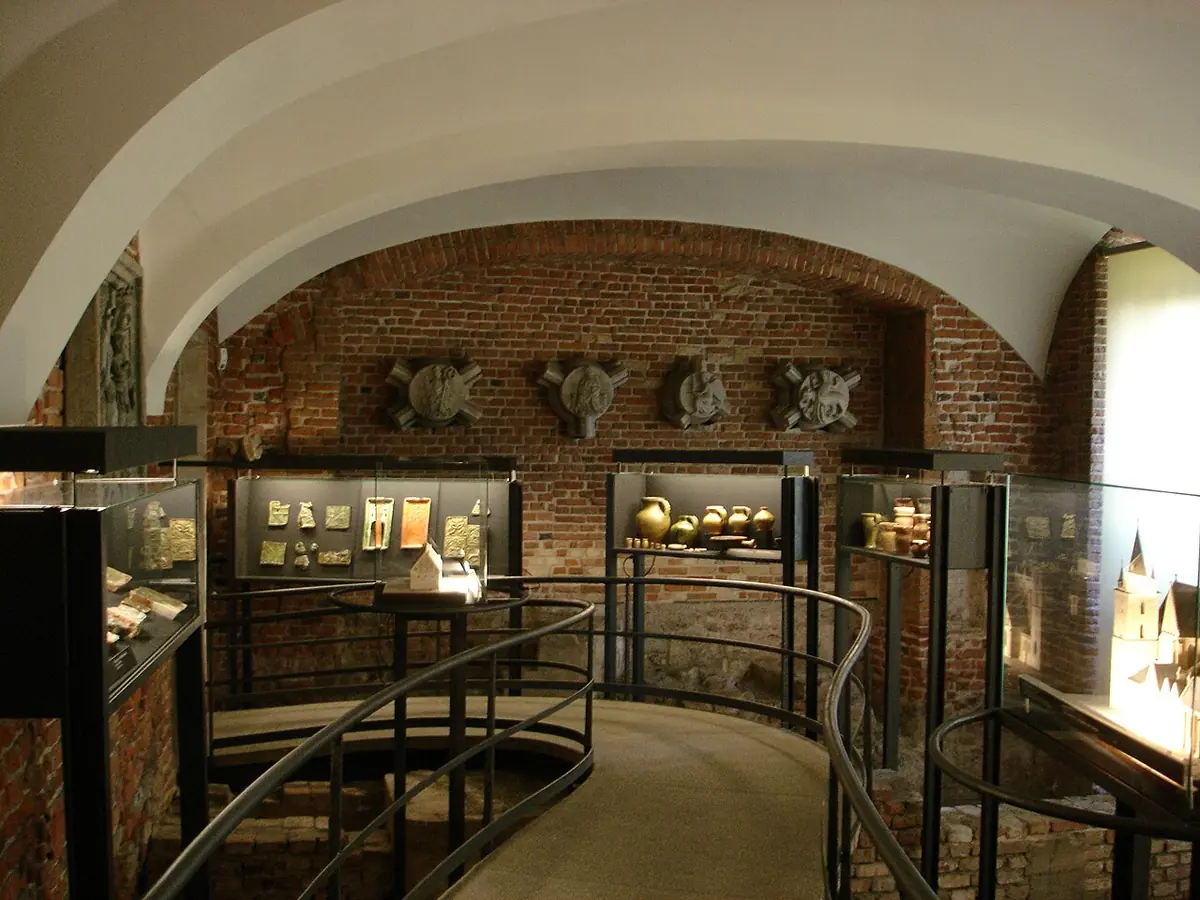
Further along, the exhibit passes through former royal carriage houses and a smaller kitchen, with finds ranging from a tenth-century carved stone calf to glazed floor tiles from a thirteenth-century Romanesque cathedral that no longer stands, coins from successive Polish rulers, and gaming pieces and rings that belonged to people who lived and worked on this hill centuries before any dragon story was written down. It's a useful stop for anyone who wants the layered, factual counterpart to the cave's legend: what's actually been dug up and dated, rather than what's been told around a fire — and it's a reminder that the hill's real history is, if anything, stranger and more continuous than the myth built on top of it.
The statue, not the story
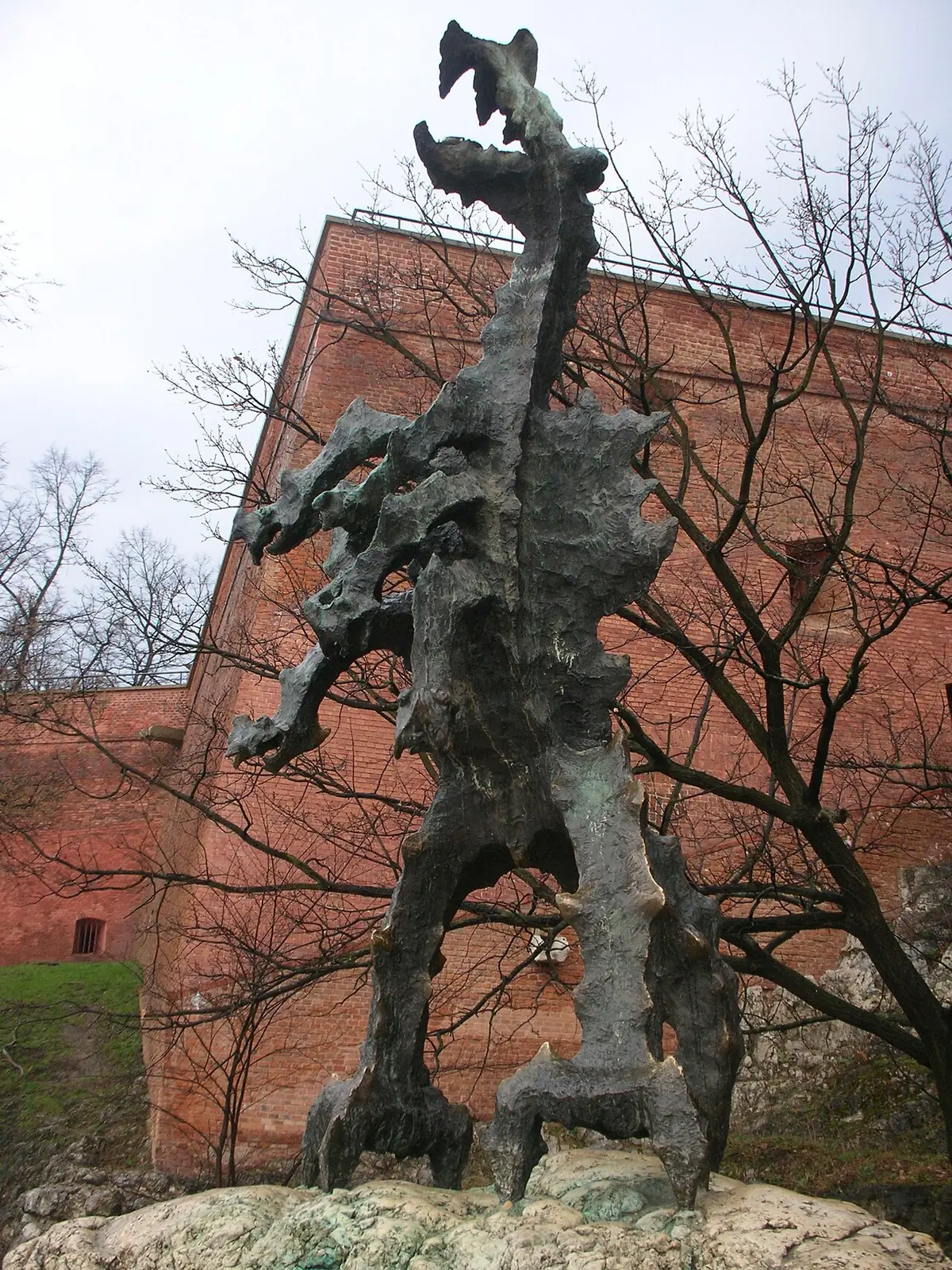
At the foot of the hill, beside the cave's exit, stands the bronze dragon statue most visitors actually photograph — a six-meter sculpture perched on a limestone boulder above the river, distinct from the medieval legend it commemorates by many centuries. Sculptor Bronisław Chromy finished the piece in 1969, and it was installed at its current spot in 1972; an early plan would have placed it partly in the Vistula itself, but engineers realized driftwood and debris carried by the current would collect against it, so the riverside boulder became its permanent home instead.
The fire came a year later. In the spring of 1973, Feliks Prochownik fitted a gas-and-electric mechanism inside the statue's open mouth, and it still runs on natural gas today — the flame can even be triggered on demand by sending a text message to a number posted near the statue, which is precisely why it draws a reliable crowd: nobody expects a public statue to respond to a text message, and then it does.
It's worth separating the statue from the legend in your own head, because they're different things built at very different times for different reasons — one is a piece of oral tradition passed down and rewritten for centuries, the other is a twentieth-century civic landmark designed specifically to give that tradition something to point a camera at. Both are worth seeing, but only one of them is old.
Where the story sits in the city
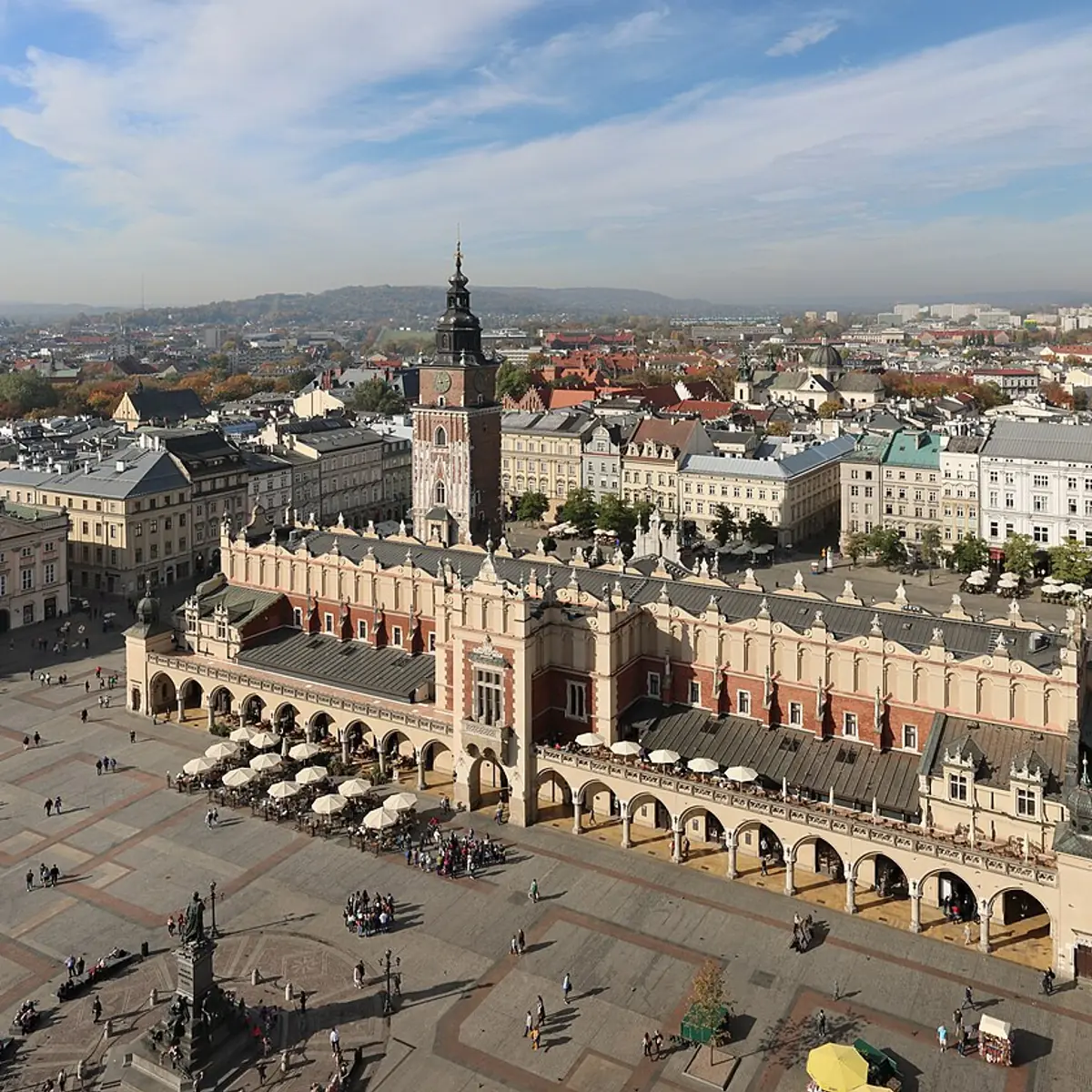
The dragon shows up more than once around Kraków if you know to look — carved into ironwork, referenced in shop names, occasionally turning up as a mascot in unrelated civic branding. That's typical of how a good founding myth behaves once it's had centuries to settle into a place: it stops being a single story told once and becomes a kind of background texture the whole city carries around, the same way Rynek Główny — first laid out in 1257 and still the city's working center — carries its own layered history of royal ceremony, uprising, and occupation without needing a single one of those events explained to feel significant just standing in it.
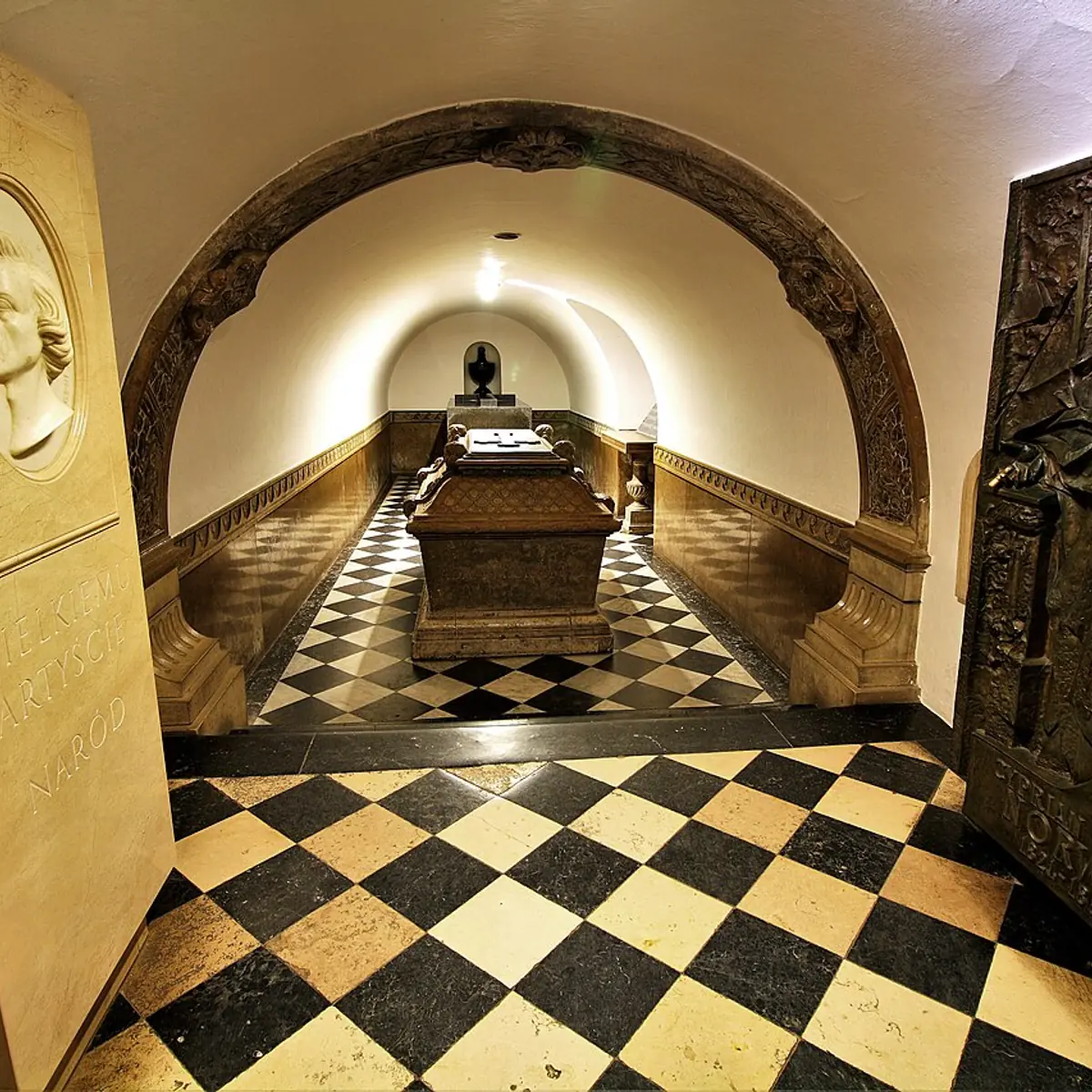
None of this makes the dragon "true" in any historical sense, and it doesn't need to be. A city's founding legend earns its keep by being memorable and by giving newcomers a story to hold onto while they're still learning everything else about the place. Wawel itself makes an interesting contrast here: a short walk from the dragon's cave, beneath the cathedral, is the National Bards' Crypt, created in 1890 to hold the remains of the Romantic poet Adam Mickiewicz, and later Juliusz Słowacki, alongside the tombs of the country's actual kings. That crypt is the opposite kind of story from the dragon — a documented, dated, deliberate act of national memory, built specifically to honor real writers as the nation's spiritual leaders during the decades when Poland had no state of its own to honor them officially. The dragon gets you interested in the hill; the crypt, the cathedral, and the real seven centuries of coronations above it are what reward you for staying.
The crypt itself grew in stages, which is its own small piece of documented history worth knowing. It was built in 1890 specifically to receive Mickiewicz's coffin, brought from Montmorency near Paris and buried on the 4th of July that year beneath a sarcophagus of Częstochowa marble carved with his portrait medallion. Słowacki's ashes followed from Paris in 1927, and the wall that had originally separated his intended vault from Mickiewicz's was removed to turn the two spaces into the single crypt visible today — his own sarcophagus is plain black marble beneath a simple cross, with an urn nearby holding earth carried from his mother's grave in Kremenets. A third poet, Cyprian Norwid, has no remains here at all: in 2001, more than a century after his death, soil from the communal grave in Montmorency where he was actually buried was placed in an urn as a purely symbolic burial. Even the crypt's newest addition is a legend in its own quiet way — a pale marble medallion of Chopin, installed in 2010 to mark two centuries since the composer's birth, for a man who is buried in Paris and has never set foot in this crypt at all except in stone.
If you're visiting Wawel yourself, Guided narrates the dragon's story — clearly labeled as legend, not history — right at the cave entrance, along with the verified facts about the hill and cathedral above it, triggered automatically as you arrive at each stop.
Places in this story
See everything in Kraków


Walk Kraków with an audio guide in your pocket
Join the beta and this story becomes a route you can actually walk.