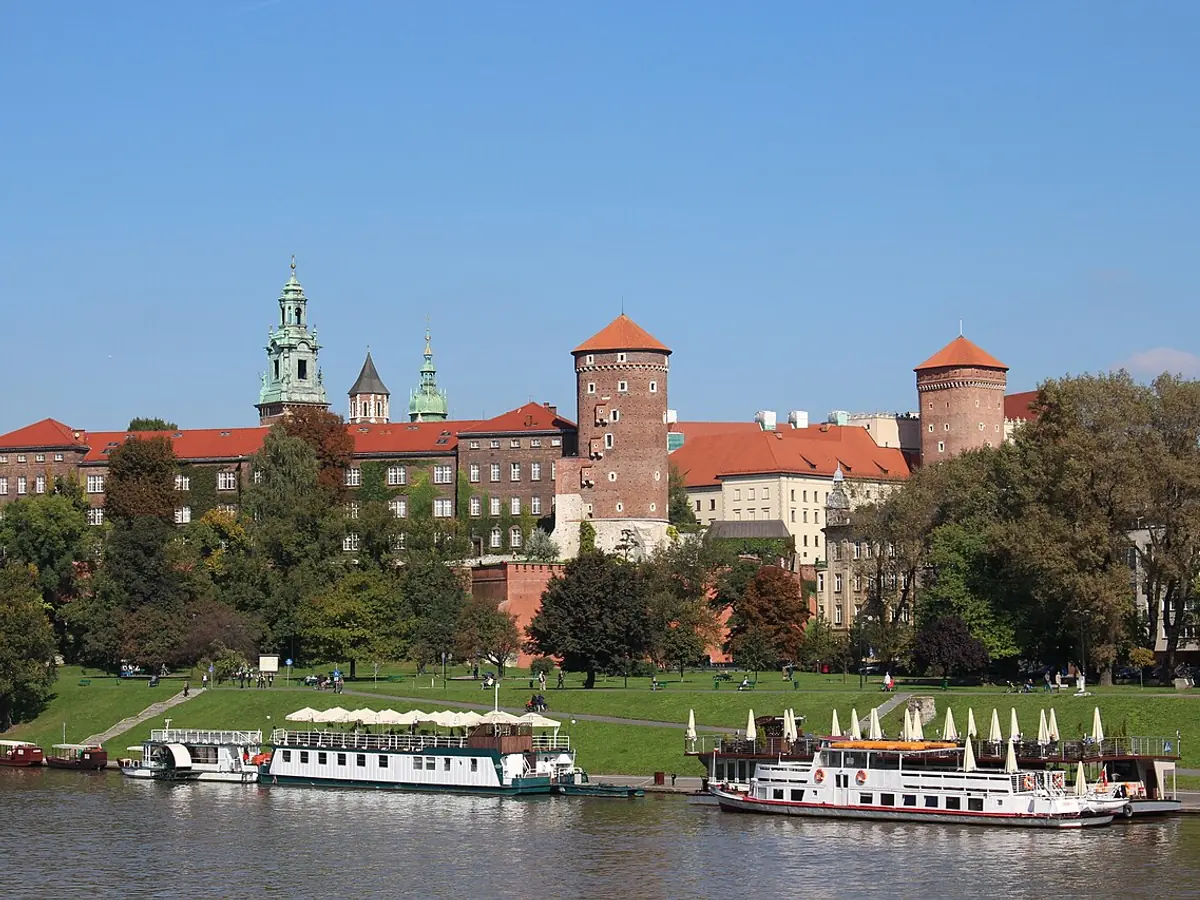
Zamek Wawel, Kraków
Updated
Listen to how the story begins
0:00 / 0:45
Wawel Castle is the fortified royal residence rising on Wawel Hill above the Vistula in Kraków. Notice the arcaded courtyard at its heart: this is the setting created as a medieval stronghold became a Renaissance palace. Some of the hill’s surviving stone structures date back to about the year 970, while the present castle was built in the fourteenth century and repeatedly enlarged afterward.
For much of the Middle Ages and Renaissance, Polish kings lived here, and Wawel also housed the national government and the Diet, Poland’s assembly. That role ended when the capital moved to Warsaw in 1596. The rebuilding was often dramatic.
Franciszek Florentczyk began reshaping the western wing in 1504; after his death, Bartolommeo Berrecci and Benedykt of Sandomierz carried the work forward. A fire in 1595 damaged parts of the northern and eastern wings, and Giovanni Trevano directed their repair through 1603, introducing early Roman Baroque interiors. The castle is now an art museum founded in 1930.
Its collections range from Italian Renaissance painting and royal tapestries to arms, furniture, and Europe’s largest collection of Ottoman tents. Beside it, Wawel Cathedral is where Polish monarchs were crowned and buried.