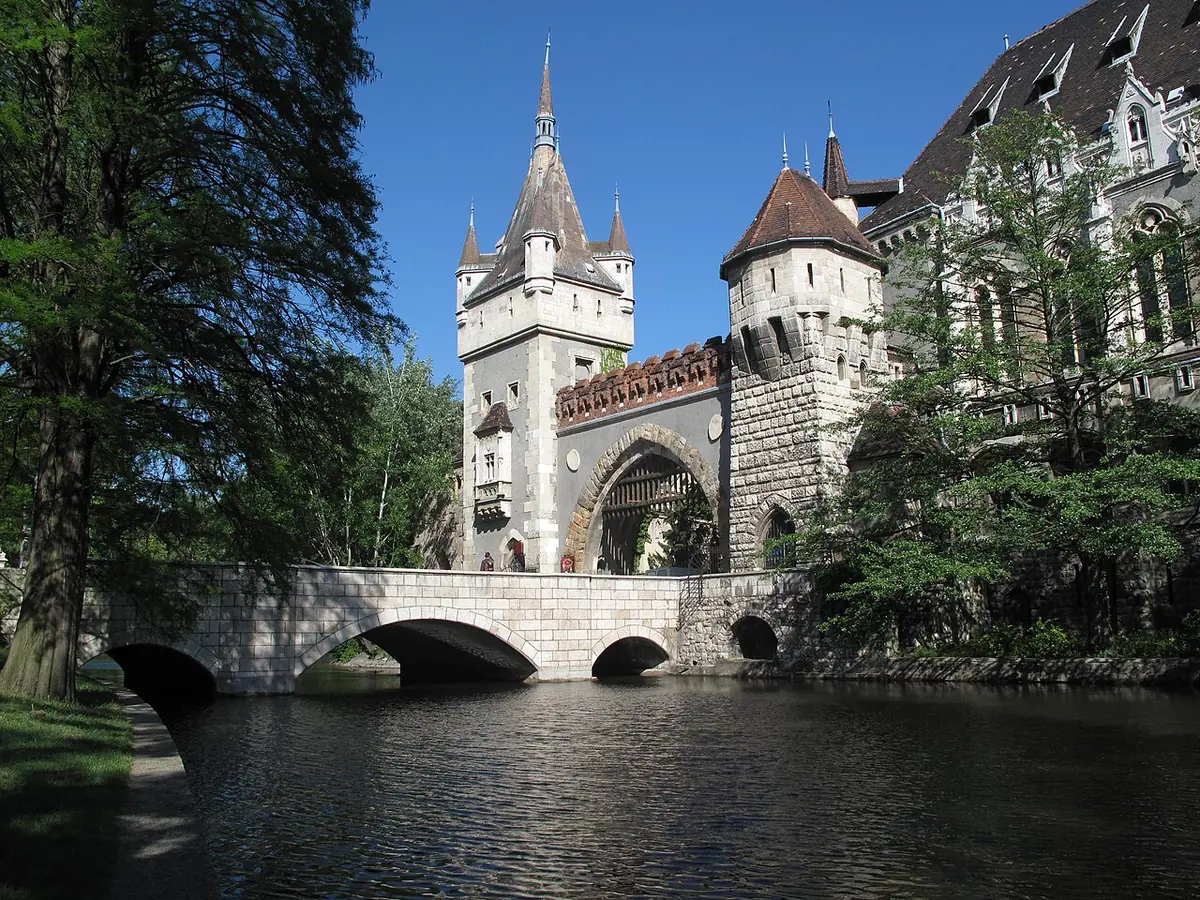
Városliget, Budapest
Városliget is a public park near the centre of Budapest, known for bringing historic buildings, museums, gardens and leisure attractions into one broad urban landscape. The park includes the Széchenyi thermal bath, the Budapest Zoo and Botanical Garden, the Capital Circus, the Museum of Ethnography and the Hungarian House of Music. Its area is about 1.2 km², with roughly 6,500 trees in the park itself.
The site began as open pasture and marshland, carrying the memorable old name Ökör-dűlő, meaning Oxmeadow. Planned tree planting and paths began in 1751, and the public park took shape during the early decades of the 19th century. That makes Városliget one of the world’s earliest public parks.
A particularly ambitious transformation followed when engineers created a lake fed by channels and built paths through the grounds; the excavated earth formed islands, including the ground where Vajdahunyad Castle and the Széchenyi thermal bath now stand. In 1896, the park hosted Hungary’s millennium celebrations, at a time when major new routes and the Millennium Underground had been built. Today, Városliget works as both a place for recreation and a cultural district, with attractions ranging from historic bathing facilities to newly built music and ethnographic institutions.