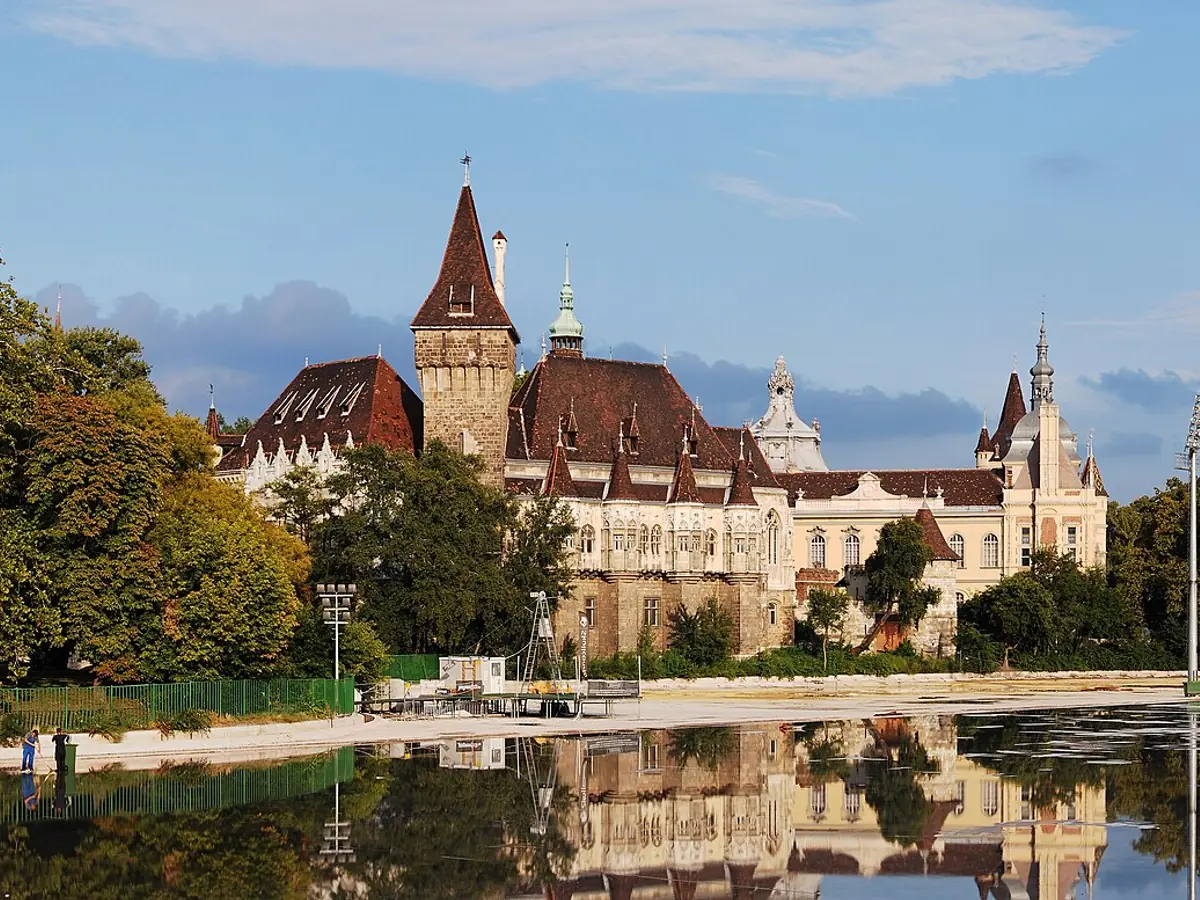
Vajdahunyad vára, Budapest
Vajdahunyad Castle is the stone-and-brick castle surrounding you in Budapest City Park, a deliberately assembled journey through Hungarian architectural history. Ignác Alpár designed it for the 1896 Millennial Exhibition, created to mark 1,000 years since the Hungarian Conquest of the Carpathian Basin in 895. The exhibition version used cardboard and wood, but its popularity brought a permanent rebuilding from stone and brick between 1904 and 1908.
Alpár’s design combines Romanesque, Gothic, Renaissance, and Baroque forms, borrowing details from landmark buildings across the former Kingdom of Hungary, with Hunyad Castle in Hunedoara as its strongest model. The castle now houses the Museum of Hungarian Agriculture, described as Europe’s biggest agricultural museum. In the courtyard, look for Miklós Ligeti’s seated figure of Anonymus, the chronicler at King Béla III’s court from 1172 to 1196.
The outer wall also carries a bust of Béla Lugosi, the Hungarian-American actor remembered for playing Count Dracula in the original 1931 film. The building’s unusual story is that it exists twice: a temporary exhibition creation became a permanent castle because visitors refused to let it disappear.