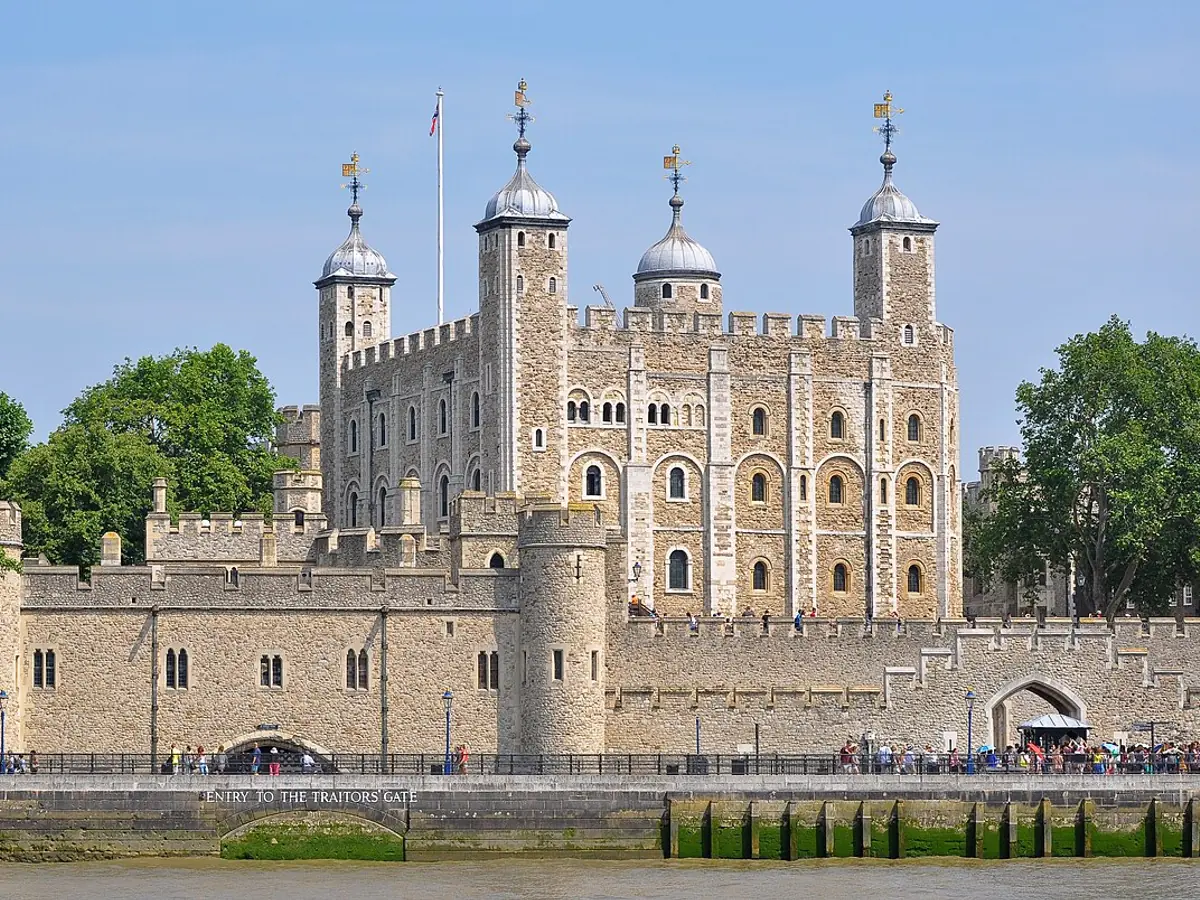
Tower of London, London
The Tower of London is a historic castle and citadel beside the River Thames, enclosed by defensive walls and a moat. Its story begins toward the end of 1066, when it formed part of the Norman Conquest. The castle’s architectural character is Norman, and its central keep, the White Tower, was built for William the Conqueror in 1078.
Look at the White Tower’s massive form: it measures 36 by 32 metres at its base and reaches 27 m at the southern battlements. The wider fortress grew through later building campaigns, creating several enclosed wards around this powerful core. Across its history, the castle has served as a royal residence, armoury, treasury, menagerie, Royal Mint, public record office, and home of the Crown Jewels.
It also became a prison, giving English the expression “sent to the Tower”; Elizabeth I, Sir Walter Raleigh, and Elizabeth Throckmorton were among those held here. Despite its grim reputation, only seven people were executed within the castle before the world wars. The strongest impression remains the keep itself: a vast medieval statement of royal power, designed to dominate the surrounding landscape and river traffic.