Temple d'August, Barcelona
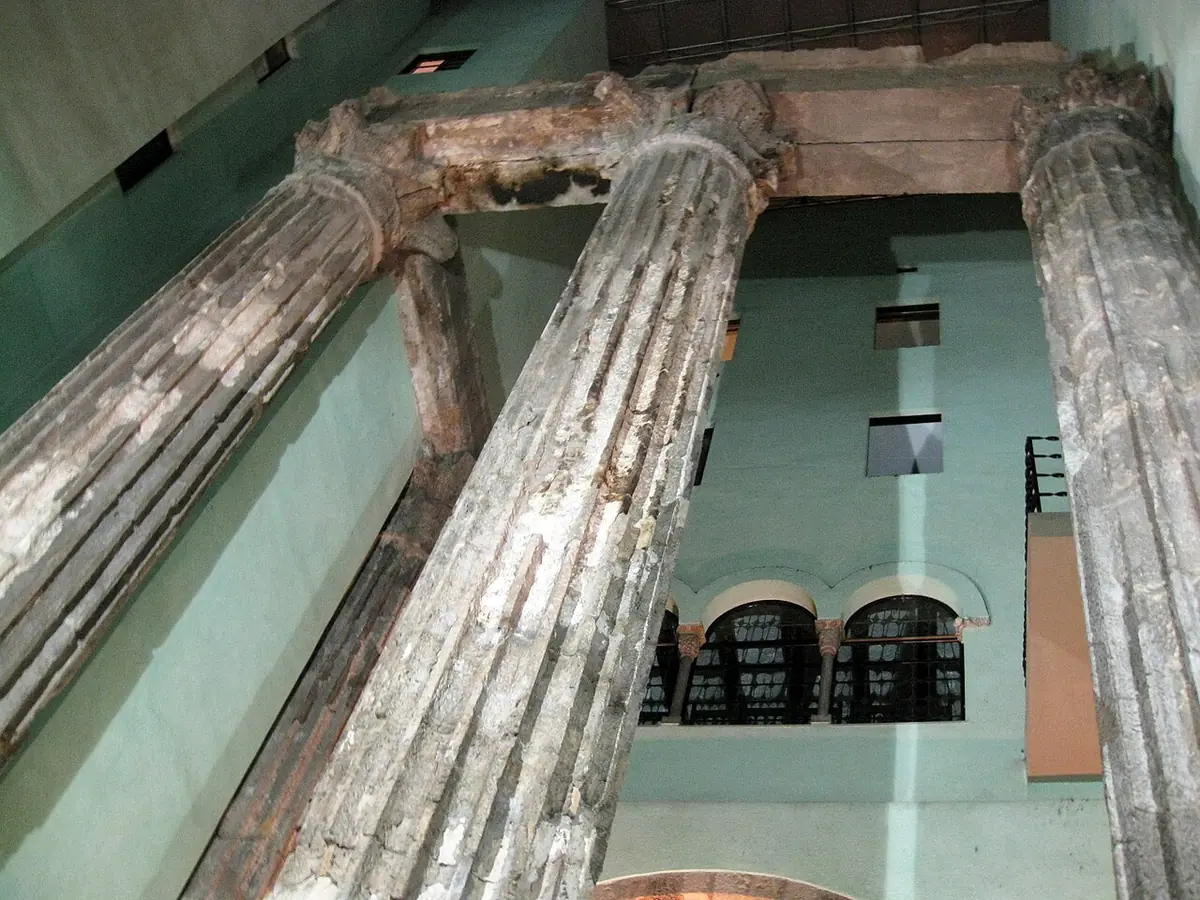
The Temple of Augustus is not a complete Roman building today, but a surviving fragment preserved within Barcelona’s Gothic Quarter. Four fluted stone columns, with Corinthian capitals and part of their entablature, remain inside the headquarters of the Centre Excursionista de Catalunya. The building around them is Gothic and was restored in 1906 by architect Lluís Domènech i Montaner.
A millstone set into the street marks the summit of Tàber Hill, directly before the entrance. These columns belonged to a temple in the Roman colony of Barcino, constructed during the Imperial period. Its dedication to Augustus is traditional, but it has not been proven.
The surviving pieces had a surprisingly unsettled history: after excavations, a column assembled from fragments was displayed outdoors in Plaça del Rei before being reunited with the columns kept here in 1956. Earlier interpretations connected the remains with legendary figures or even an aqueduct; those ideas belong to the building’s documented history, not to what the archaeology establishes today. The site now forms part of the Barcelona City History Museum, MUHBA, and its national cultural importance was recognized in 1931. Look at the rough shafts and carved capitals: they are the tangible remains of a much larger sanctuary that once occupied this ancient hilltop.
.jpg)