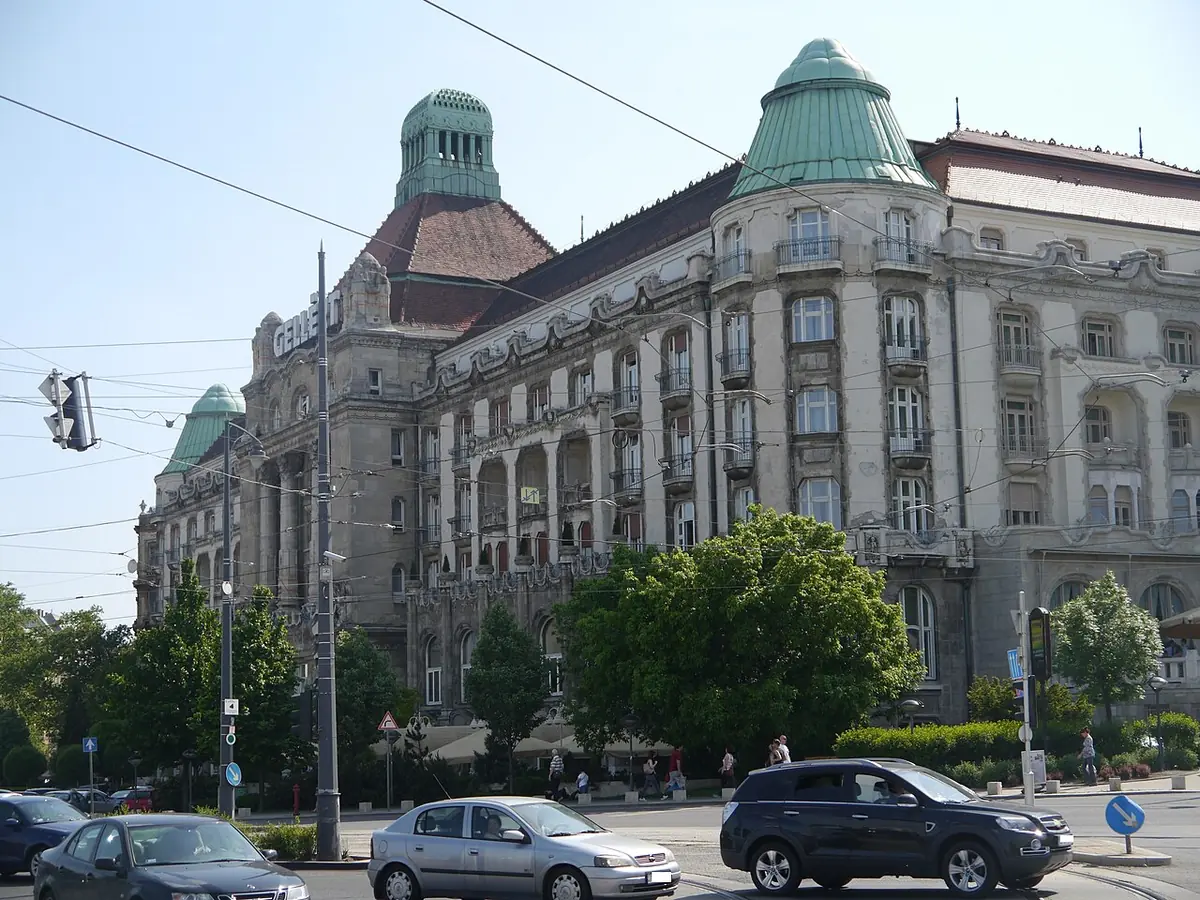
Szent Gellért Gyógyfürdő és Uszoda, Budapest
The Gellért Baths are a historic bath complex joined to Hotel Gellért, and their richly decorated halls belong to Hungarian Secession architecture. The complex was built from 1912 to 1918, then repaired after wartime damage; it is now closed for refurbishment from October 2025 until a planned reopening in 2028. Look at the mosaic-covered entrance hall and the long swimming hall beneath its coloured glass roof.
That hall measures 74 metres by 11 metres and contains ten decorative windows made in the workshop of glass artist Miksa Róth, showing scenes from János Arany’s poem The Death of King Buda. At the far end stands Adolf Huszár’s Venus. The bath’s history reaches much further back: healing waters were known here in the 13th century, a hospital once occupied the site, and baths stood here during Ottoman rule.
The mineral water rises from springs beneath Gellért Hill and contains calcium, magnesium, bicarbonate, alkalis, chloride, sulfate and fluoride. Its thermal pools are kept between 35 and 40 °C. The building’s survival is part of its story: the baths remained open during World War II, although the women’s thermal section suffered bombing and was later restored.