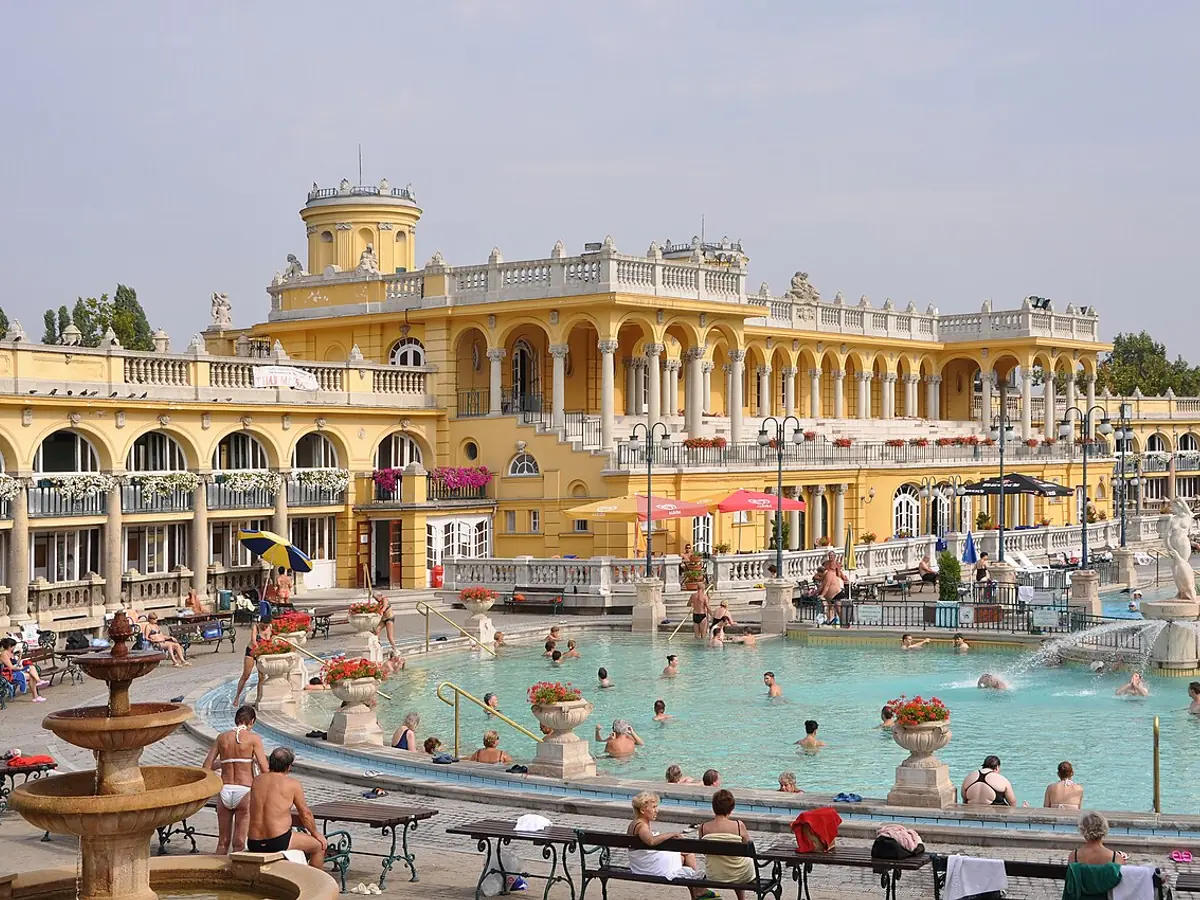
Széchenyi Gyógyfürdő és Uszoda, Budapest
Széchenyi Bath is a vast medicinal-bath complex, and its scale is part of its identity: it is described as Europe’s largest medicinal bath. The building was designed by Győző Czigler, with classicist, Neo-Renaissance and Neo-Baroque elements shaping its architectural character. Look at the façade and the surrounding ornament: the bathing theme appears in sculptural forms and decorative details, giving the complex the feel of a ceremonial palace devoted to water.
Its story begins with the ground beneath the park. A deep well drilled from 1865 to 1875 became the original source of the spa’s thermal water. The bath opened on 16 June 1913 under the name Széchenyi, honouring István Széchenyi.
Today, two thermal springs supply the water, at 74 °C and 77 °C. The complex contains three outdoor pools and 15 indoor pools, alongside medical treatments and a day hospital. The warmer spring reaches the bath from a depth of 1,256 metres and delivers 6,000,000 litres of hot water each day. As you take in the building’s elaborate surfaces, remember that the drama here is not only decorative: the palace-like setting is built around water drawn from deep below the park.