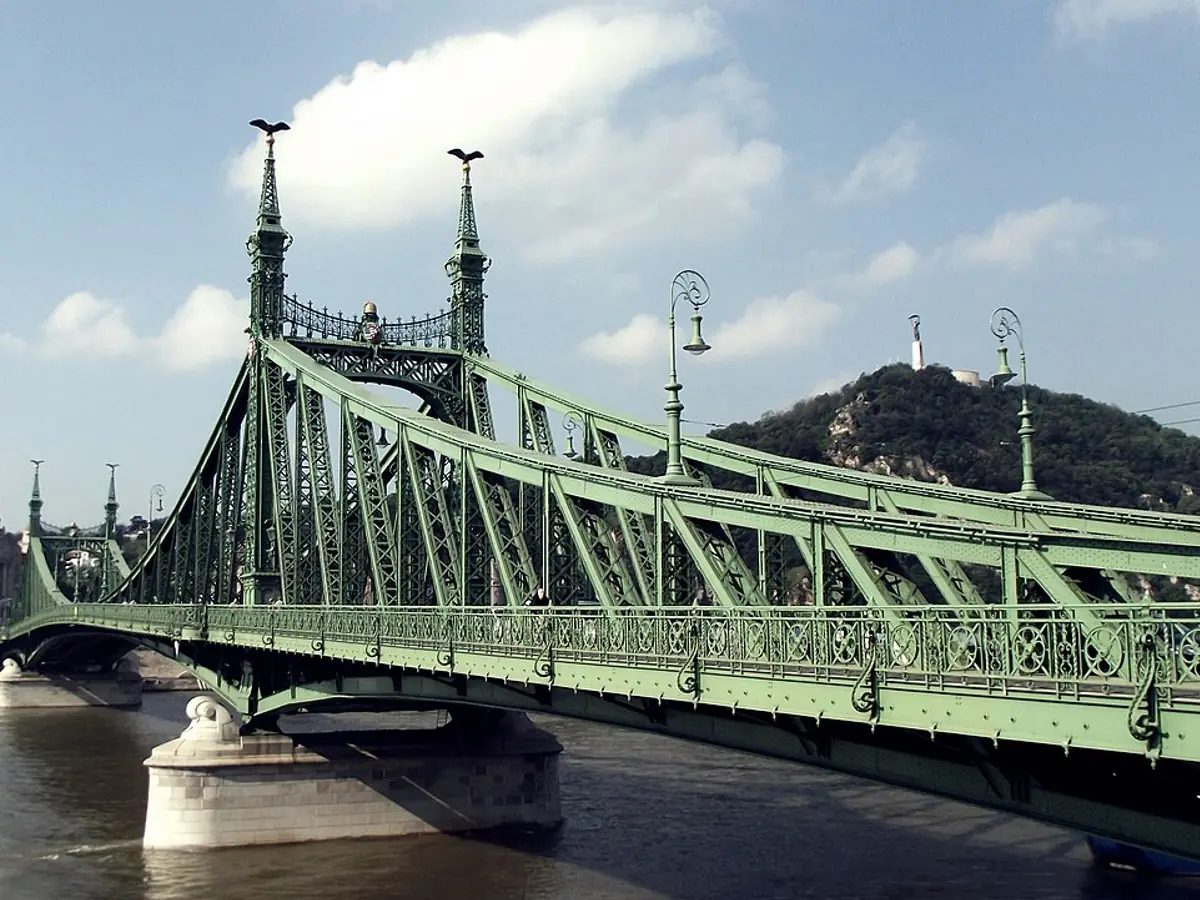
Szabadság híd, Budapest
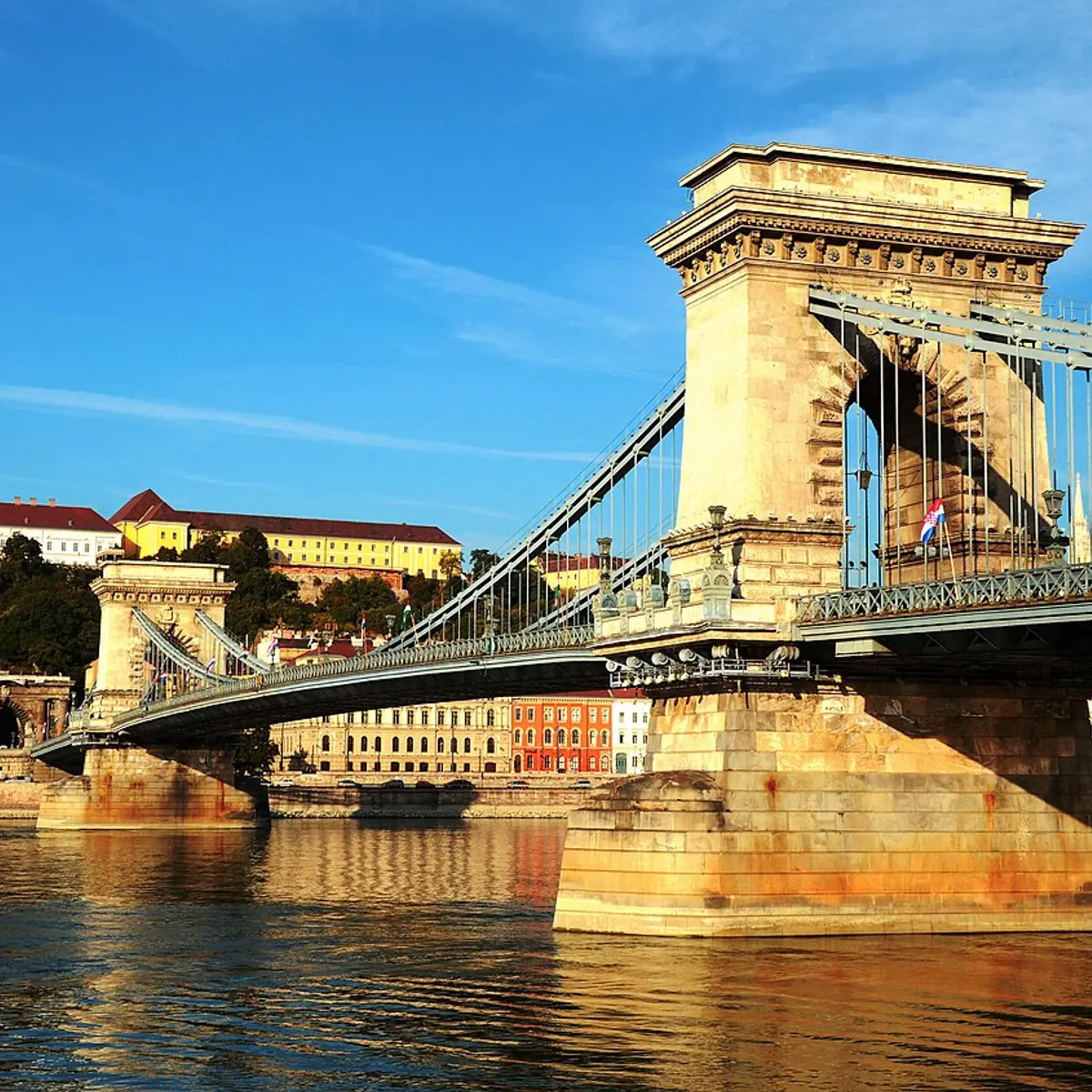
Szabadság híd is a Danube road bridge, linking Buda and Pest with a notably slender iron structure. Its name means freedom, while its original name honoured Franz Joseph. Feketeházy János designed it, and the architectural treatment belongs to the secessionist tradition.
Look at the gateways and the latticework: the structure combines metal with carved granite, while heraldic devices and mythological sculpture enrich the entrance towers. At the highest points of the towers, you can see the outstretched turuls, the legendary birds of Hungarian mythology. The bridge was built between 1894 and 1896 and opened in 1896 as Budapest’s third road crossing.
It was created for the millennium exhibition and is the shortest bridge in the city centre. Its span measures 333.6 metres, with a width of 20.1 metres. The bridge suffered major destruction on 16 January 1945, when its central section was lost.
Reconstruction followed, and the restored crossing opened on 20 August 1946. Trams and buses still use it, carrying traffic between Gellért tér and Fővám tér. The graceful appearance is not merely decorative: the slender form is held stable by massive cast-iron counterweights hidden in the shore spans.