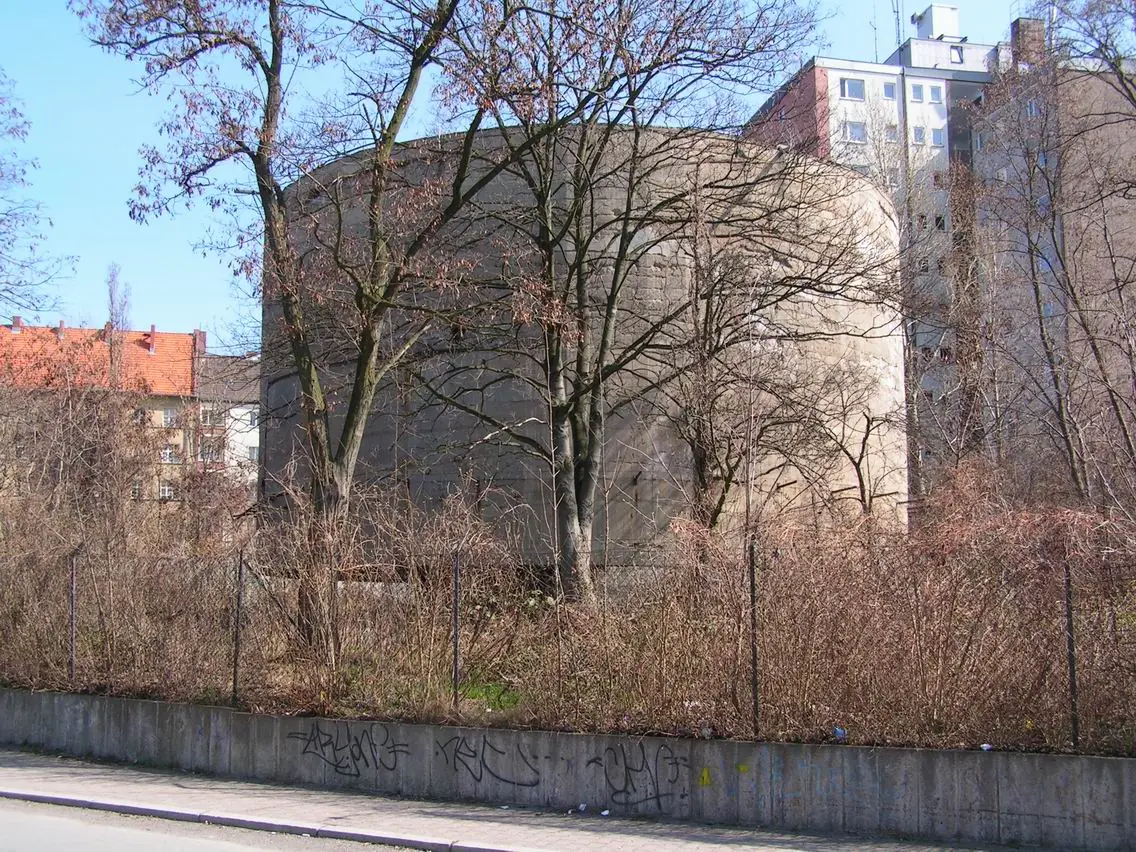
Schwerbelastungskörper, Berlin
Schwerbelastungskörper is a massive concrete cylinder built as a load test for an enormous triumphal arch that the Nazi regime planned for Berlin. Its architect was Albert Speer, and construction took place from 1941 to 1942. The structure was intended to press on the local ground with the kind of force that the proposed arch would have imposed.
The lower foundation reaches 18.2 metres into the earth, while the visible cylinder rises 14 metres and spans 21 metres. Its mass is 12,650 tonnes, concentrated on a base of 100 square metres. Look at the unadorned curved shell: this is engineering made physically imposing, not a monument designed for celebration.
Measuring instruments occupied chambers inside it, tracking how far the structure settled. The readings continued until 1 June 1944, and their later evaluation showed that the cylinder had sunk 19.3 centimetres in two and a half years. The planned arch therefore required prior ground stabilisation.
The interior also served as an emergency air-raid shelter during the war; the surviving steel shutters and doors still reveal that use. Nearby, the information pavilion and viewing tower frame this remnant of Speer's unrealised Germania scheme, while the cylinder itself remains the starkest evidence of how grandiose plans were tested against Berlin's soil.