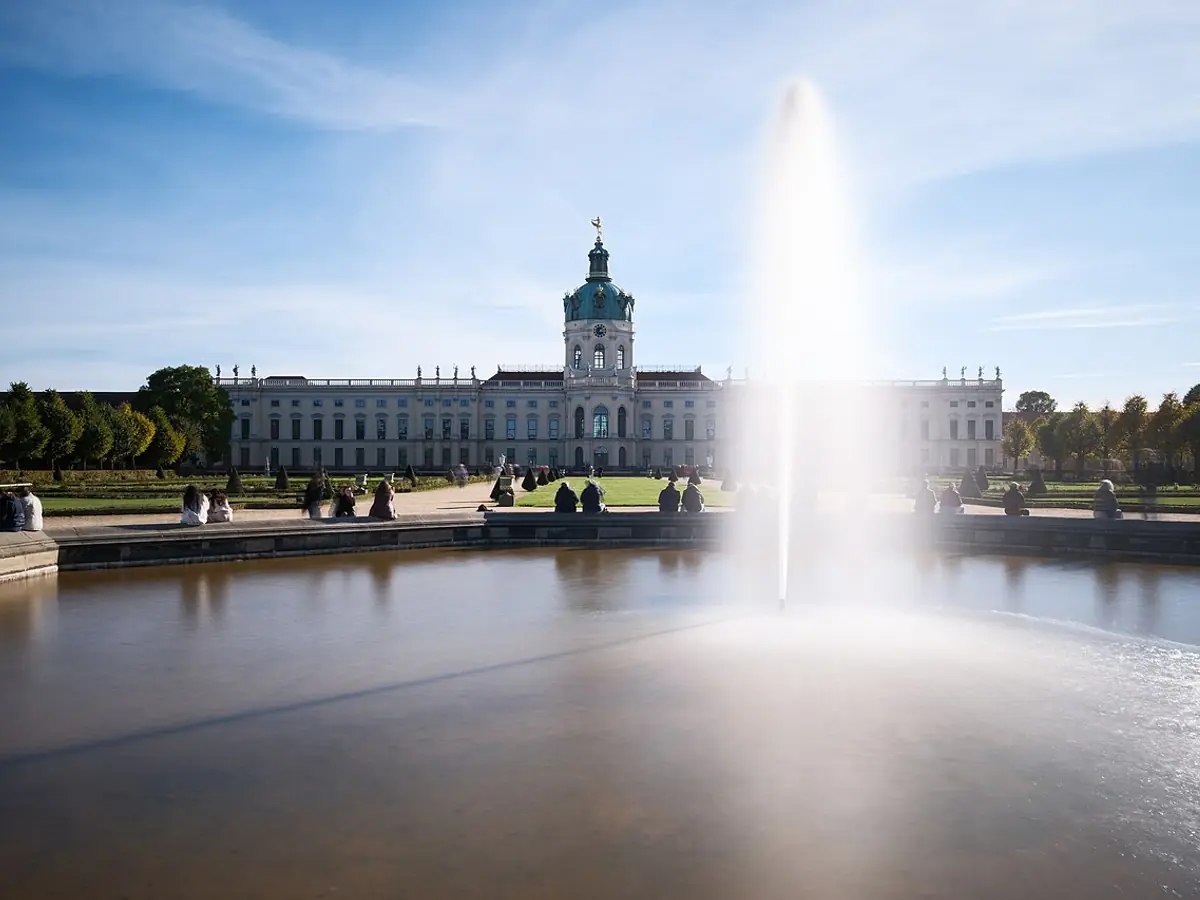
Schloss Charlottenburg, Berlin
Schloss Charlottenburg is the palace before you, once used as a summer residence by Prussia’s kings and now a museum. Its story began as a residence commissioned for Sophie Charlotte of Hanover, and the palace later took her name. The complex grew in stages from 1695 to 1791, with Johann Friedrich Eosander, Georg Wenzeslaus von Knobelsdorff, and Carl Gotthard Langhans shaping its architecture.
You can read that growth in the building’s changing character: Baroque, Rococo, and Neoclassical work belong to different phases of the ensemble. Beyond the palace stretches a garden whose design also changed. Siméon Godeau laid it out as a French formal garden from 1697, while Peter Joseph Lenné reshaped it as an English landscape garden from 1819.
The grounds include a belvedere, a mausoleum, and the New Pavilion. Langhans also created the palace theatre, built from 1788 to 1791; it played an important role in German theatre history and later offered free performances to members of the public. The palace suffered severe damage during the Second World War, then was rebuilt with close fidelity, with Margarete Kühn playing a decisive part. What you see is a royal residence turned museum, carrying several centuries of design in a single ensemble.