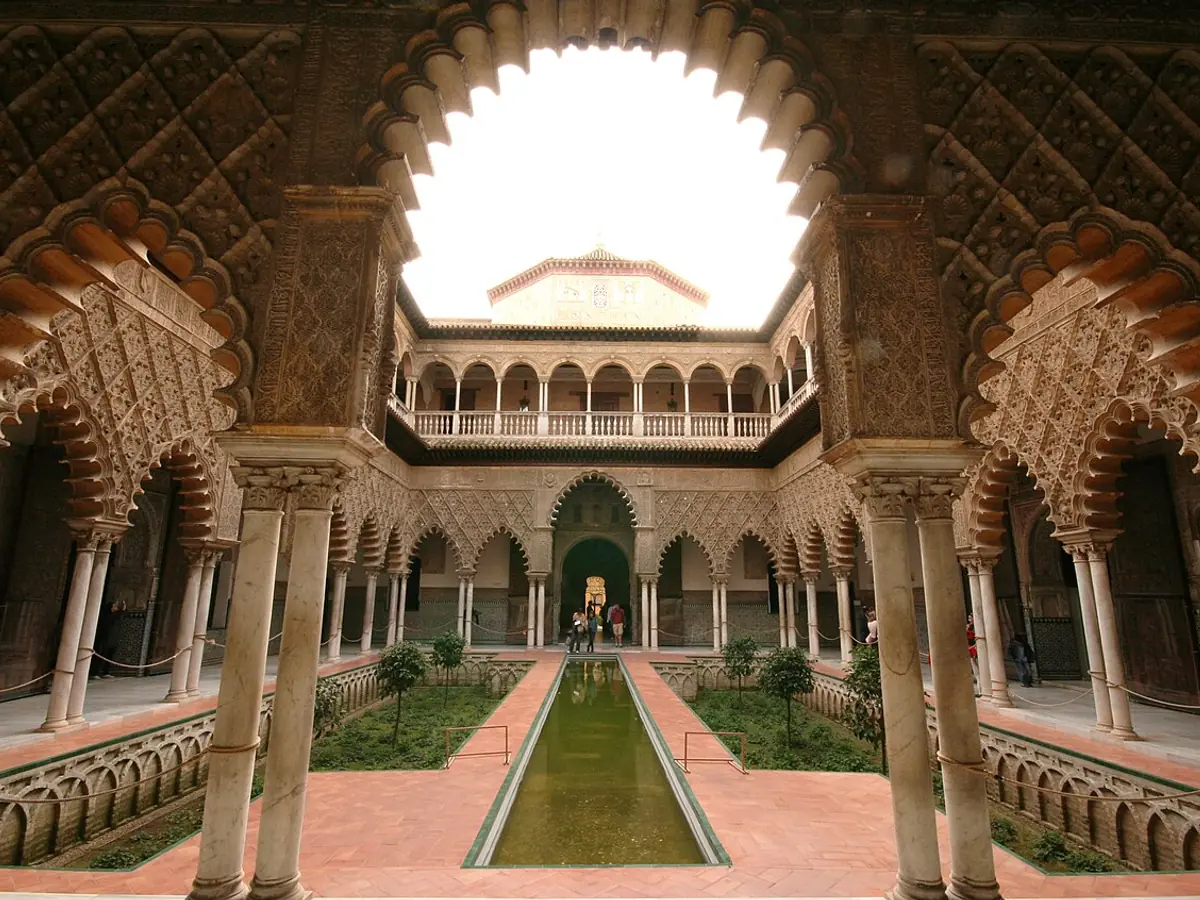
Real Alcázar de Sevilla, Seville
Real Alcázar de Sevilla is a royal palace whose walls enclose layers of Seville’s Islamic and Christian past. The complex began as an Islamic citadel under the Umayyads, then grew through work by the Abbadids and Almohads before Castilian rulers reshaped it with new palaces and gardens. Its best-known historic building is Pedro I’s richly decorated Mudéjar palace, created during the 1360s.
Look at the monumental façade and the ornate court beyond it; together they lead toward the Hall of the Ambassadors, a domed ceremonial room. The palace also preserves Gothic spaces and later Renaissance additions, so its architecture shifts as you move through the complex. Tilework is among its defining details.
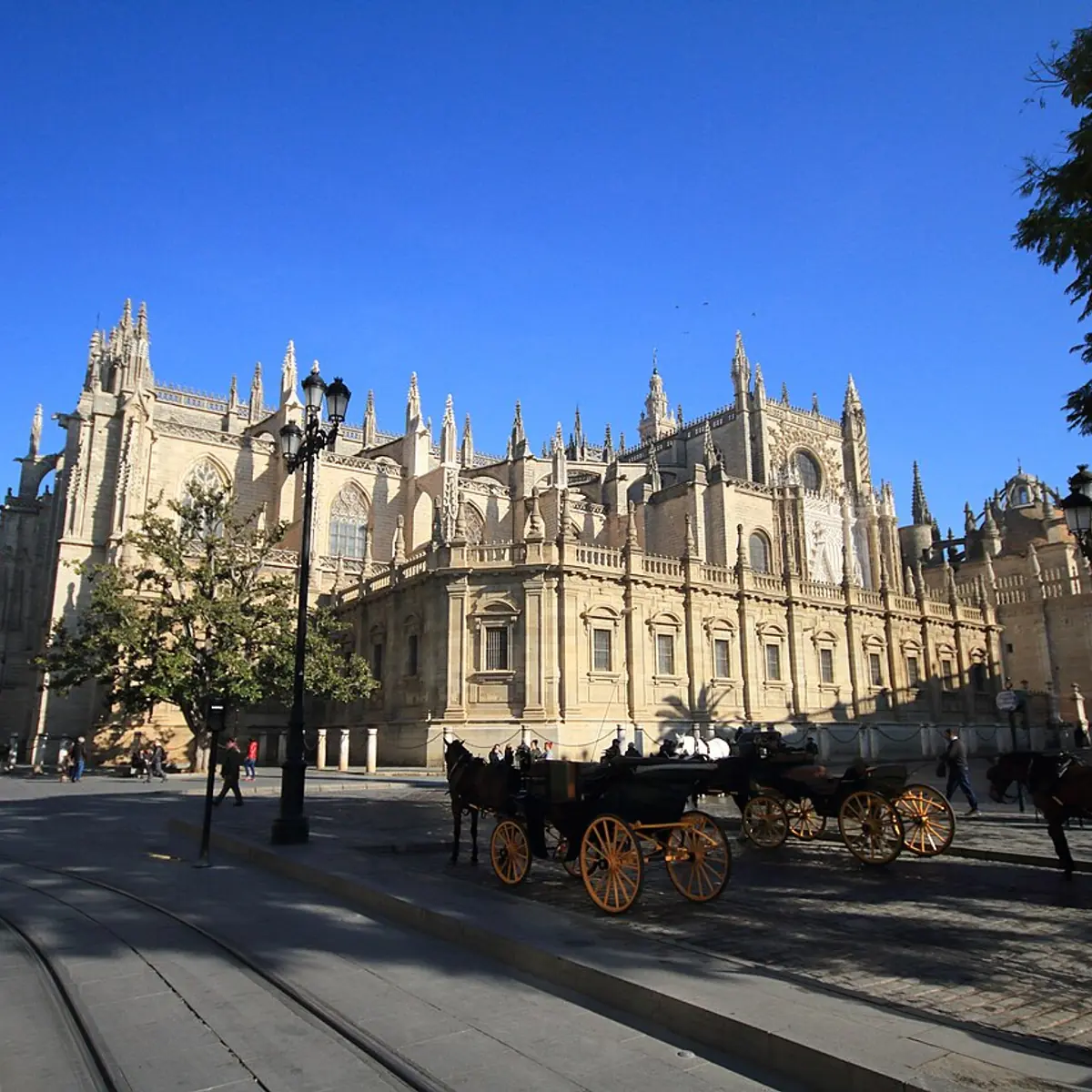
Some tiles have raised ridges formed in a mould, giving their surfaces a shaped, almost sculpted effect; others carry painted designs over a pale glazed ground. The upper storeys remain an official residence of Spain’s royal family when they visit Seville. This is also a World Heritage site, recognised alongside the Cathedral and the General Archive of the Indies. The result is not a single-period palace, but a living royal residence where Islamic, Mudéjar, Gothic, and Renaissance work remains visibly joined together.