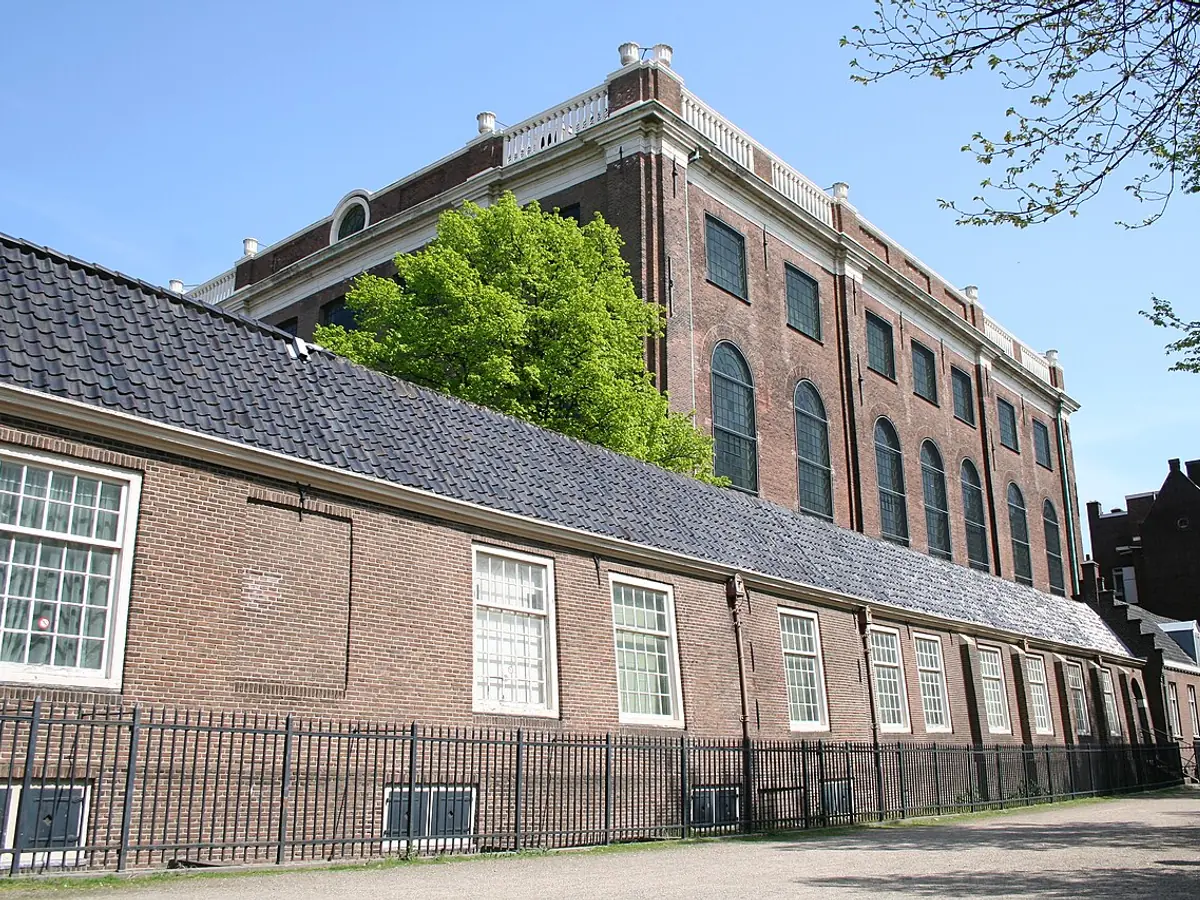
Portugese Synagoge, Amsterdam
The Portugese Synagoge is an active Orthodox Jewish house of worship, completed in 1675 and also known as the Esnoga or Snoge. Its name, Esnoga, comes from the traditional Judaeo-Spanish word used by Sephardi Jews for a synagogue. The Amsterdam Sephardic community built this imposing place during the Dutch Golden Age, when it was among Europe’s largest and wealthiest Jewish communities; the building’s scale expressed both the importance of worship and the community’s prosperity.
Construction began under architect Elias Bouman, and the completed synagogue opened with a major ceremony on August 2, 1675. Its design follows plans for King Solomon’s Temple. The surrounding low service buildings enclose a forecourt, while the synagogue itself forms a solid, monumental block.
Look at the façade’s projecting central sections, tall pilasters, and repeated arched windows; these are the concrete features associated here with baroque architecture. The interior has survived with its historic furnishings, including the copper candle crowns and holders, an exceptional survival from the building period. During the Nazi persecution, volunteers prevented the synagogue from becoming a deportation centre. Ritual objects belonging to deported Jews were hidden in the sanctuary ceiling and attic floor, turning this house of worship into a place of protection as well as prayer.