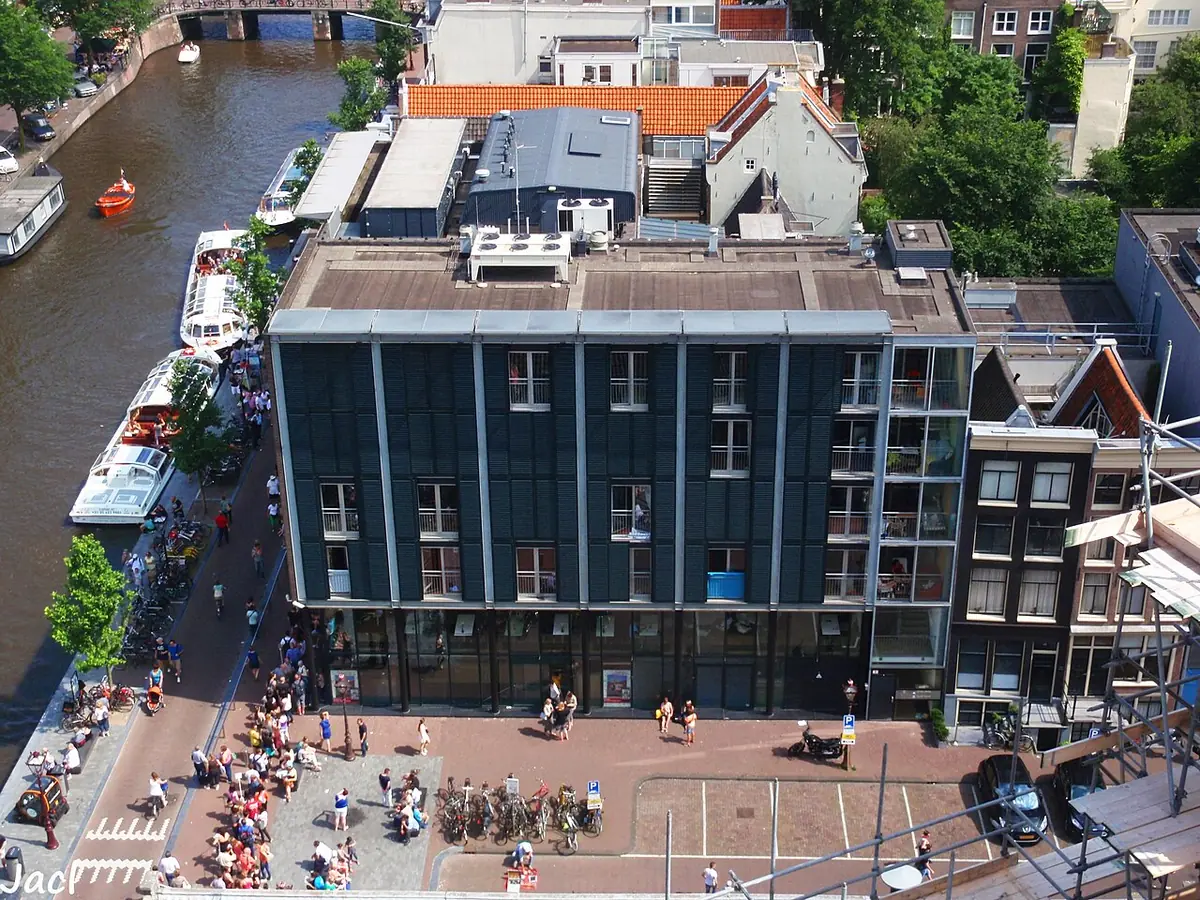
Anne Frank Huis, Amsterdam
The Anne Frank House is a museum built around the concealed rooms where Anne Frank and her family hid during the Nazi occupation. You are looking at a writer’s house and biographical museum on Prinsengracht, close to the Westerkerk, in central Amsterdam. The hiding place occupies the rear of the canal house at Prinsengracht 263, while the museum extends through three adjoining buildings on the street front.
Anne stayed here with her family and four other people for two years and one month. The cramped rooms were reached through a concealed entrance, and the people in hiding had to remain quiet during working hours because a warehouse operated below them. Anne wrote her wartime diary here.
After the occupants were arrested and deported, Miep Gies and Bep Voskuijl recovered papers and books from the rooms; Otto Frank later brought Anne’s writing together for publication in 1947. The building itself dates to 1635, with its canal façade altered in 1740. It later became a warehouse and then housed businesses, including Otto Frank’s spice company.
The museum opened on 3 May 1960, preserving the Secret Annex while adding exhibitions about Anne’s life and about persecution and discrimination. Its survival was not guaranteed: plans to demolish the block were stopped by public protest, and the Anne Frank Foundation was created in 1957 to protect the property.
_(15316045410).jpg)