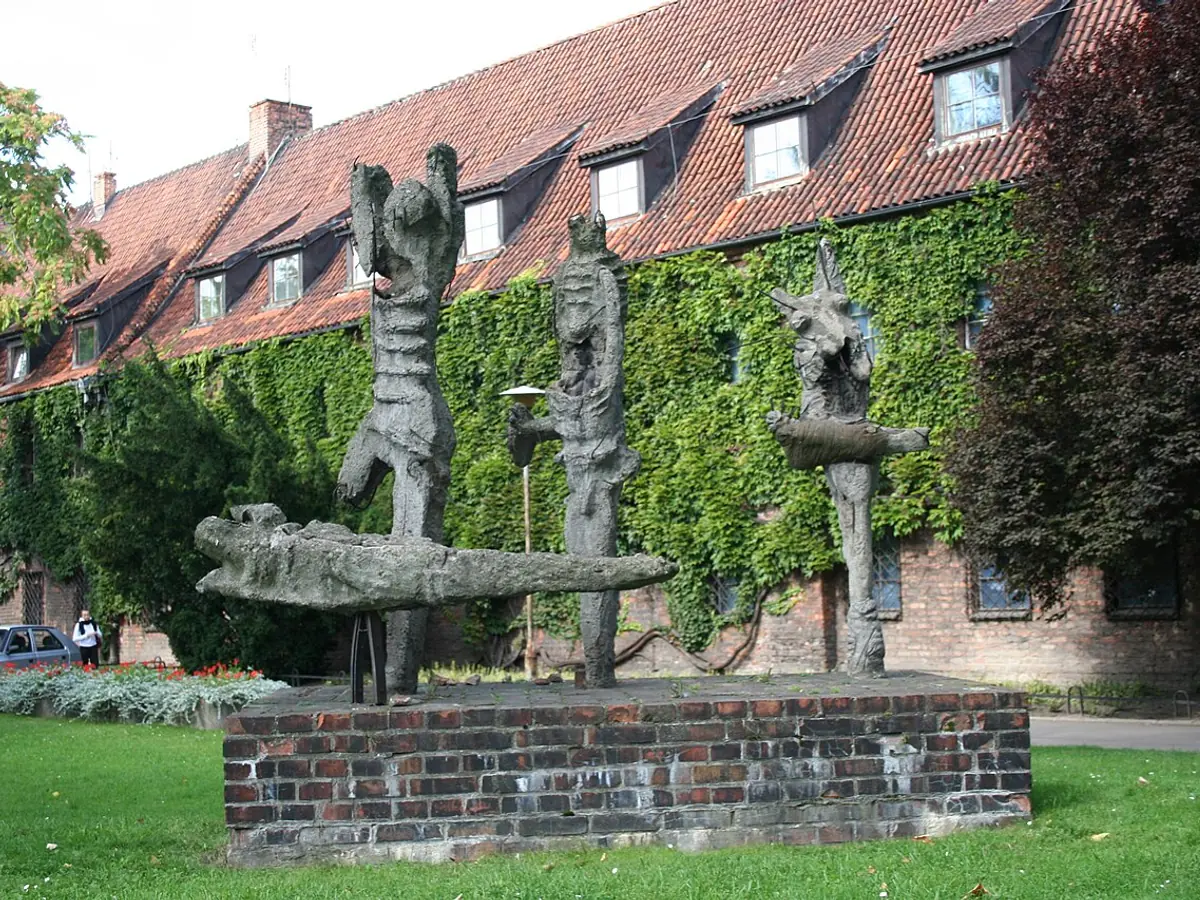
Pomnik Rozstrzelanych Zakładników z Nowego Sącza, Wrocław
Updated
Listen to how the story begins
0:00 / 0:45
These four concrete forms beside Aleja Juliusza Słowackiego are the Monument to the Executed Hostages from Nowy Sącz. Although they now function as a piece of outdoor decoration, they were made as a half-size version of a memorial by Władysław Hasior. He created it between nineteen sixty-six and nineteen sixty-eight, and it won him the Minister of Culture’s prize.
Each upright, human-like shape represents the suffering of hostages murdered during the Nazi occupation. Notice the channels worked into the figures: they were designed to hold fuel. The finished memorial was meant to burn with a continuing flame, making remembrance visible.
Yet the full-scale monument was never built in Nowy Sącz. Local authorities first rejected the design because its figures were understood as an allusion to Christ’s crucifixion. When the proposal returned in nineteen seventy-five, its fire was read instead as a concealed reference to Józef Kuraś, known as “Ogień,” a partisan opposed to the communist system.
Wrocław’s Museum of Architecture bought this model in nineteen seventy-one and placed it here. In the nineteen seventies, museum staff lit its flames on All Saints’ Day; the ritual eventually ended, with the last lighting in two thousand three.