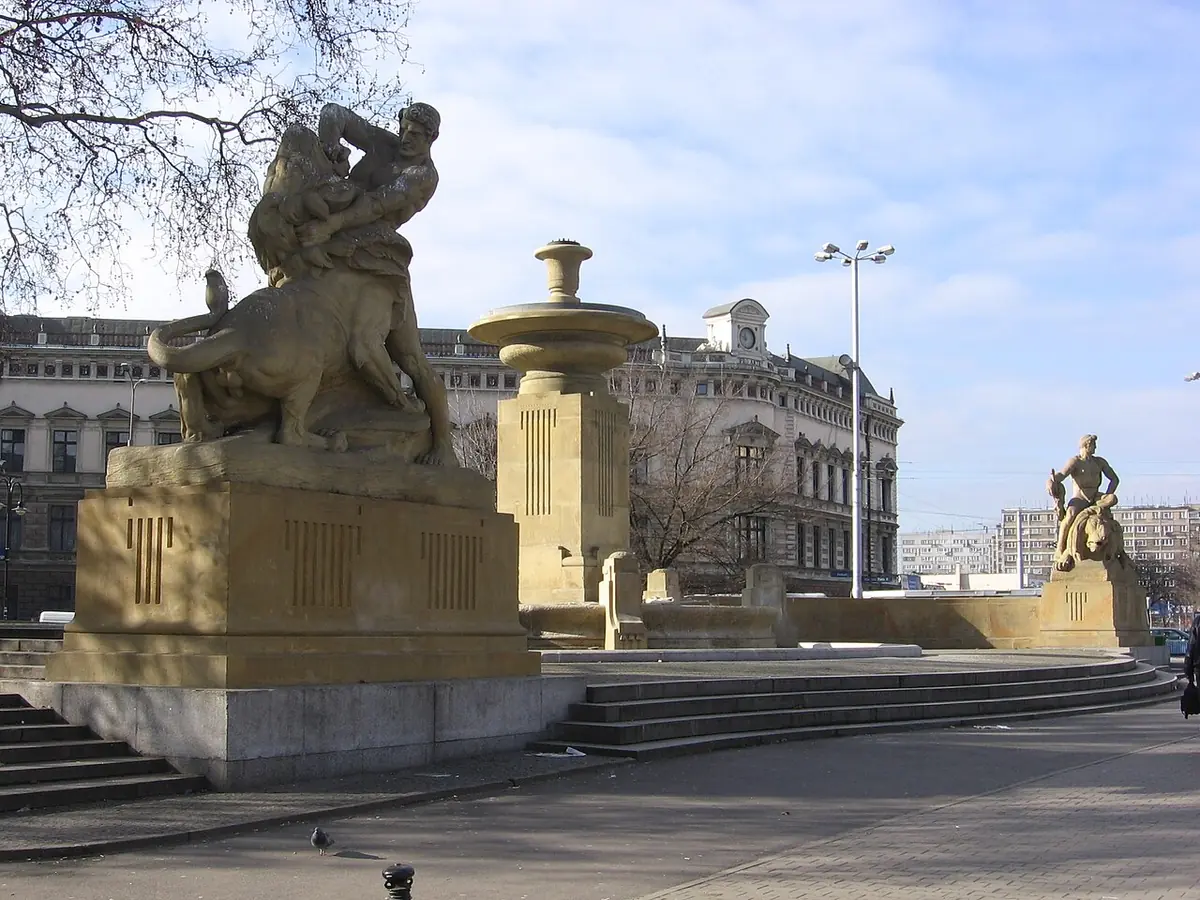
Przebudowa pl. Jana Pawła II, Wrocław
Plac Jana Pawła II is the large square around you, and it serves as a key public-transport interchange in Szczepin. The name has honoured Pope John Paul the Second since two thousand and six, following his death the previous year. Its story begins when Napoleon’s forces took Wrocław in eighteen oh seven and the city’s defences were subsequently removed, freeing this ground for a new urban space.
The Nicholas Gate once stood here beside the moat, until demolition in eighteen twenty. An iron Royal Bridge followed, then a rectangular square took shape; later, the buried stretch of moat allowed the space to expand with planted areas. A Bismarck monument was installed along the northern edge, while Ernst Seger’s sculptural fountain faced it from the southern side.
The monument disappeared after the city’s capitulation in nineteen forty-five, but the fountain survives. War damage erased nearly all the buildings around the square. The exception is the elaborate former rental house at the Podwale corner, built in eighteen forty-one and later remade as a Neo-Renaissance palace, meaning it adopts the visual language of the Renaissance.
It now houses Wrocław’s Academy of Music. In recent years, the Infinity office building has joined the square’s changing skyline.
Good for
History, Architecture, Culture


More places in Wrocław
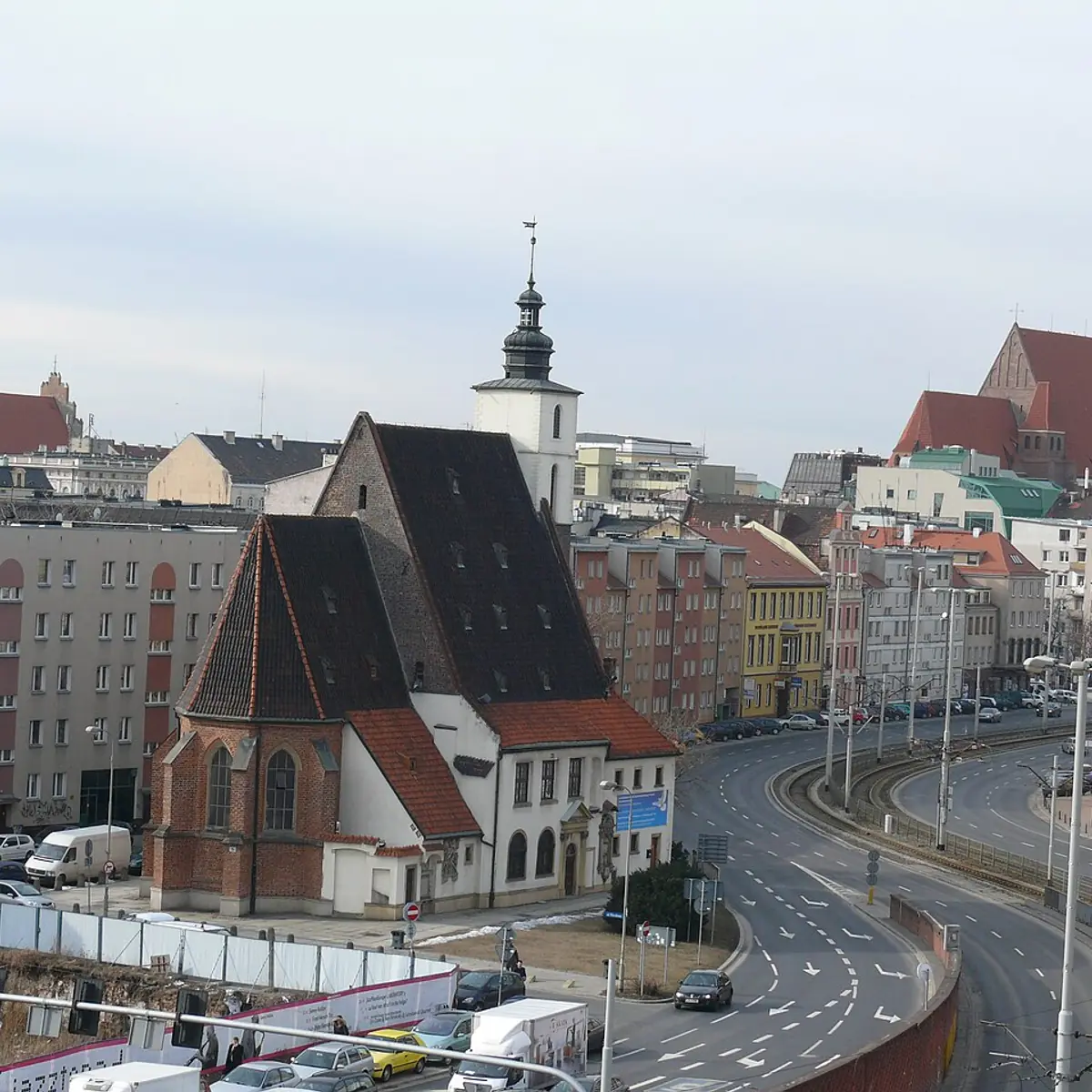
iBasik07 Barbara Wrzesińska (CC BY-SA 3.0 pl) Kościół Świętego Krzysztofa
history
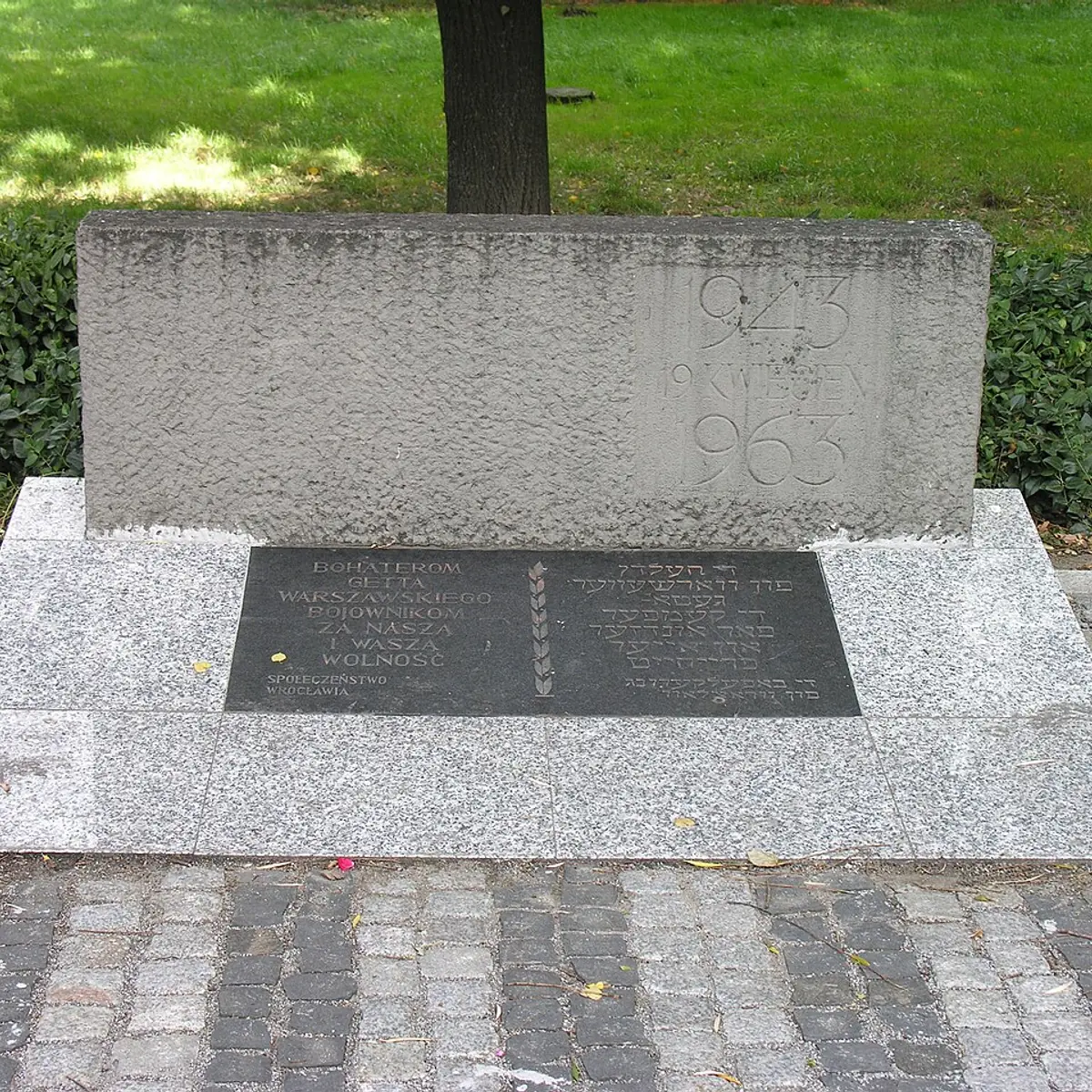
iBonio (CC BY-SA 3.0) Pomnik Bohaterów Getta Warszawskiego
history
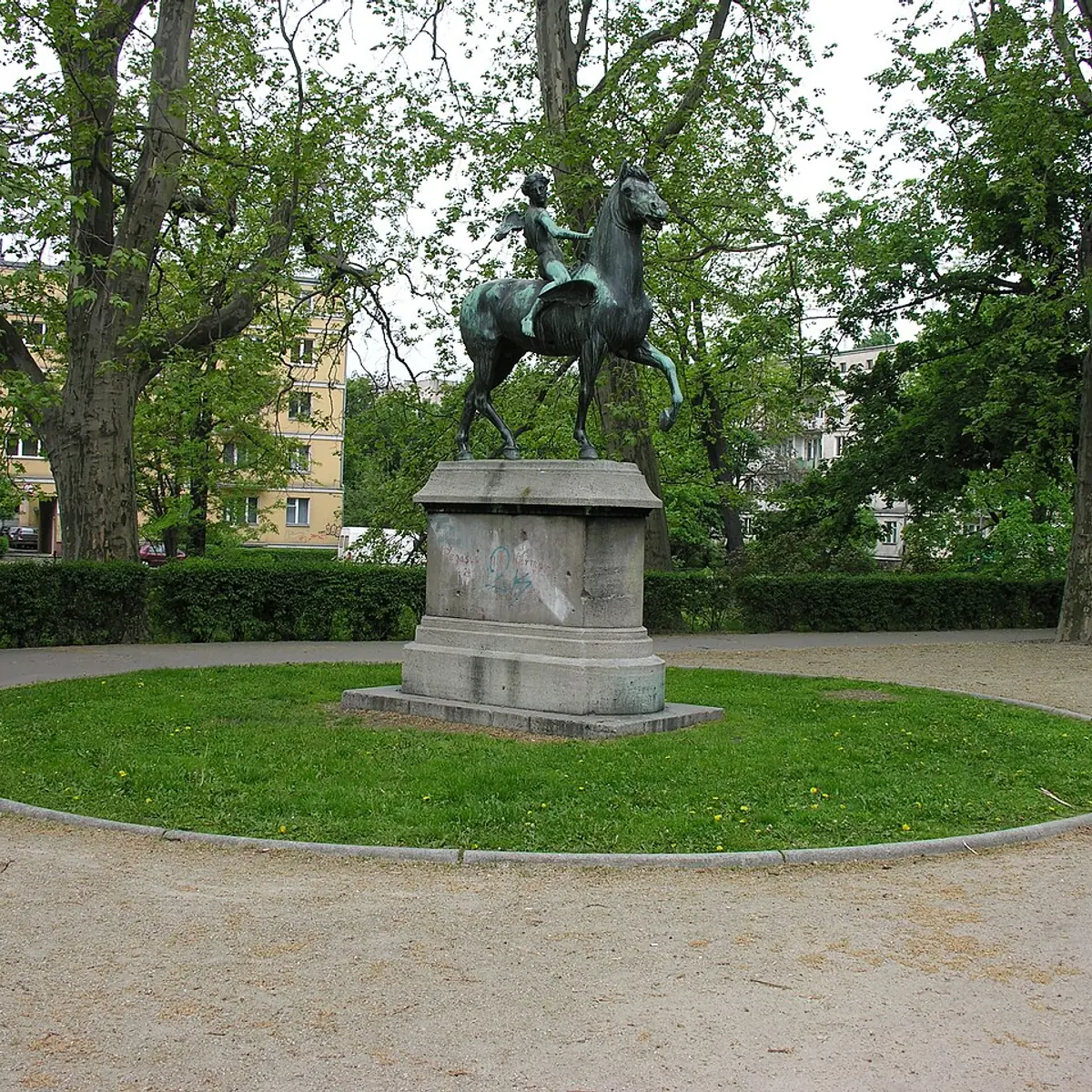
iTheodor von Gosen (CC BY-SA 3.0) Amor na Pegazie
history
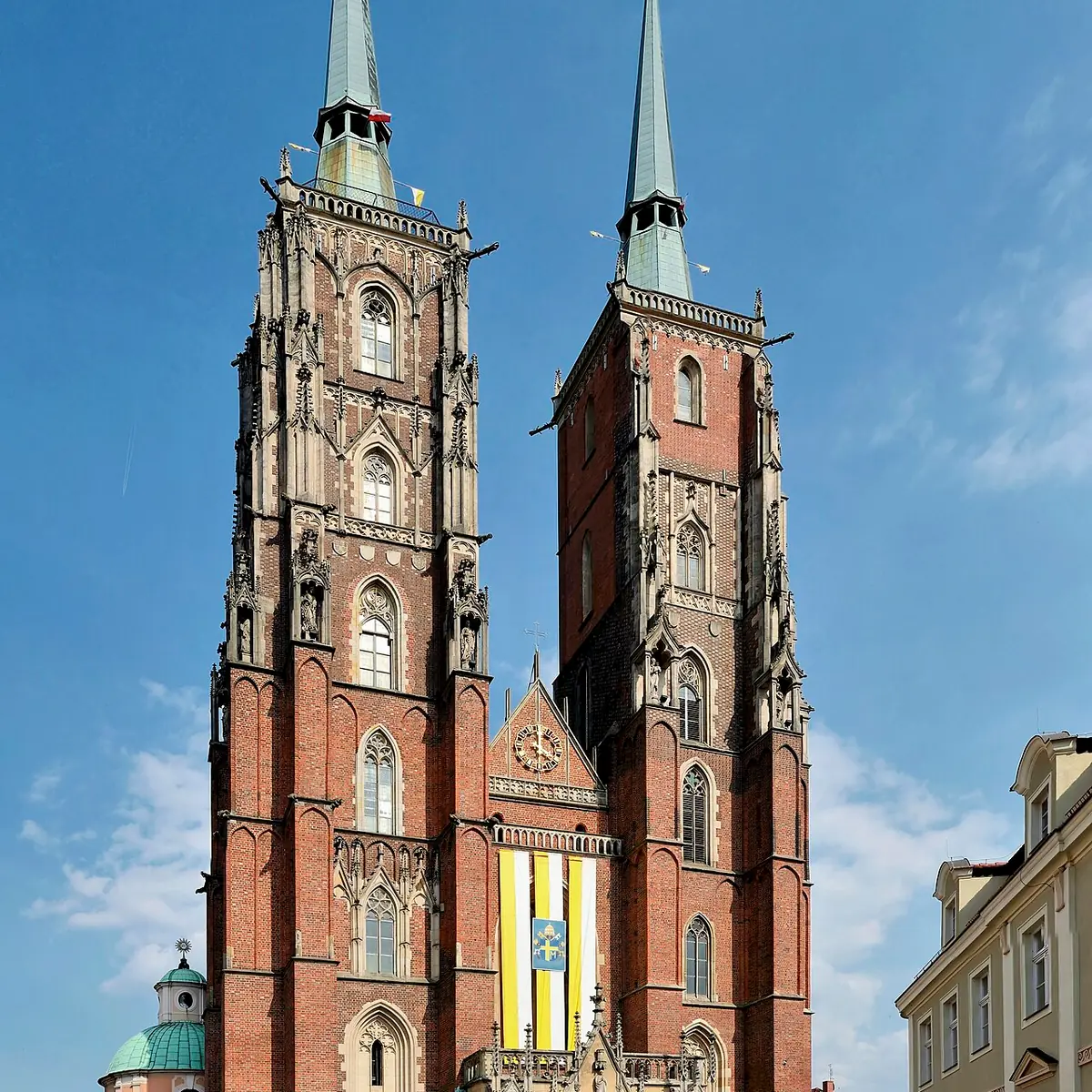
iWrocław - Archikatedra św. Jana Chrzciciela1.jpg derivative work: Hic et nuncTaxiarchos228 derivative work: Hic et nunc (FAL) Archikatedra Świętego Jana Chrzciciela
history