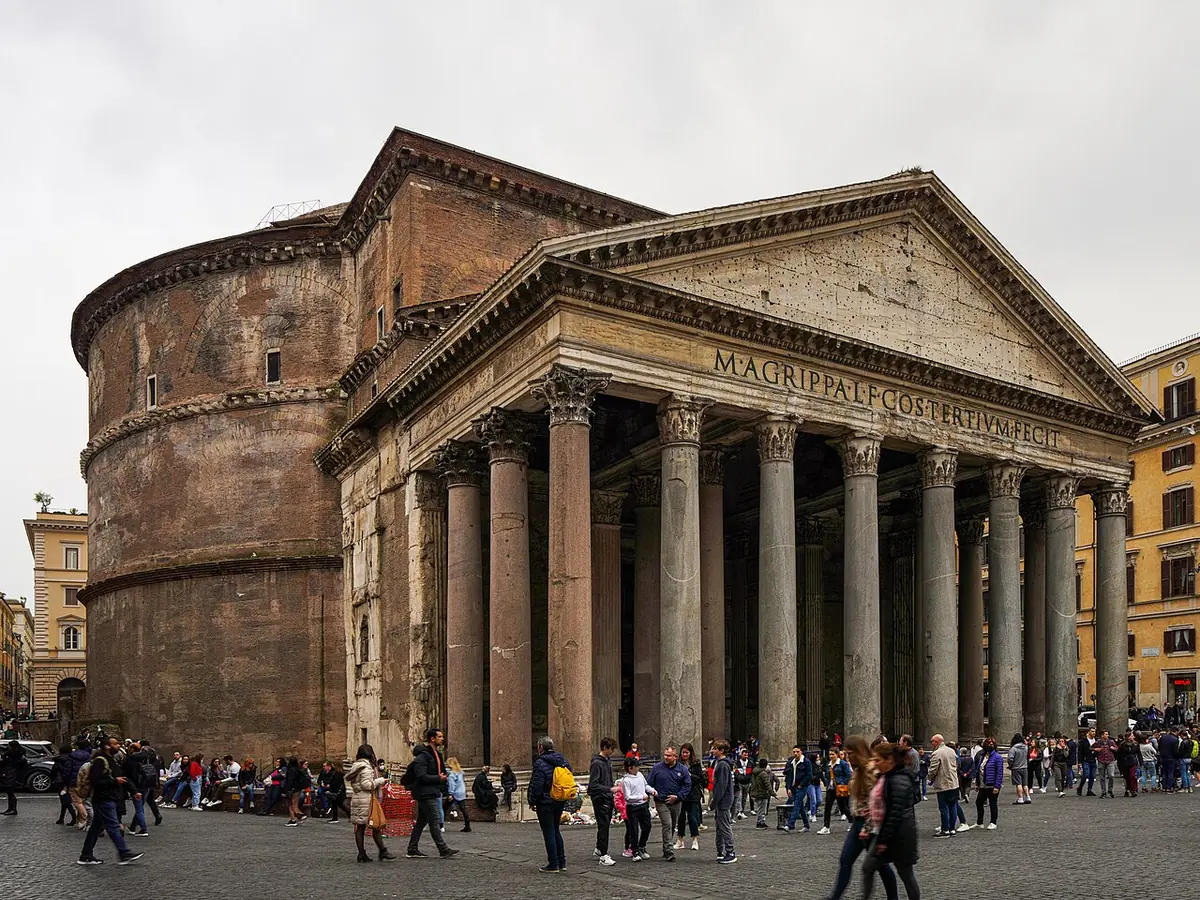
Pantheon, Rome
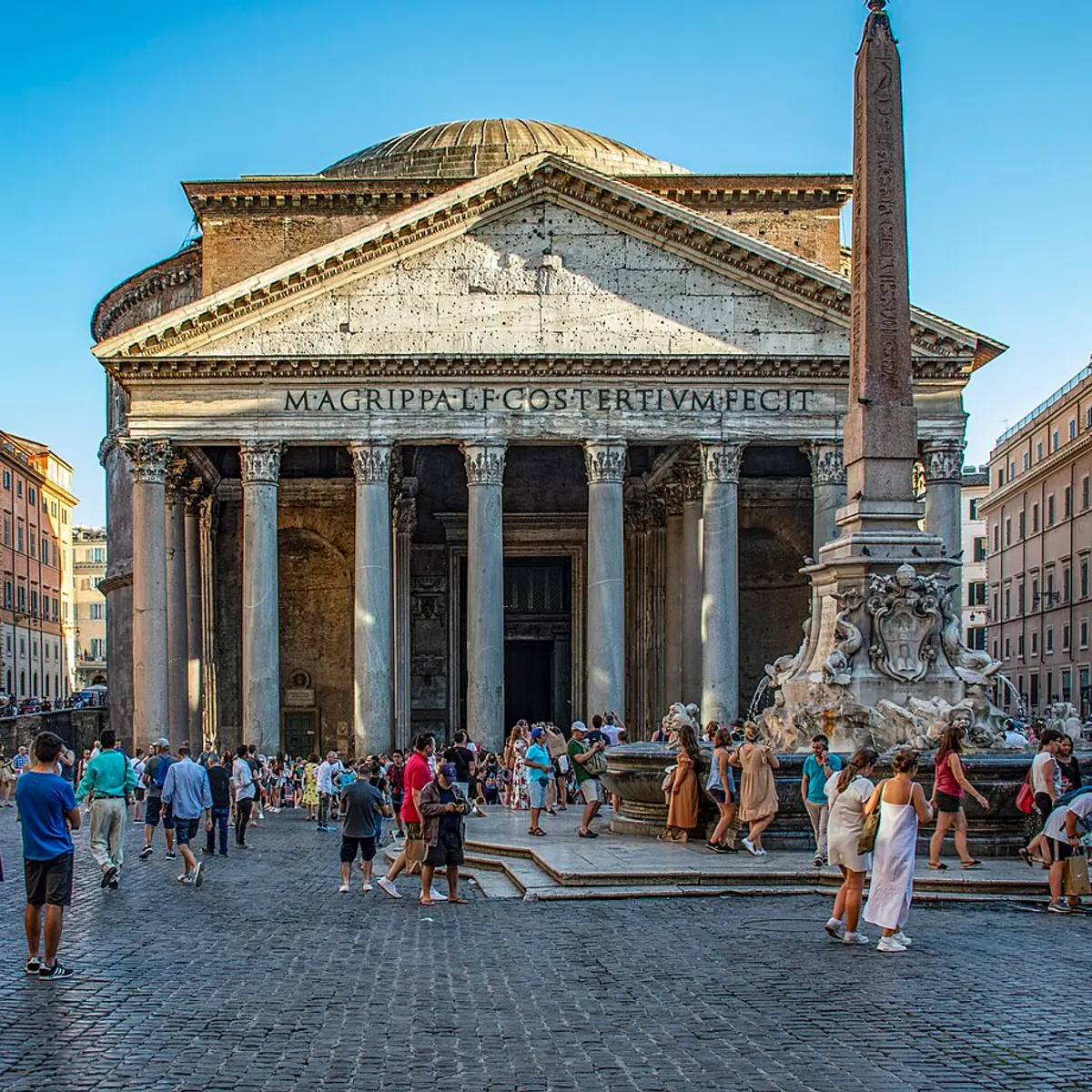
The Pantheon before you began as an ancient Roman temple and has served as the Catholic Basilica of Saint Mary and the Martyrs since the early seventh century. At the entrance, the portico gathers massive granite Corinthian columns beneath its pediment: eight stand across the front, with further rows set behind them. Beyond this formal threshold, the building opens into a circular rotunda beneath a coffered concrete dome.
Its oculus, the round opening at the crown, admits daylight directly into the interior. Agrippa commissioned an earlier sanctuary here during Augustus’s reign, but fires destroyed it; Hadrian completed the structure you see around the year one hundred and twenty-six. He deliberately retained Agrippa’s earlier dedicatory inscription, binding the rebuilt monument to its predecessor.
The dome remains the largest unreinforced-concrete dome on Earth, despite nearly two millennia of weather and use. Its interior diameter and the height from floor to oculus each measure forty-three metres, making the room feel like a perfect sphere imagined in stone and concrete. When the building became a church in the year six hundred and nine, that continuing religious role helped preserve it far more completely than many Roman monuments. The Pantheon is not a relic sealed away from the city; it is an ancient structure still living through its purpose.
Good for
History, Architecture, Culture, Famous landmarks


_-_Right_side_and_front.jpg)
More places in Rome
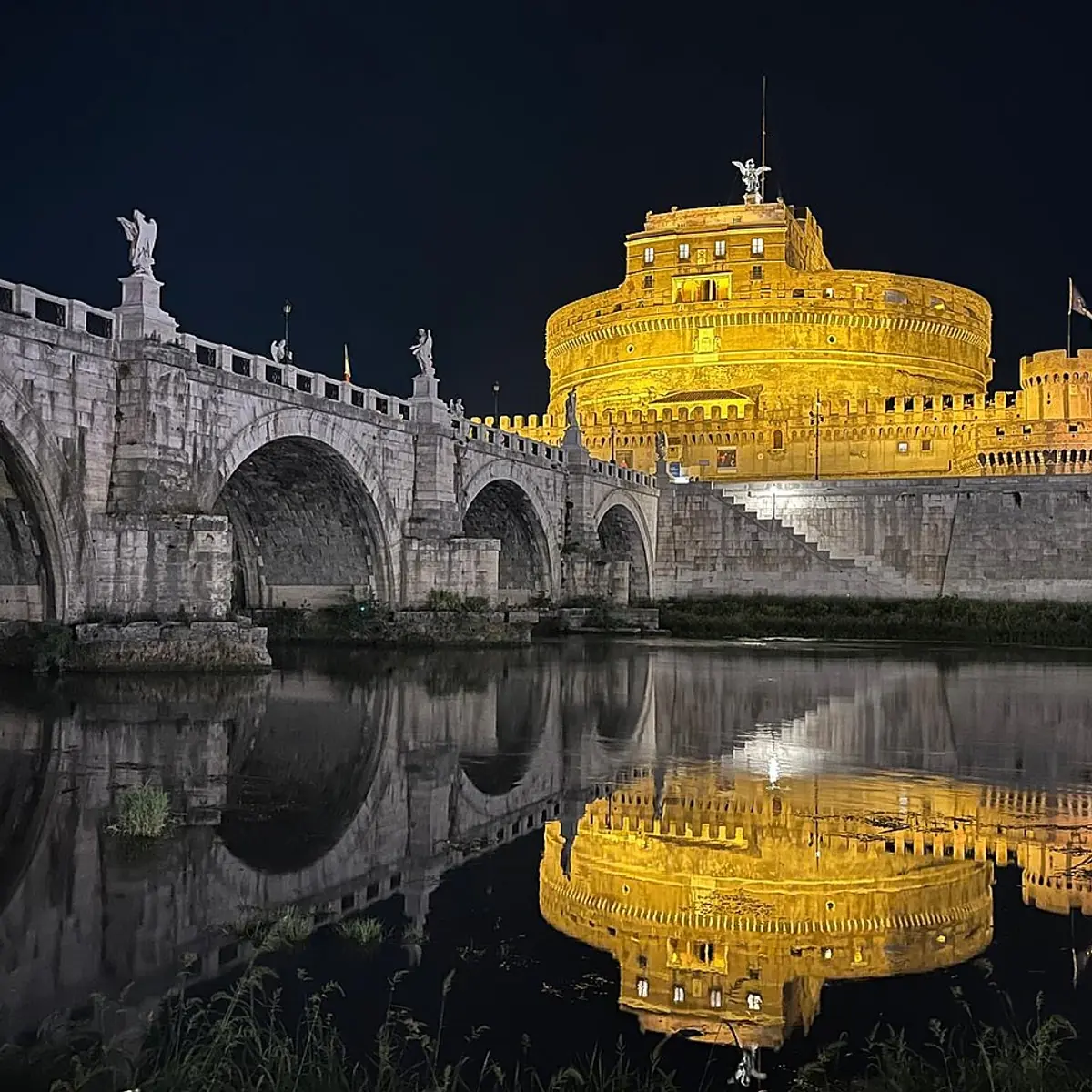
iTanne2 (CC BY-SA 4.0) Castel Sant’Angelo
history
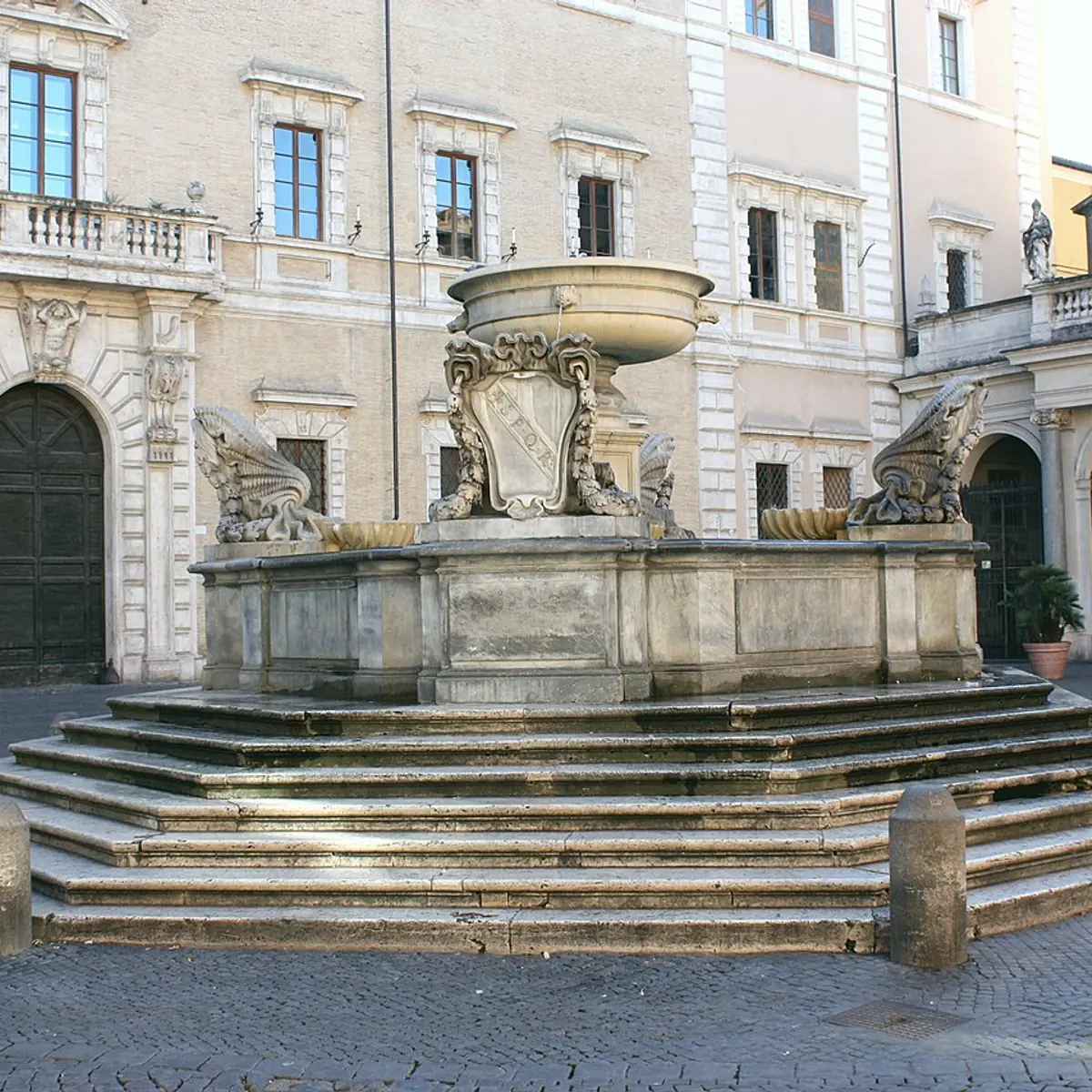
iDguendel (CC BY 3.0) Fontana di Piazza Santa Maria in Trastevere
history
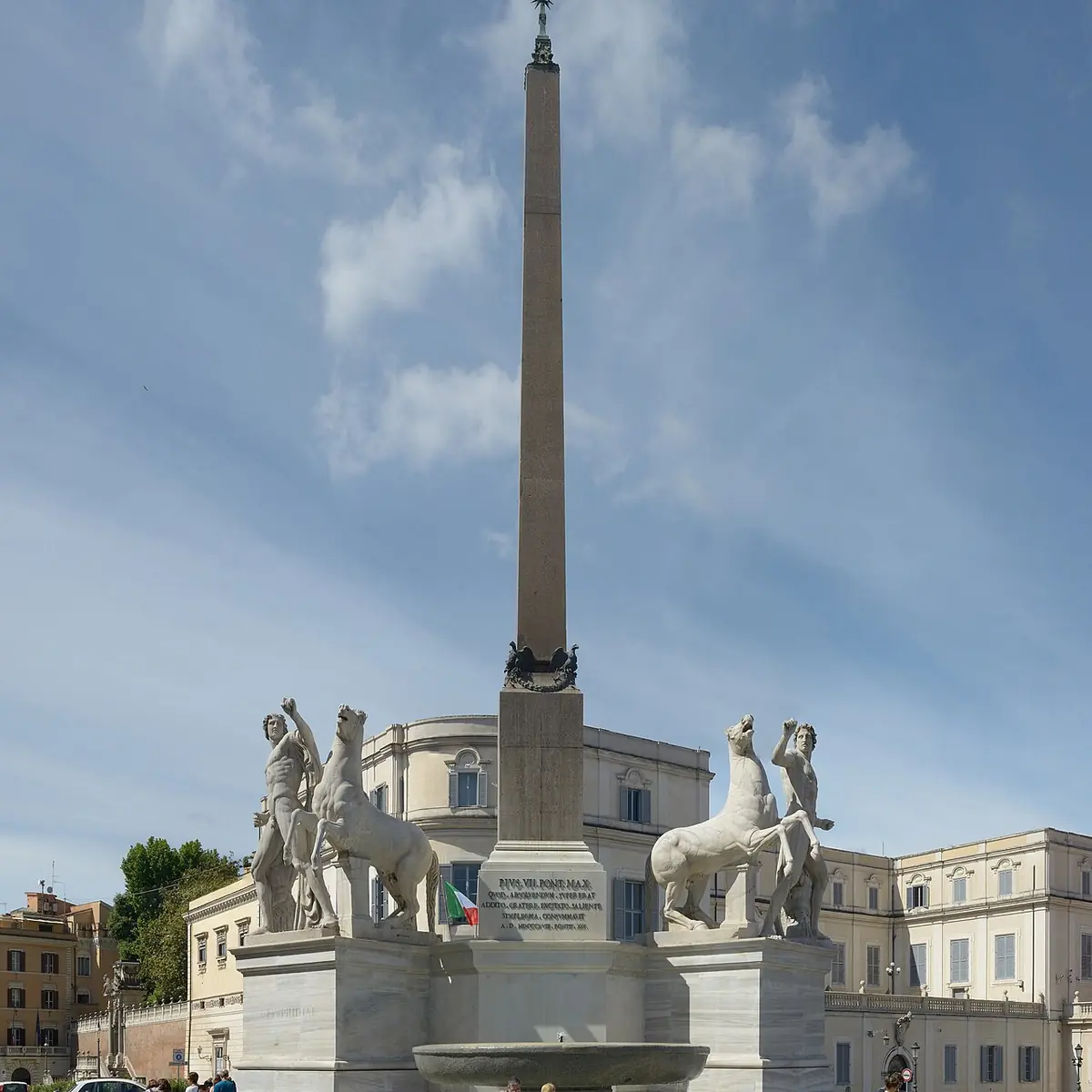
iThis Photo was taken by Wolfgang Moroder. Feel free to use my photos, but please mention me as the author and send me a message. This image is not in the public domain. Please respect the copyright protection. It may only be used according to the rules mentioned here. This specifically excludes use in social media, if applicable terms of the licenses listed here not appropriate. Please do not upload an updated image here without consultation with the Author. The author would like to make corrections only at his own source. This ensures that the changes are preserved.Please if you think that any changes should be required, please inform the author.Otherwise you can upload a new image with a new name. Please use one of the templates derivative or extract. (CC BY-SA 3.0) Obelisco del Quirinale
history
iASaber91 (CC BY-SA 4.0) Piazza della Rotonda
history