Pancernik, Wrocław
Updated
Listen to how the story begins
0:00 / 0:45
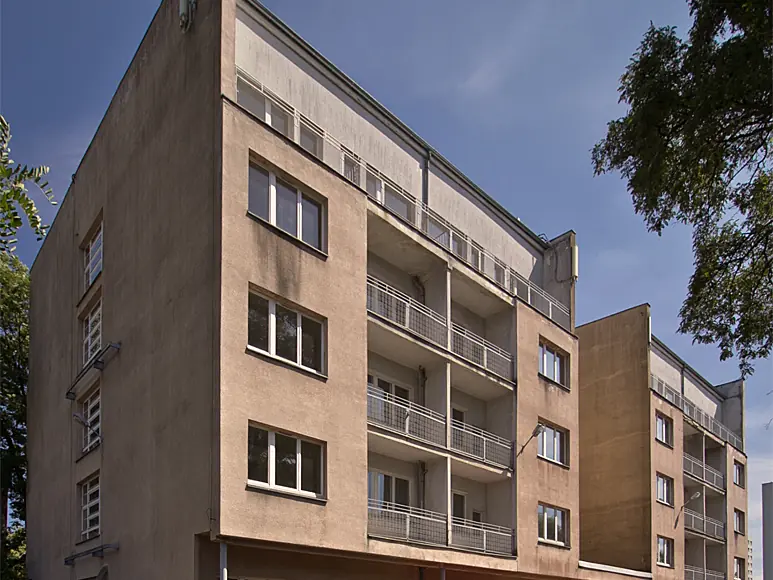
Pancernik, at Tramwajowa 2b, is a modernist apartment building designed by Adolf Rading, later converted into a University of Wrocław student residence. Built in 1929, it began as House Number Seven, a demonstration apartment block in the experimental estate created for the “Home and Workplace” exhibition. That estate brought together thirty-two houses by eleven Wrocław architects, with Rading and Heinrich Lauterbach devising its overall plan.
Along the facade, you can trace an experiment in making apartments adaptable rather than permanent. A skeletal structural system meant that the internal partitions carried no weight. Each floor contained eight flats of identical size but with different room layouts; neighbouring homes could even be merged, including between levels.
Rading also imagined a shared house, not a conventional rental block. The scheme included children’s playrooms, reading rooms, social and recreation spaces, plus shops for everyday supplies on the ground floor. During the siege of Wrocław in spring 1945, shelling badly damaged the building and fire consumed the interiors, but the structure itself survived. Rebuilt in the 1950s as a dormitory, Pancernik has stood unused since it closed in 2012.