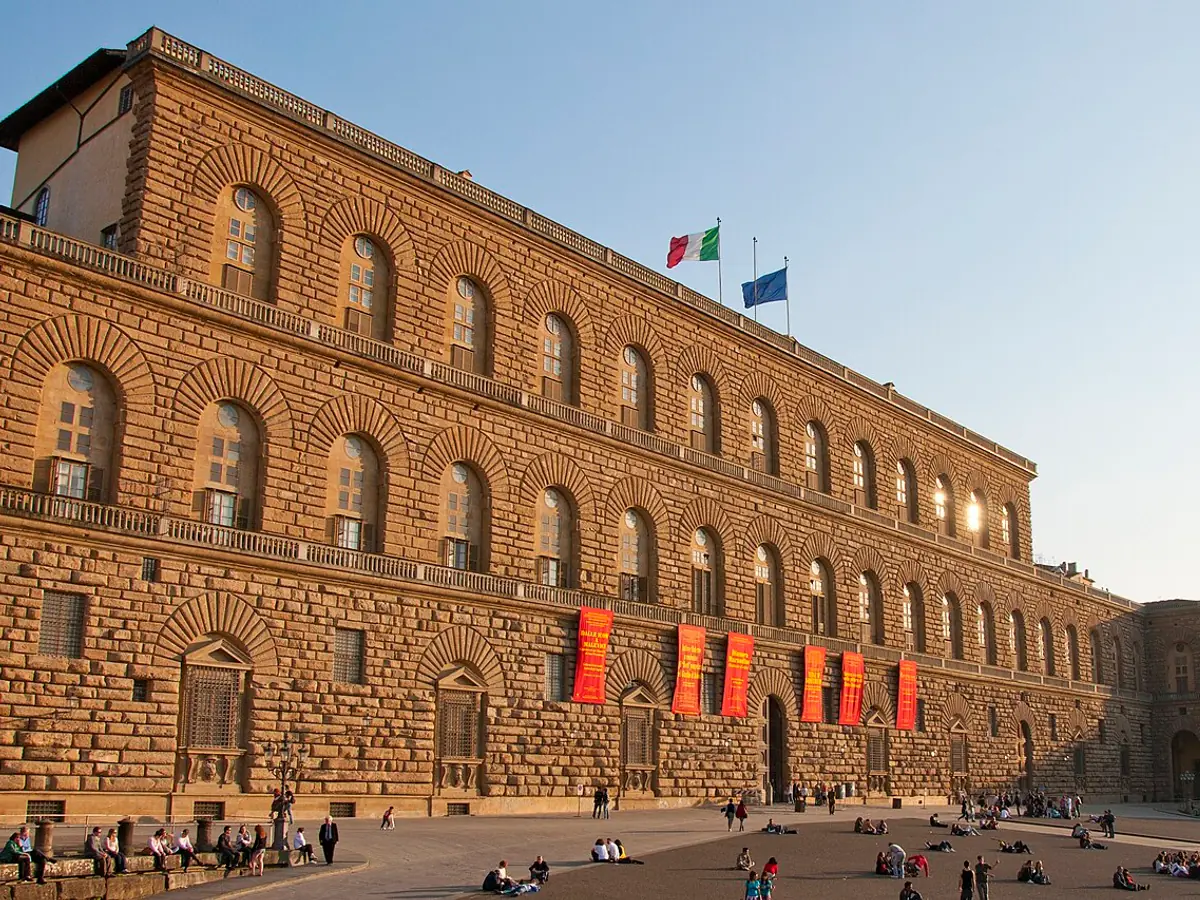
Palazzo Pitti, Florence
Palazzo Pitti is the vast Renaissance palace before you, now functioning as Florence’s largest museum complex. Its imposing façade began as the urban home of Luca Pitti, a Florentine banker, with construction starting in 1458. The design is credited to Luca Fancelli, with Filippo Brunelleschi also associated with the project.
The severe stonework and repeated arched openings give the exterior a powerful, almost fortress-like presence; the original formula shaped later additions to the building. In 1549, the Medici acquired the palace, and it became the principal residence of Tuscany’s ruling family. Their generations expanded it into a treasure house containing paintings, tableware, jewellery, and other luxurious possessions, while the Boboli Gardens were added behind it.
The palace later served Napoleon as a base during his European campaigns and then became a royal residence for the House of Savoy. In 1919, King Victor Emmanuel III gave it to the Italian people. Today, the complex brings together galleries devoted to paintings, modern art, fashion, porcelain, carriages, and applied arts. The building’s most striking story is its transformation: a banker’s unfinished residence became a dynastic palace and then a public museum.