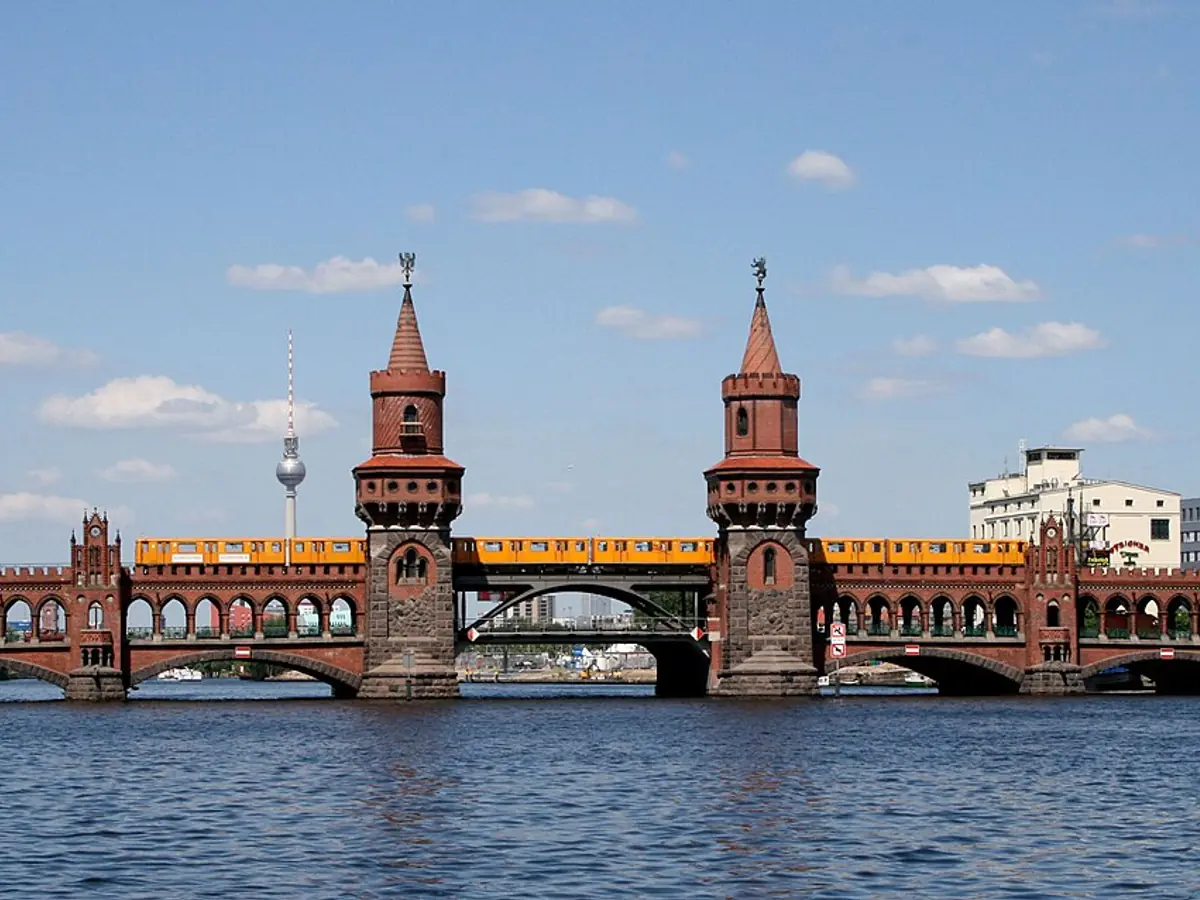
Oberbaumbrücke, Berlin
Oberbaumbrücke is a double-deck bridge over the Spree, linking Friedrichshain and Kreuzberg. Its brick-built gateway form gives this crossing an unmistakable presence, while the railway viaduct runs along the upper deck and the roadway occupies the lower one. Otto Stahn designed the replacement bridge, completed in 1896, with pointed arches, decorative masonry and towers inspired by Prenzlau’s Middle Gate Tower.
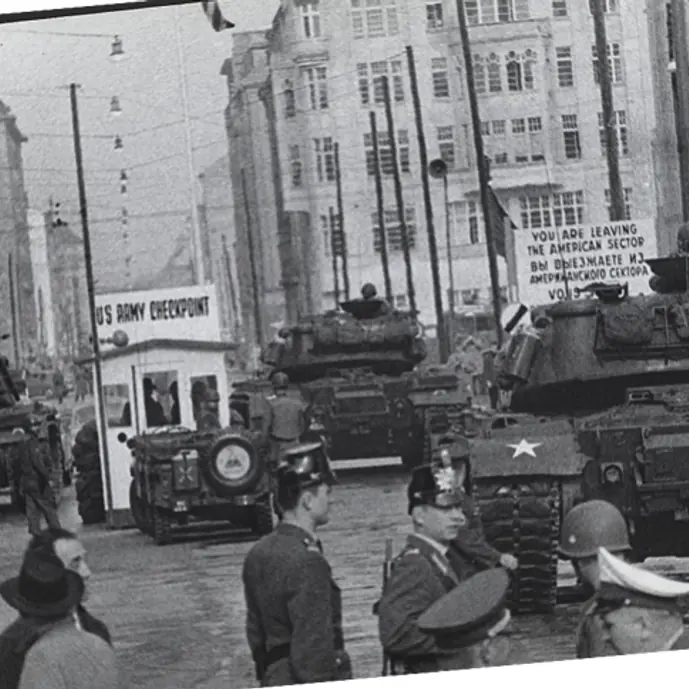
The towers recall the site’s earlier role as Berlin’s river gateway, where a spiked tree trunk once blocked boats at night to stop smuggling. During the battle for Berlin in April 1945, German forces blew apart much of the central arch. The bridge later became a border crossing between East and West Berlin.
The Berlin Wall closed it to all traffic, including the underground railway, in 1961; permanent pedestrian access returned through the Four Power Agreement in 1972. After reunification, the damaged structure was restored, with a new steel central section designed by Santiago Calatrava. It reopened to pedestrians and traffic on 9 November 1994, and the underground railway returned the following year. Look at the illuminated installation on the bridge: “Stone – Paper – Scissors” has played continuously since 1997, turning the crossing’s history of borders into a visual game.