Nowa Giełda, Wrocław
Updated
Listen to how the story begins
0:00 / 0:45
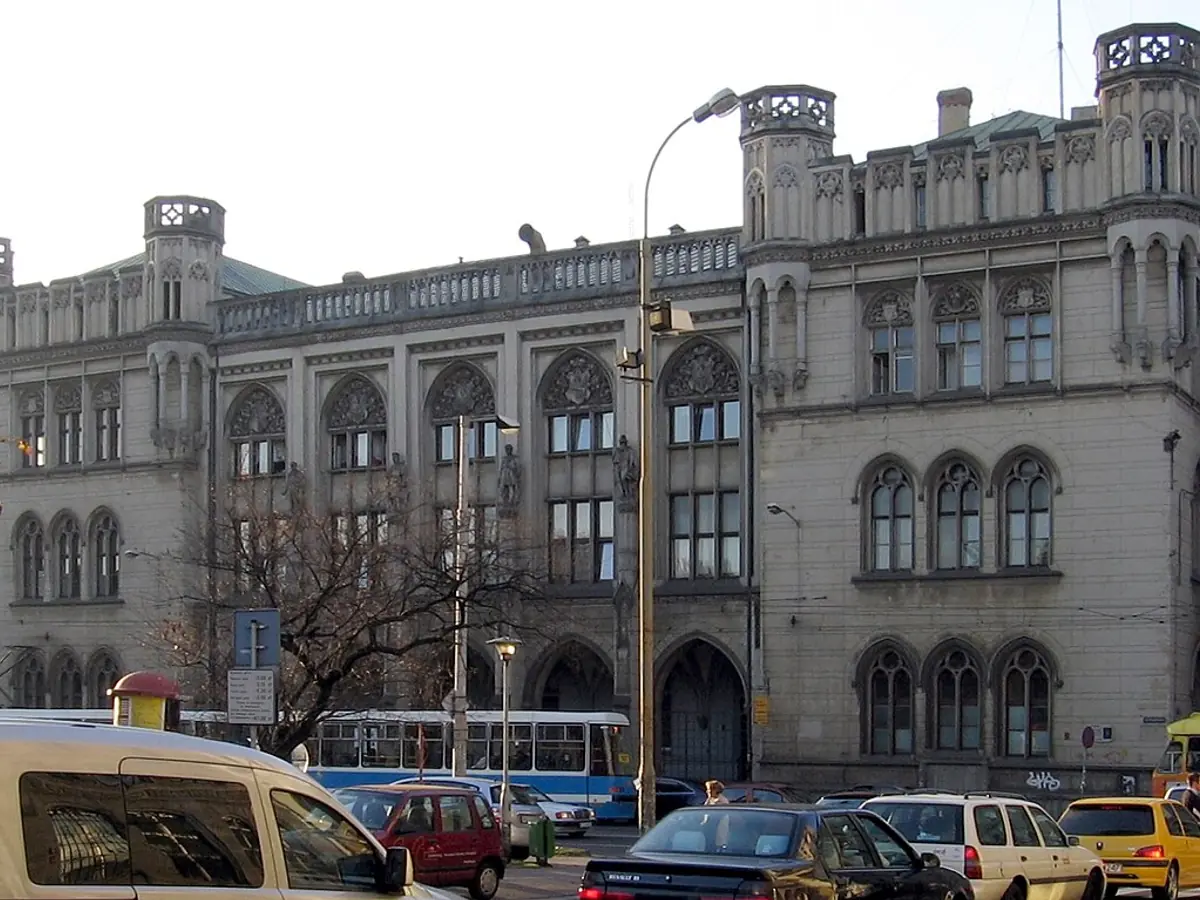
Nowa Giełda is the nineteenth-century exchange building here, finished in 1867. Its designers gave commerce the outward drama of a palace with a hint of a fortified residence: the upper parapet has small battlements and corner turrets. The sandy-coloured render is made to resemble blocks of dressed stone, while pointed windows occupy the lower levels and rectangular ones sit above them.
In 1863, architect Karl Lüdecke entered two competing designs, one drawing on medieval Gothic and the other on Renaissance forms. The judges chose his work, and the constructed building fused both proposals. At the main façade, the sandstone figures represent agriculture, livestock raising, trade and shipping.
The figure for trade is an image of Lüdecke himself—a discreet signature by the architect in the building’s sculpture. This was a working exchange, not merely an impressive façade. Wrocław’s exchange handled goods traded with countries across Europe and South America.
Its principal hall also hosted lectures and concerts; Ignacy Jan Paderewski performed here on the sixth of February 1891. A bronze plaque added in 2017 marks that concert. After the Second World War, Gwardia Wrocław used the building, and its interior was converted into a sports hall in 1952.