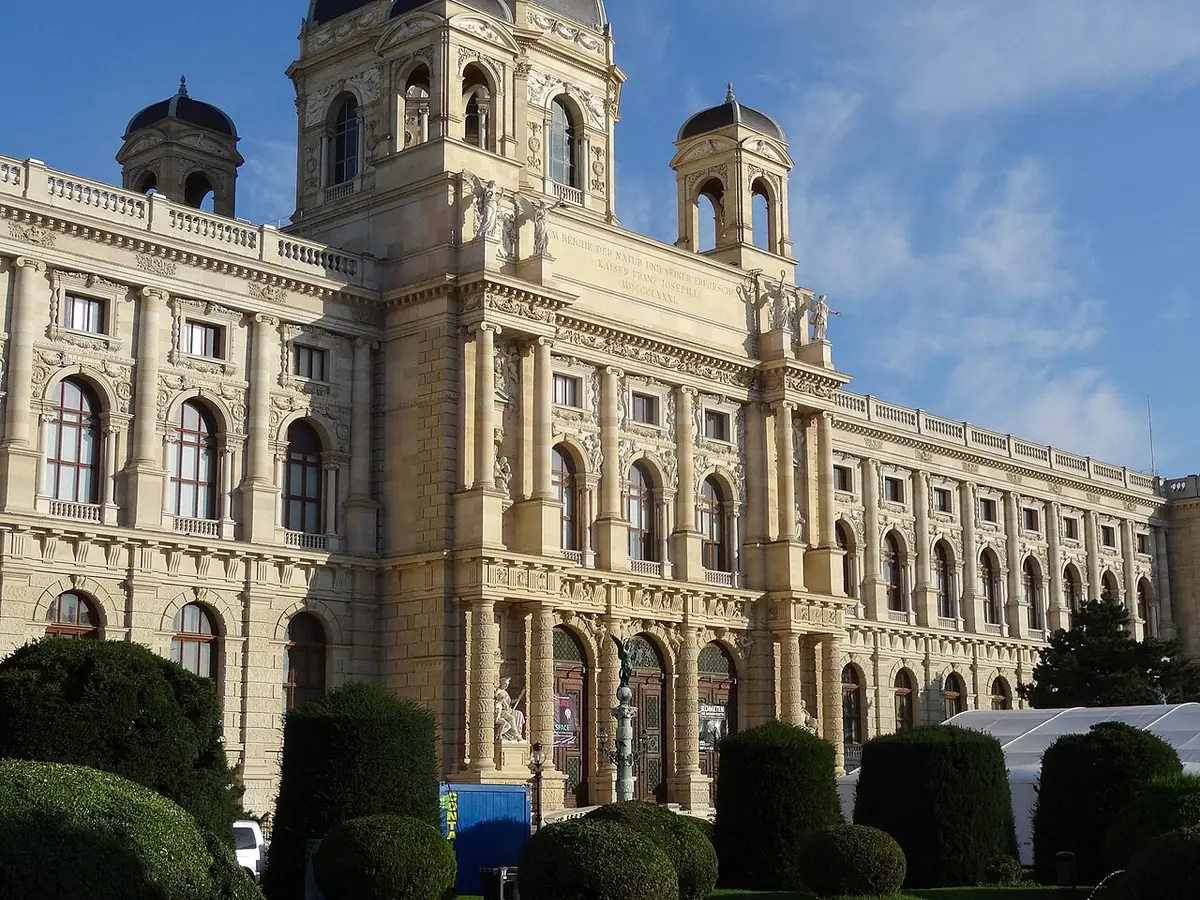
Naturhistorisches Museum, Vienna
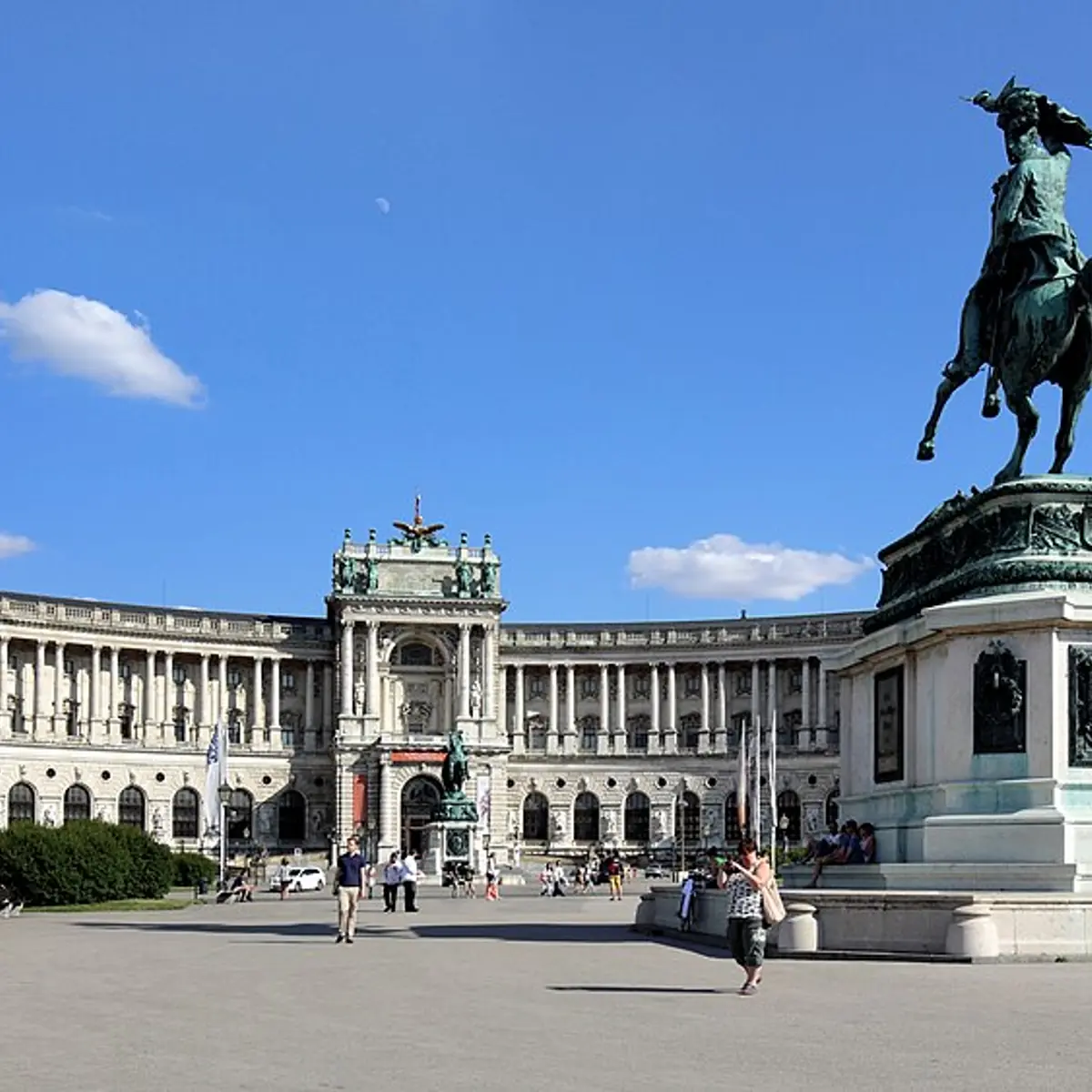
The Naturhistorisches Museum is the grand natural-history museum occupying this monumental building at Maria-Theresien-Platz. Its construction ran from 1871 to 1889, with Gottfried Semper and Carl von Hasenauer as architects, and it opened to the public on August 10, 1889. The building belongs to the former imperial museum complex and carries the character of a richly ornamented Neorenaissance palace.
Look at the long façade, the sculpted details, and the powerful entrance: this was designed to give the study of nature an imposing home. The story began in 1750, when Emperor Francis I acquired a collection of 30,000 natural-history objects from Jean de Baillou. Fossils, shells, corals, minerals, and precious stones formed its early core.
Today, the museum holds about 30 million objects, while its exhibition rooms present more than 100,000 of them. Its collections grew through scientific work and ambitious expeditions, including the voyage of the Novara around the world from 1857 to 1859 and the Austro-Hungarian North Pole expedition from 1872 to 1874. The museum is also a research institution, with more than 60 scientists working across the human, earth, and life sciences. This building is therefore both a public museum and a vast working archive of the natural world.