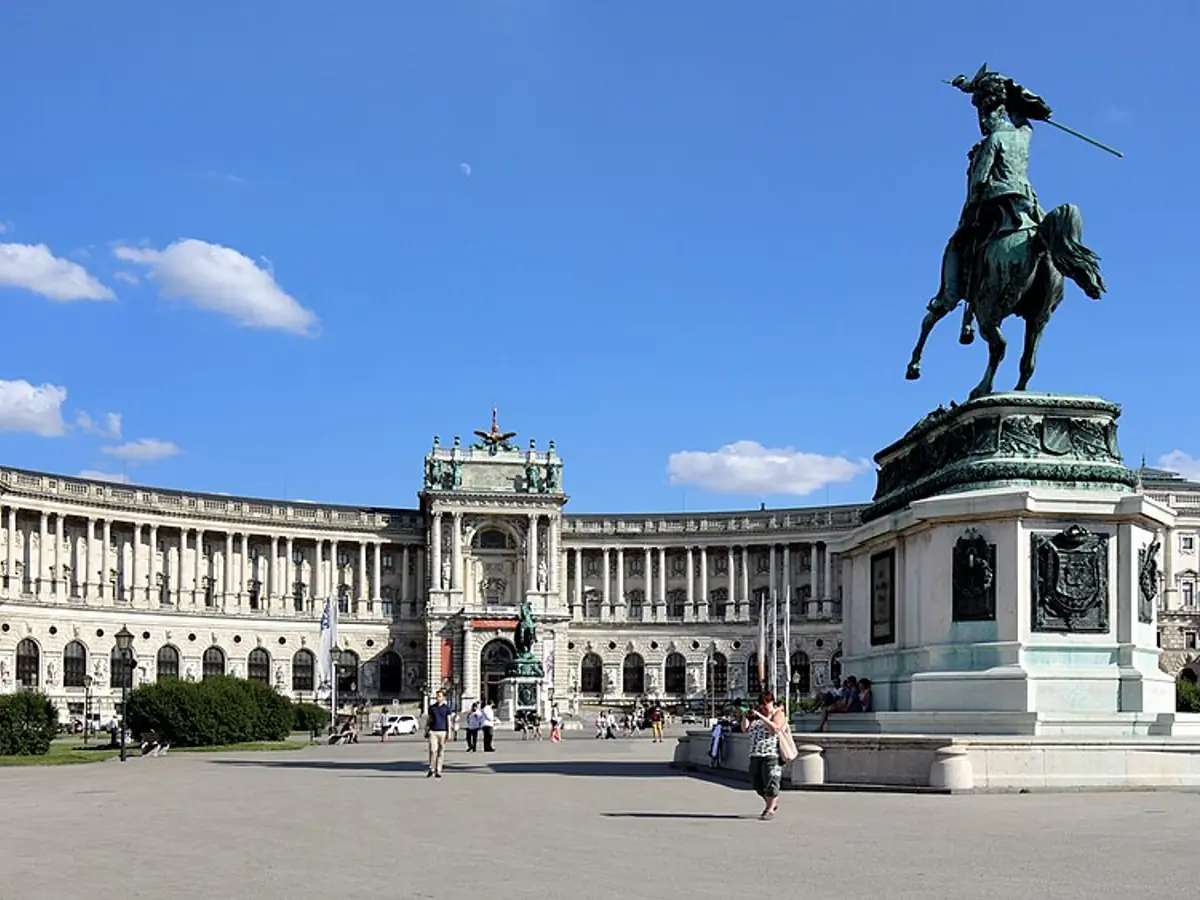
Hofburg, Vienna
The Hofburg is a vast imperial palace complex, once the Habsburgs’ winter residence and now a working seat of Austria’s presidency. Look at the palace façades as a single ensemble: their different wings reveal how the residence grew through successive building campaigns. The site is documented from 1279, and its origins reach back to a medieval fortress.
The Hofburg was expanded repeatedly after its beginnings in the thirteenth century, eventually bringing together a chapel, library, treasury, riding school and many residences. Filiberto Lucchese is named as an architect of the complex, while Renaissance architecture is among the styles associated with it. The visible scale reflects that long development: the palace covers about 300,000 square metres.
Since 1955, the Hofburg has served as the seat of Austria’s Federal President, the National Library and several federal museums. Its story is therefore still active: this former imperial residence remains a place of government, collections and public life, enclosed within an architectural fabric assembled over many generations.