National Museum of Ireland, Archaeology, Dublin
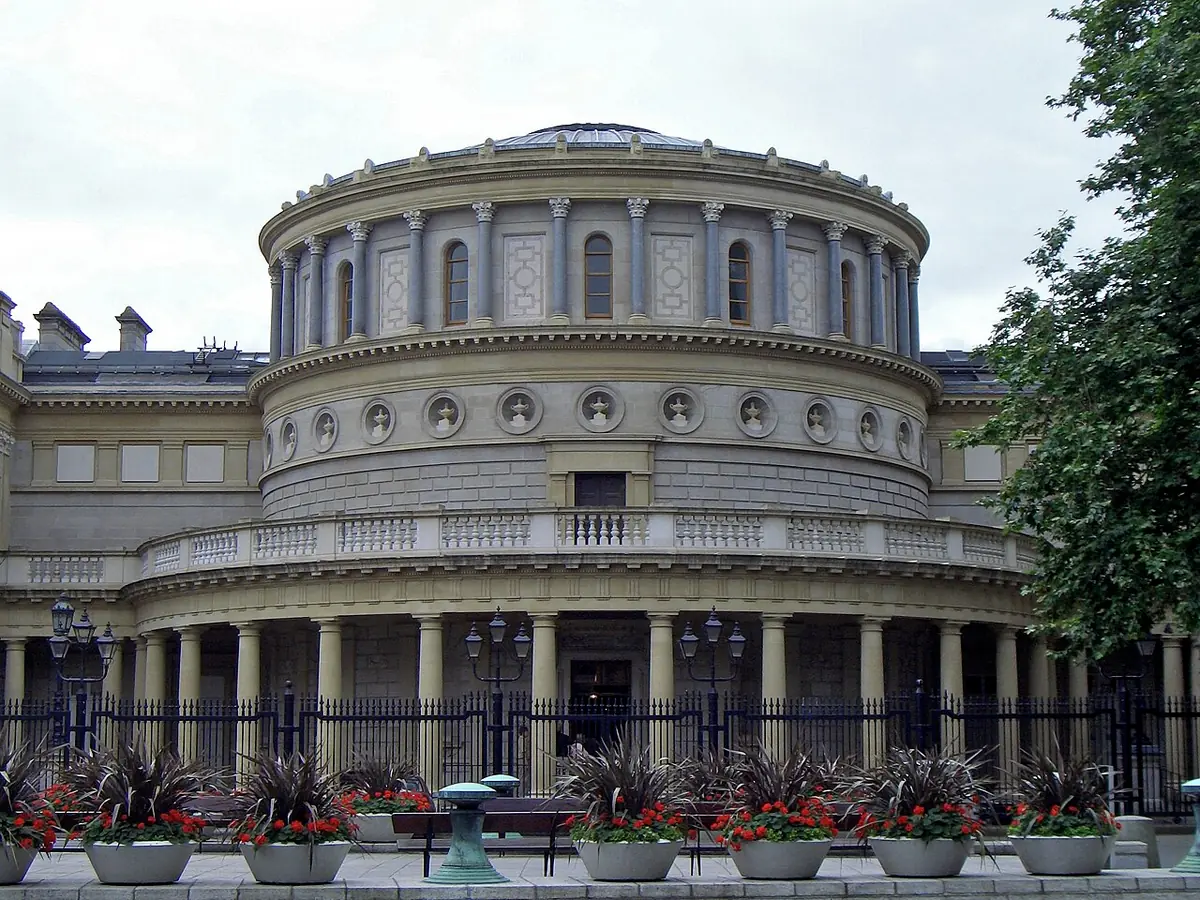
This is the National Museum of Ireland, Archaeology, a Kildare Street museum devoted to antiquities from Irish prehistory through the Late Middle Ages. Its building opened on 29 August 1890, designed by Thomas Newenham Deane and his son Thomas Manly Deane. Look at the entrance columns and the domed rotunda: Irish marble gives these features their distinct solidity, while the outer stone is largely Leinster granite.
Inside, mosaic floors show scenes from classical mythology, and the balcony around the central court rests on slender cast-iron columns with ornate cherub capitals. The collections take you from early stone tools and burial objects to weapons, vessels, jewellery and ceremonial pieces. Among the most arresting displays are Irish bog bodies from the Iron Age, preserved after violent deaths in wet ground.
Cashel Man dates to about 2000 BC and is regarded as Europe's earliest discovered bog body retaining its flesh. The museum also holds a major body of post-Roman Irish medieval art, alongside Viking weapons and coins and ancient objects from Egypt, Cyprus and the Roman world. This is a place where delicate goldwork, carved wood and human remains make Ireland's distant past intensely tangible.