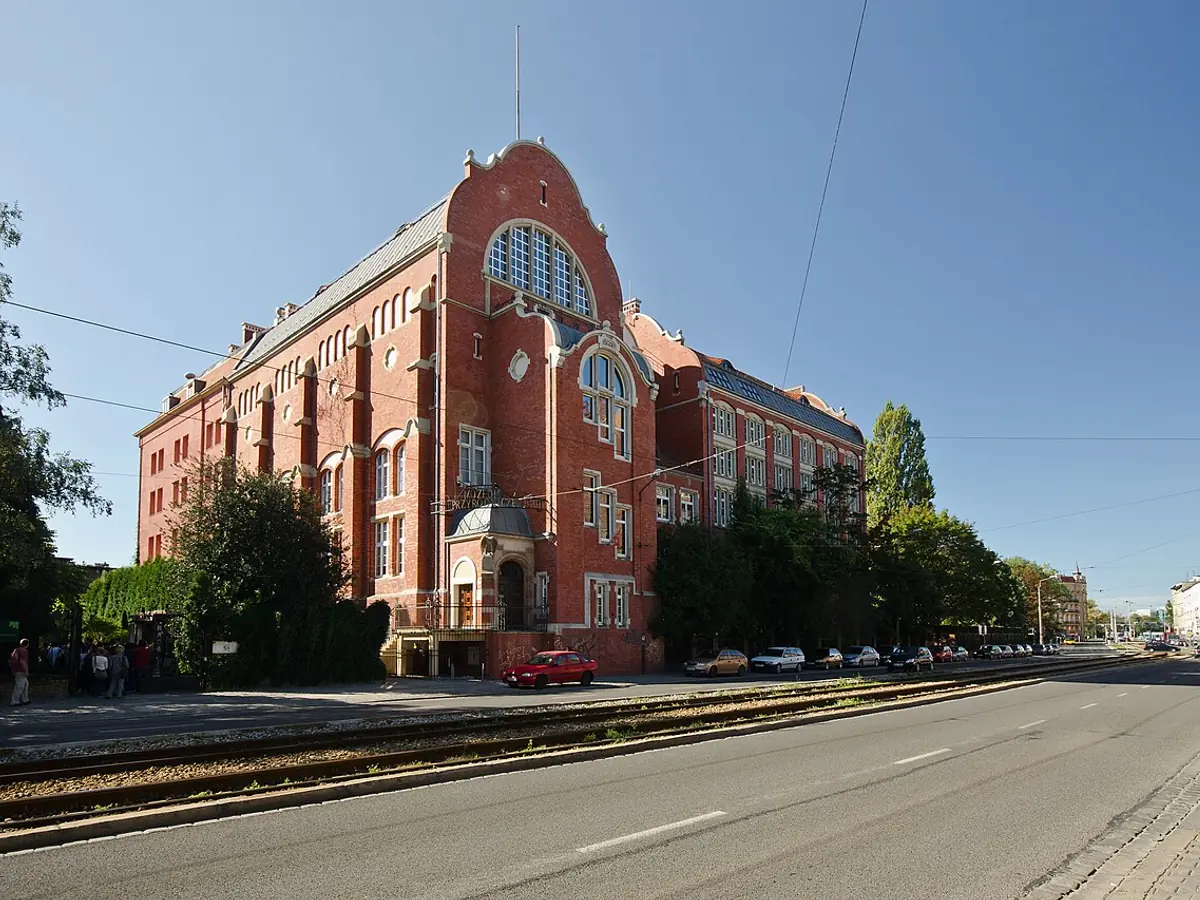
Muzeum Przyrodnicze, Wrocław
Updated
Listen to how the story begins
0:00 / 0:45
Muzeum Przyrodnicze is the University of Wrocław’s natural-history museum, founded in eighteen fourteen by Johann Ludwig Christian Gravenhorst, who became its first director. Inside, it brings together the legacy of three earlier collections: botany, zoology and the herbarium. The scale is extraordinary: its holdings include about two and a half million animal specimens and half a million plant specimens.
The museum’s public displays range across animals, plants, vertebrate skeletons, and the relationship between insects and people. Its great showpiece is a nearly complete blue-whale skeleton, the only one of its kind in Poland; this young whale measures more than fourteen and a half metres long. The skeleton gallery also includes an extinct giant deer from Irish peat bogs, collected before the First World War, with antlers spanning two metres and weighing tens of kilograms.
This collection has survived severe loss. When the building was bombed during the Second World War, an entire wing collapsed and almost every display vanished, apart from the Skeleton Hall. About half the zoological collection and a third of the botanical collection endured. After the war, the Polish university authorities took over, secured what remained, repaired the building, and rebuilt the museum’s work.