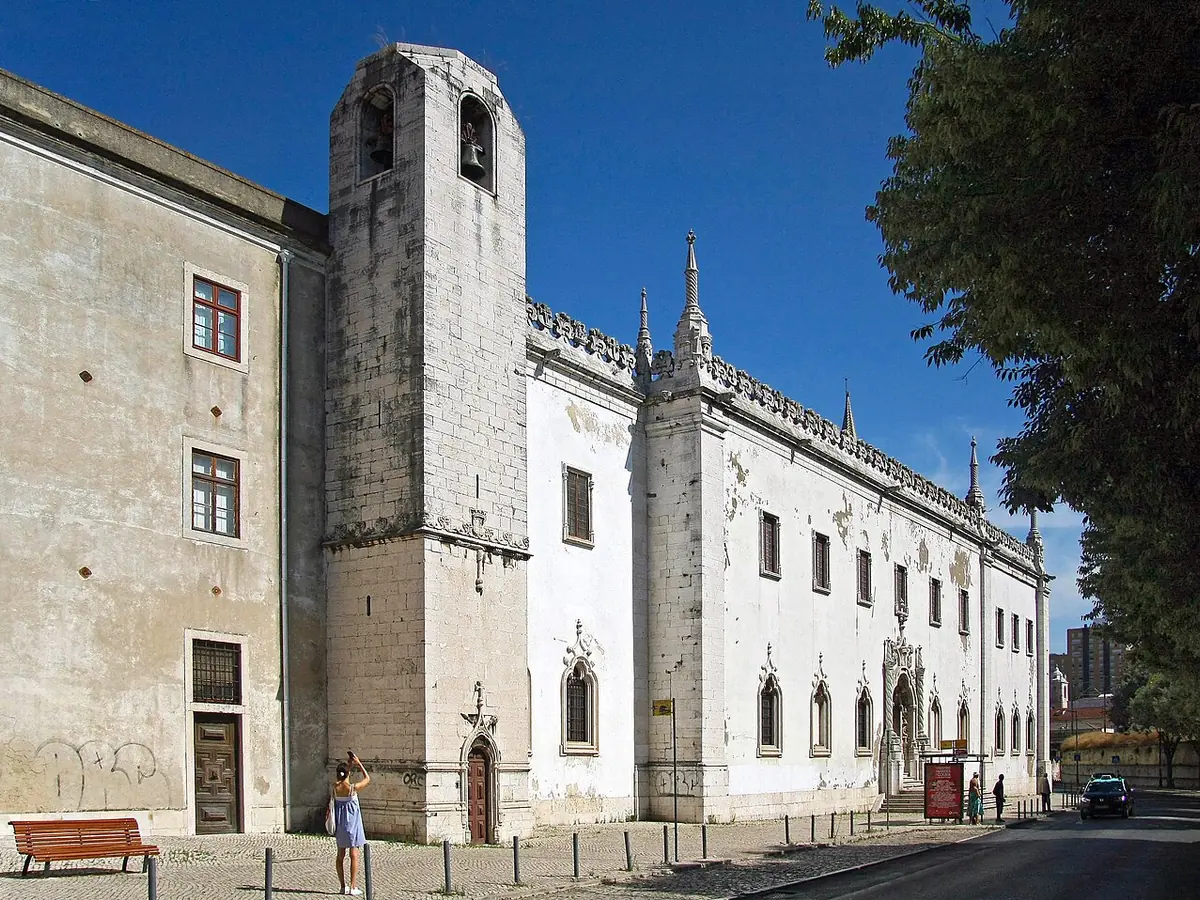
Museu Nacional do Azulejo, Lisbon
The Museu Nacional do Azulejo is an art museum devoted to Portugal’s tile tradition and related Iberophone cultures. Its setting is the former Madre de Deus Convent, whose origins reach back to 1509, when Queen Leonor founded it. The museum itself began in 1965 and received national status in 1980.
The collection is among the world’s largest ceramic holdings, bringing together tiles from the late fifteenth century through the present, alongside porcelain, faience, and other ceramics from the nineteenth and twentieth centuries. The exhibition begins by explaining how tiles are made, then leads you through their development in chronological order. Look at the church, chapels, choir, and cloister as parts of that story: these former religious rooms now hold the permanent display.
The church contains extensive painted and tiled decoration; the sacristy includes a Brazilian wood cabinet and carved frames; and the Chapel of Saint Anthony carries an eighteenth-century Baroque interior with paintings by André Gonçalves. Among the most striking works is a tiled panorama showing Lisbon before the earthquake of 1755. That combination—an intimate convent interior and a sweeping image of a vanished city—gives this museum its particular force.

.jpg)