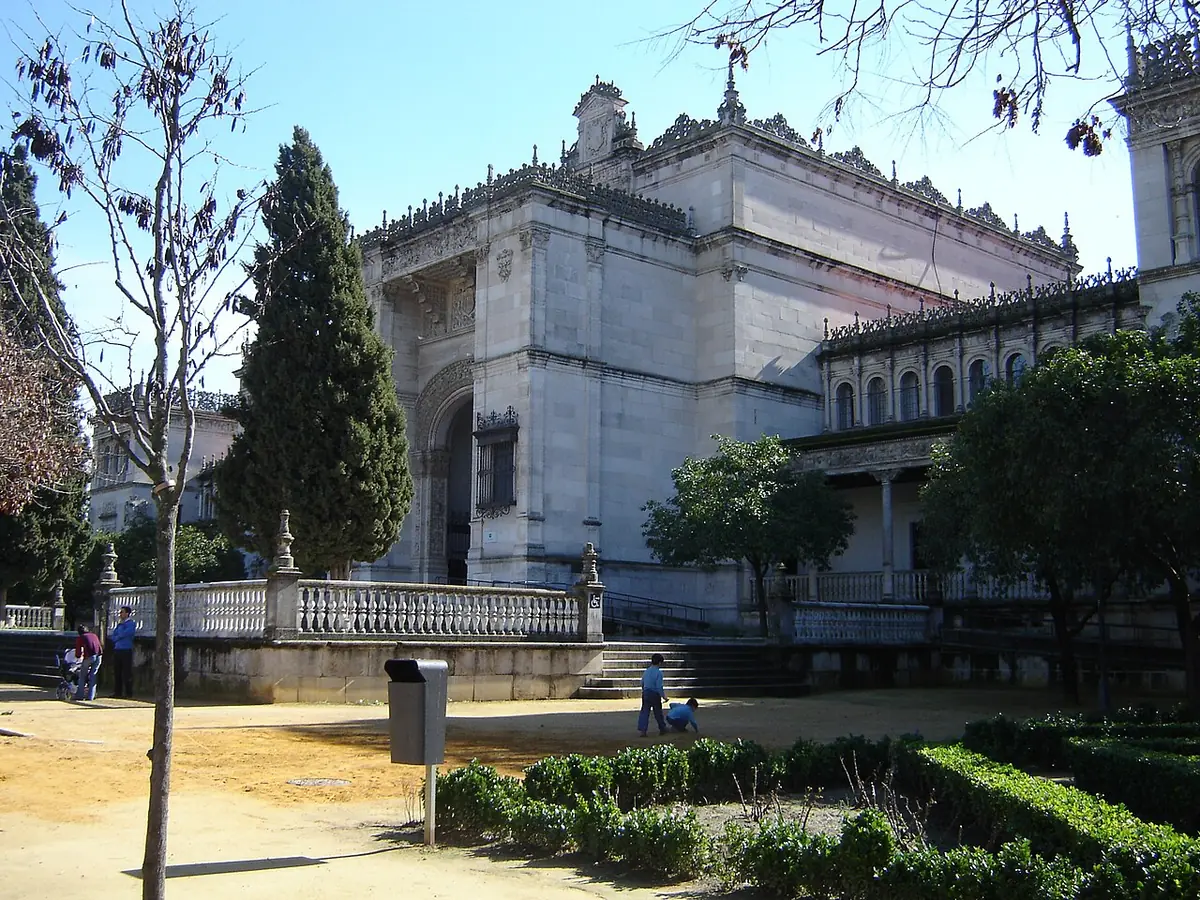
Museo Arqueológico, Seville
Museo Arqueológico is Seville’s archaeology museum, housed in the Pabellón del Renacimiento designed by Aníbal González for the Ibero-American Exposition of 1929. The institution began through a royal order on 21 November 1879, and its present premises received visitors from 25 May 1946, after the collection moved here. The museum’s most striking treasure is displayed in the basement: the El Carambolo hoard, found at Camas in 1958.
It contains 2950 grams of 24-carat gold, formed into bracelets, a pendant chain, buckles, and plates for belts and the forehead. A small image of Astarte, a Phoenician goddess, belongs to the hoard. Once linked with Tartessos, the find is now understood as part of a Phoenician sanctuary, an interpretation confirmed by excavations in the 2000s.
Other rooms bring together Roman material, much of it from nearby Itálica. Among the highlights are mosaics, statues including the Venus of Itálica, and portraits of emperors from Augustus through Hadrian. The collection also includes the Seated Marriage of Orippo, donated in 1944.