most Władysława Sikorskiego, Wrocław
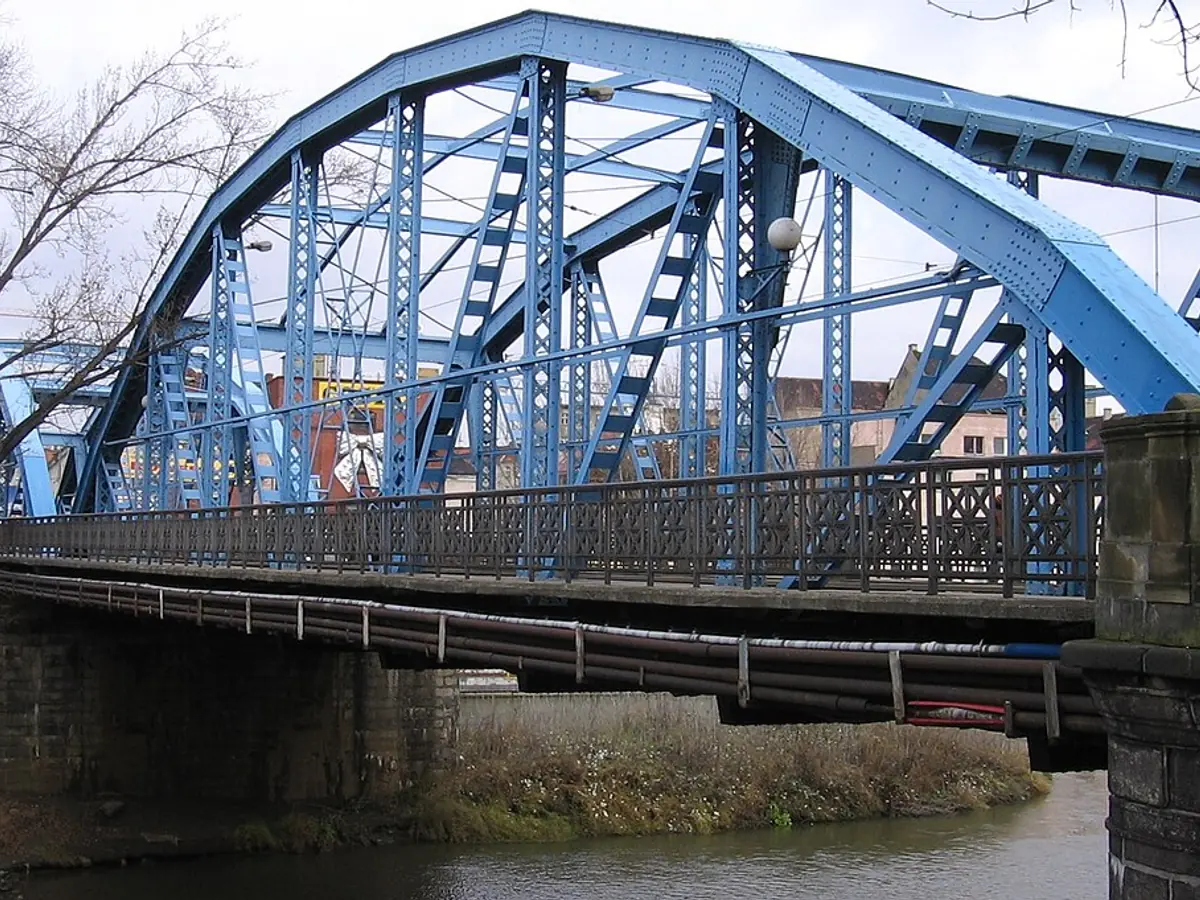
Riveted steel gives Władysław Sikorski Bridge its unmistakably nineteenth-century character. Built in 1875, it is among Wrocław’s oldest bridges that still survive. The crossing carries the line of Podwale over the Southern Oder, linking the river’s left bank with Kępa Mieszczańska.
Its two steel spans rest on a pier placed on an island in the current. Notice the truss’s gently arching, almost parabolic upper edge: beneath it, the deck stiffens the lower members, while cross-connections bind the upper ones. Parts of the hangers and diagonal braces are cut into openwork patterns.
Two tram tracks have crossed here since the late nineteenth century, making this structure part of the city’s everyday movement for well over a century. It opened as Königsbrücke, meaning Royal Bridge. In the first years after the war it briefly became Lignicki Bridge, before taking the name of General Władysław Sikorski.
A major rebuilding in 1986 replaced older cast-iron road supports and granite paving beneath the pavements with reinforced-concrete slabs. Road and tram surfaces were renewed in 2001, and the steelwork received new anti-corrosion protection in 2008 and 2009. The bridge is also protected as an immovable heritage monument.