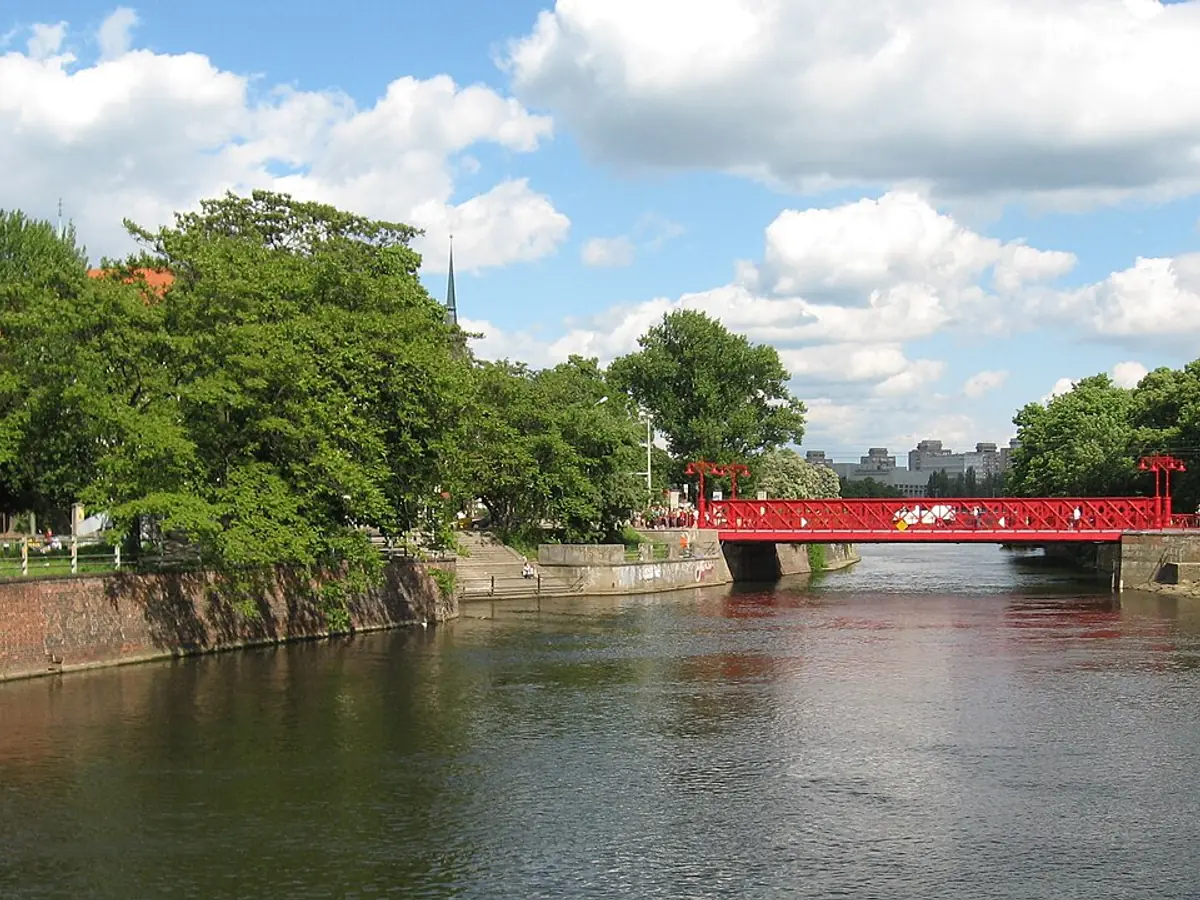
Most Piaskowy, Wrocław
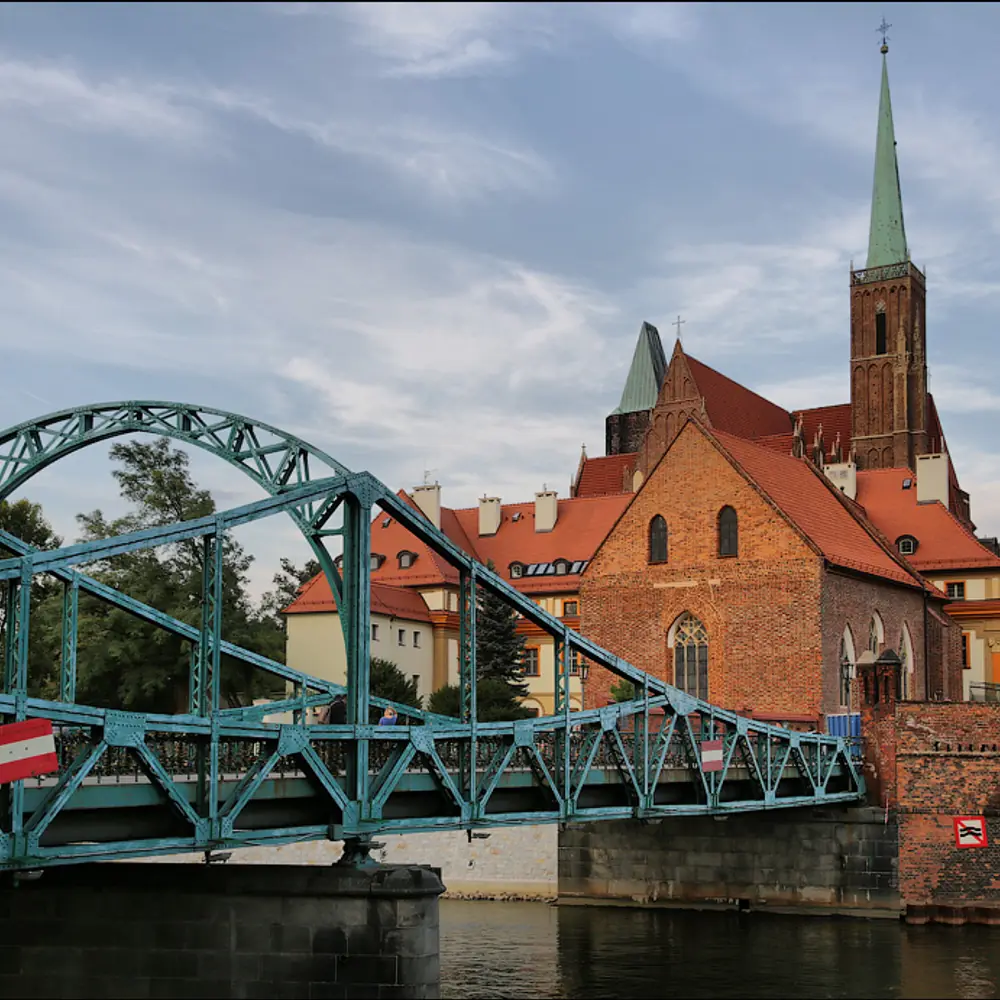
Most Piaskowy is Wrocław’s oldest surviving iron bridge, the southern section of the city’s oldest crossing of the Oder. Its present single-span structure was built in 1861, designed by Ernst Uber and made by Gustav Ruffer’s metalworks. Little room the bridge has to spare: its carriageway is less than six and a half metres wide, yet it carries traffic in both directions and a two-way tram route, while the footways run outside the main girders.
This crossing had already been important for centuries. In 1149, the Augustinian canons who owned Piasek Island charged a toll here. The earlier bridge was wooden, made in several spans and equipped with a drawbridge; it repeatedly collapsed and was rebuilt.
From 1893, electric trams crossed here. During the 1945 siege of Festung Breslau, German defenders mined the bridge, and Soviet artillery fire triggered the explosives late in April. It was hastily restored during the siege, then extensively renewed after the war, preserving the main historic trusses.
This was also where Wrocław’s own mile began: 6,700 metres measured from the former Sand Gate toward Psie Pole. The bridge entered the heritage register on the fifteenth of October 1976.