Most Młyński Północny, Wrocław
Updated
Listen to how the story begins
0:00 / 0:45
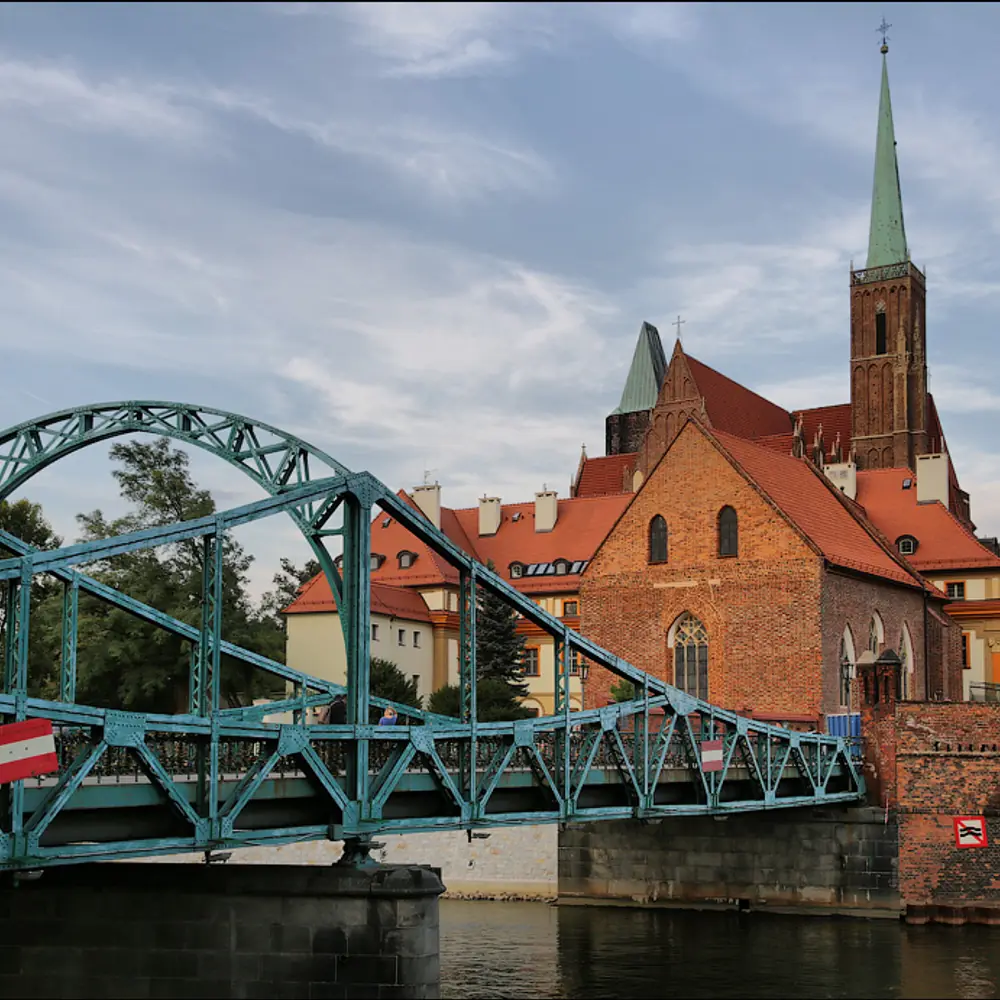
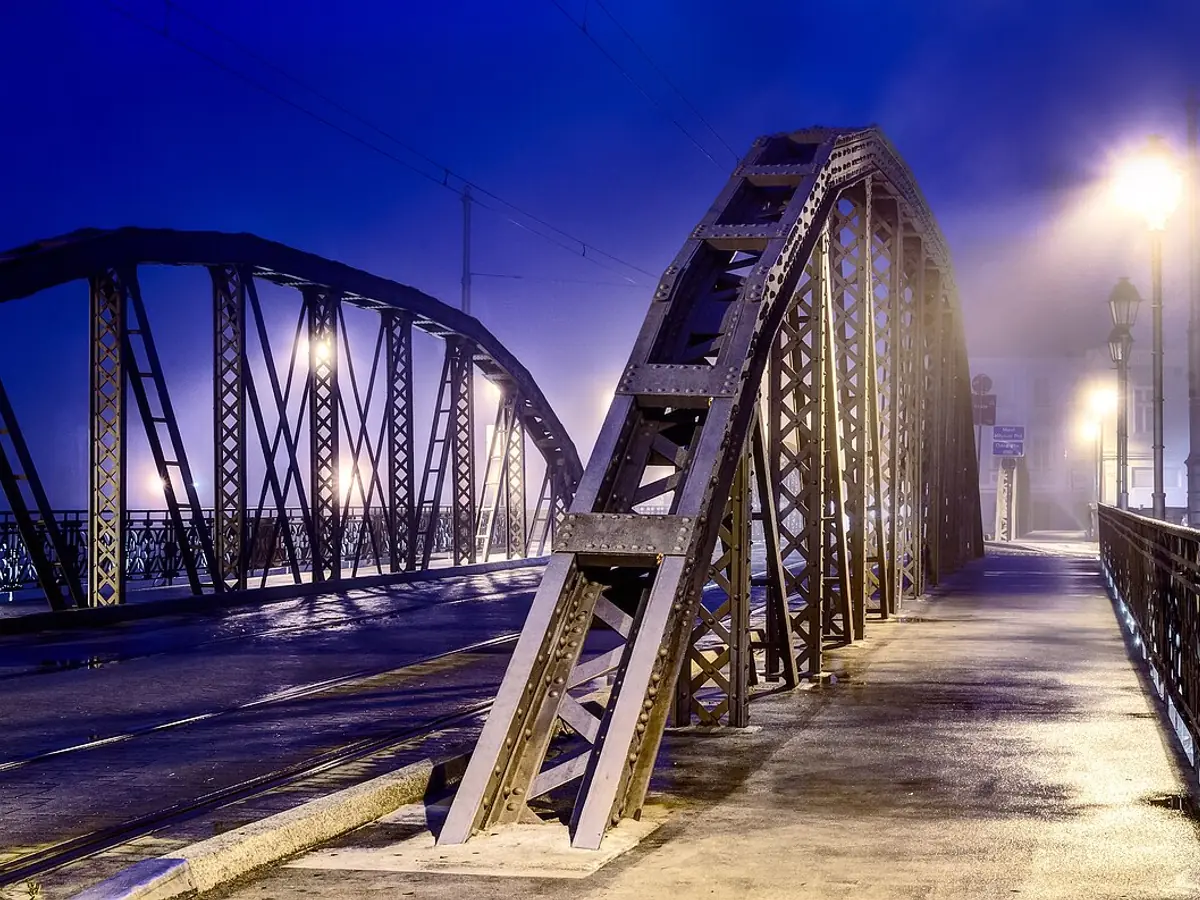
Most Młyński Północny is the longer of Wrocław’s two Mill Bridges, carrying the route from Mill Island to the river’s right bank. Its steel truss was built in eighteen eighty-five, replacing wooden crossings that had stood here before. Notice the broad metal framework enclosing the roadway: this is a riveted Schwedler system, its latticework arranged in a parabolic arch.
This bridge is thirty-six point six metres long. After a major reconstruction in nineteen fifty-six, it received its present roadway arrangement, with tram tracks, two-way motor traffic, and separate pavements. Granite-block abutments anchor it at the island and riverbank.
The water beneath is the northern branch of the Oder. It curves around the north side of Mill Island toward Bielarska Island and Saint Clare’s Bridge. Yet this crossing occupies a far older route: a twelfth-century predecessor stood on this very site, forming part of a chain of bridges that led north from the Sand Gate toward Ołbin and Trzebnica.
The bridge survived a more recent crisis as well. During the flood of nineteen ninety-seven, rescuers and climbers worked for hours to stop tree trunks and debris jamming beneath the nearby mill channels, preventing a collapse that could have endangered these bridges and much of central Wrocław.