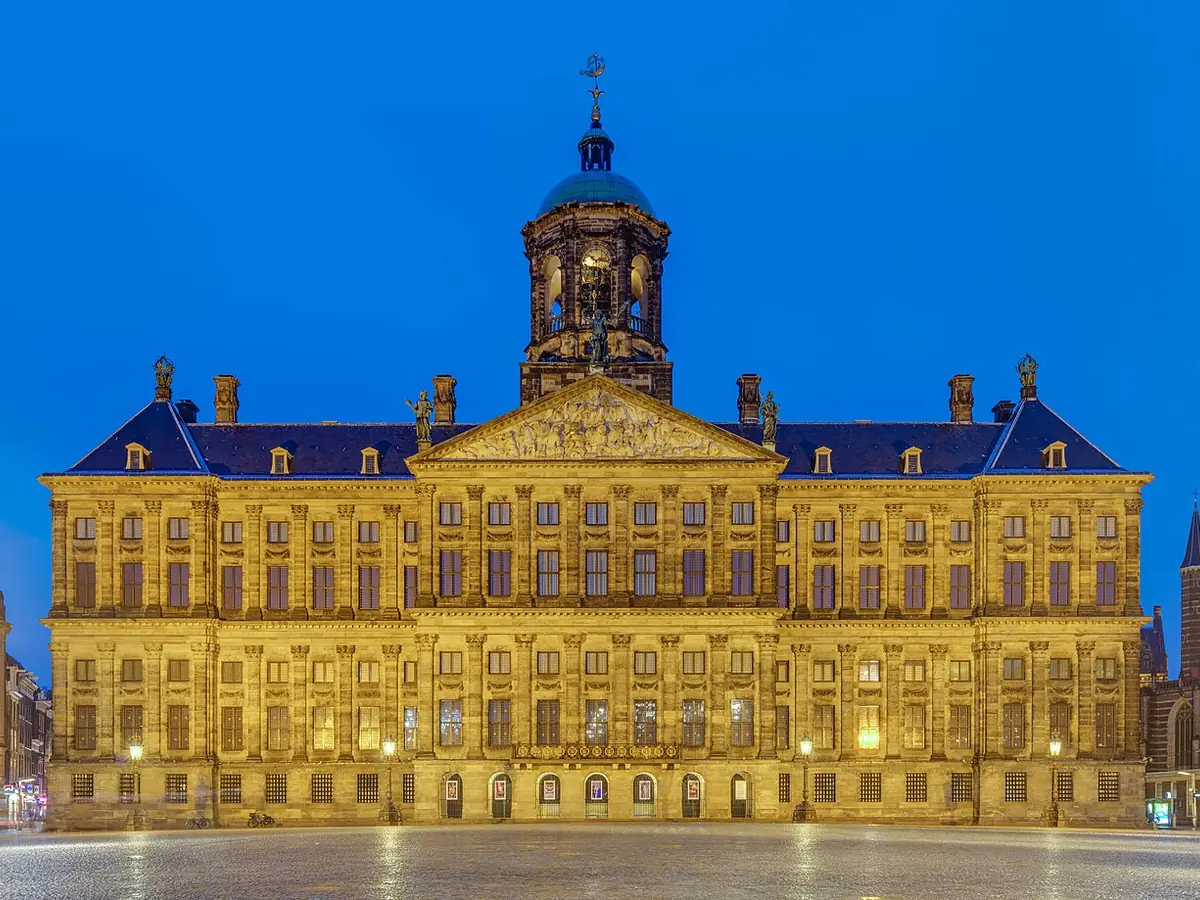
Koninklijk Paleis, Amsterdam
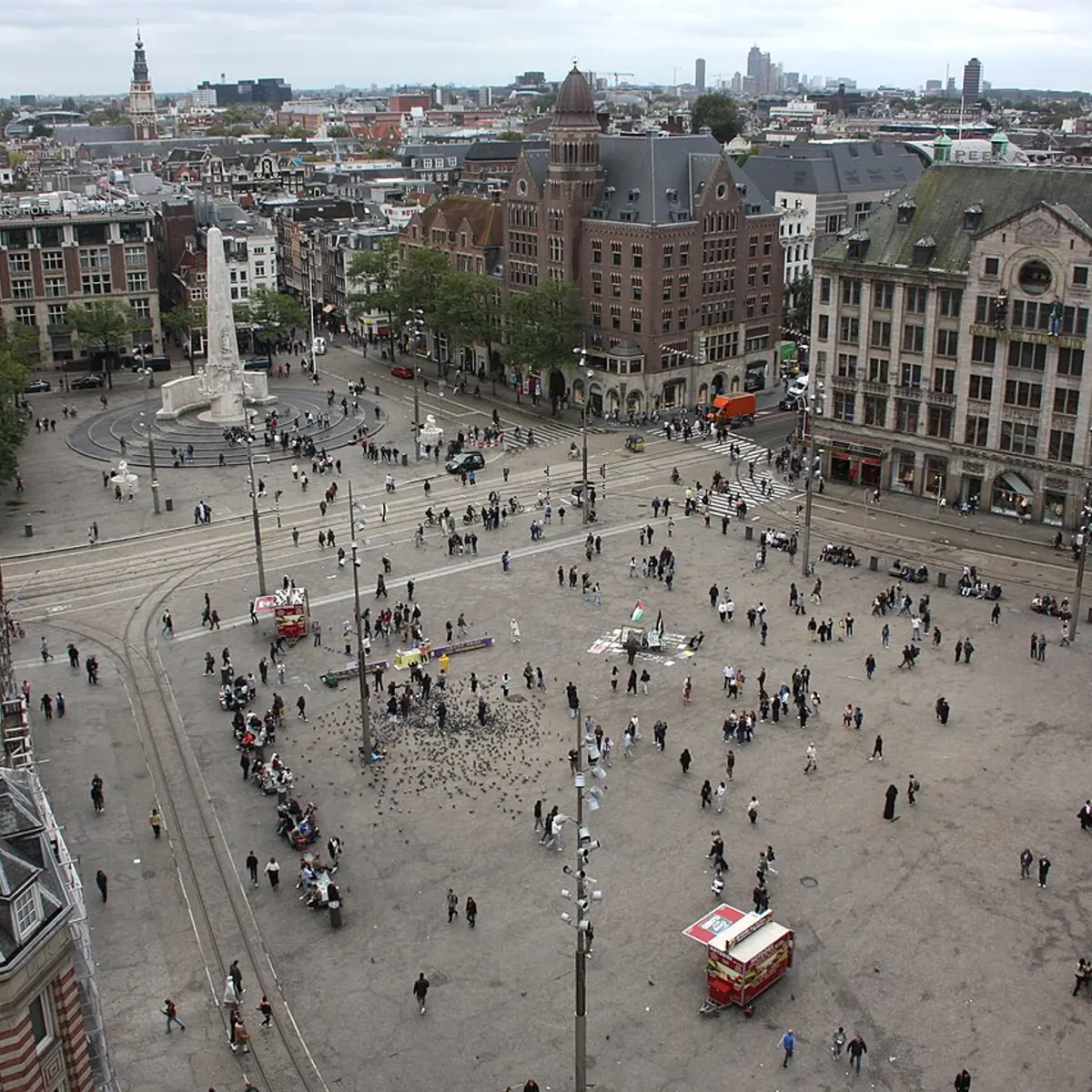
Koninklijk Paleis is the royal palace on Dam Square, a building still used for official receptions and exhibitions. It began life as Amsterdam’s city hall, commissioned as a vast civic project after the earlier town hall burned. The building was created between 1648 and 1665, with Jacob van Campen as its principal architect and Daniël Stalpaert also involved.
Its architecture belongs to Hollands classicisme, with a clear, monumental façade and restrained sculpture. In 1808, King Louis Bonaparte converted the city hall into a royal palace after moving his court to Amsterdam. That change also brought a national art collection into the building; Rembrandt’s Night Watch was among the important works displayed there.
Look at the palace’s rear: Atlas carries a globe on his shoulders in a statue about 6 metres high. The building’s original civic purpose explains a striking omission: unlike many royal residences, it has no grand entrance. The palace remains available to the Dutch monarch for state occasions, while its public rooms continue as a museum. Its long transformation—from municipal government to royal residence—still reads in the building’s formidable, public character.