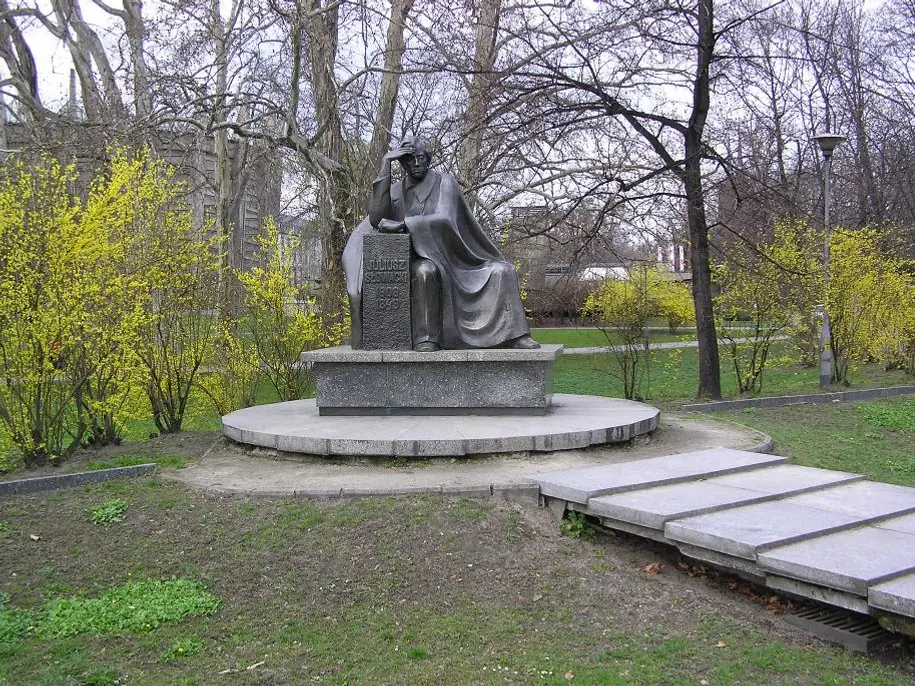
Juliusz Słowacki, Wrocław
The name here is Juliusz Słowacki, and this place dates from 1984. Słowacki was one of Poland’s defining Romantic poets, counted among the three great bards of Polish literature. His imagination moved through Polish history, mysticism, Slavic pre-Christian traditions, and places farther east; it also had a sharp taste for newly coined words and irony.
His life carried the force of the age he wrote about. During the November Uprising of 1830, he worked as a courier for the revolutionary Polish government. When the revolt was defeated, he remained abroad as a political émigré, living in places including France and Switzerland and travelling through Italy, Greece, Egypt, and the Middle East.
Drama stood at the centre of his work, and he became a formative figure in modern Polish theatre. Kordian, written in the wake of the failed uprising, examines a nation’s troubled conscience. Balladyna is another of his best-known plays, while Beniowski, Testament mój, and Anhelli rank among his celebrated poems. Let this name carry you into that intense nineteenth-century world: exile, rebellion, imagination, and theatre made from history.