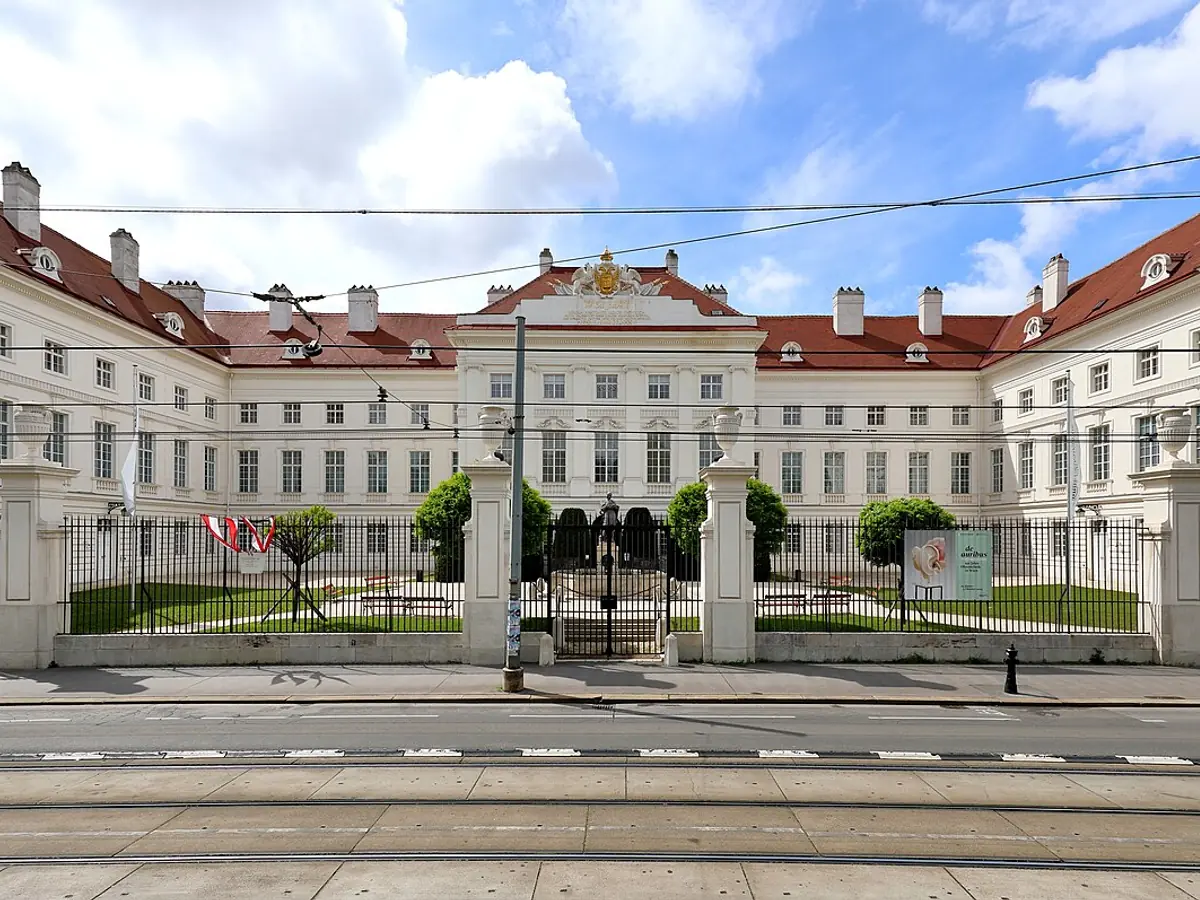
Josephinum, Vienna
Josephinum is a former medical and surgical academy, created to train army doctors for the Austrian army. Its buildings now house the Medical University of Vienna’s Institute for the History of Medicine, along with other institutes. The academy began in 1784 through the initiative of Emperor Joseph II, and its doors opened on the seventh of November 1785.
Giovanni Alessandro Brambilla, the emperor’s personal surgeon, led the project and served as its director until 1795. The building was designed by Isidor Marcellus Amandus Canevale and constructed from 1783 to 1785. Its broad central staircase uses hard Kaiserstein from Kaisersteinbruch, while the architecture captures a shift from Josephinian Baroque classicism toward classicism.
A particularly remarkable part of the collection is the anatomical wax models. Joseph II commissioned 1,192 of them from wax artists in Florence, and they entered teaching at the academy from 1786. They were also made available to interested members of the public, reflecting the era’s belief that medical knowledge should be shared beyond the classroom. In the garden, Hygieia, the goddess associated with healing, appears in a lead statue made by Johann Martin Fischer in 1787.
_-_Josephinum.JPG)