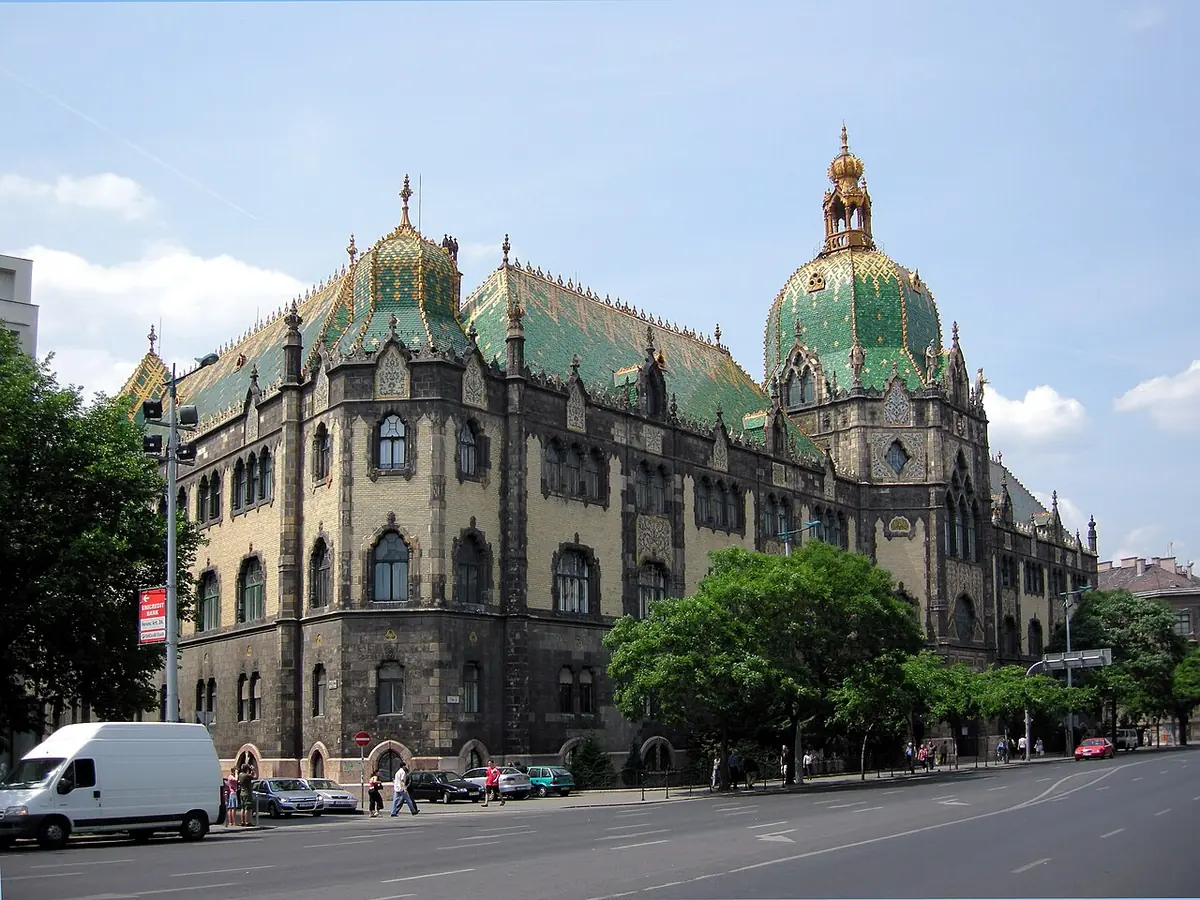
Iparművészeti Múzeum, Budapest
The Museum of Applied Arts is the building before you, created for a national collection of decorative objects and design. Its architects were Ödön Lechner and Gyula Pártos, and construction took place from 1893 to 1896 in the Hungarian Secession style. The most arresting detail is the green roof, while the interior draws on Hindu, Mogul, and Islamic design traditions.
Together, these choices make the building a major Hungarian Art Nouveau work. The institution itself reaches back to 1872, when Parliament founded it to gather historical and contemporary applied art from Hungary and elsewhere. It ranks as the world's third-oldest museum devoted to applied art.
Its holdings include metalwork, furniture, textiles, and glass, with especially notable collections of Secession glass and ceramics and Islamic-Turkish carpets. It also preserves the Esterházy family treasury, described as the sole surviving aristocratic treasury from medieval and early modern Hungary. The building has been undergoing extensive reconstruction, and the museum is closed because of that work. Even from the street, its unusual mixture of a vivid roofline and richly varied architectural sources explains why this museum became a landmark of Hungarian design.