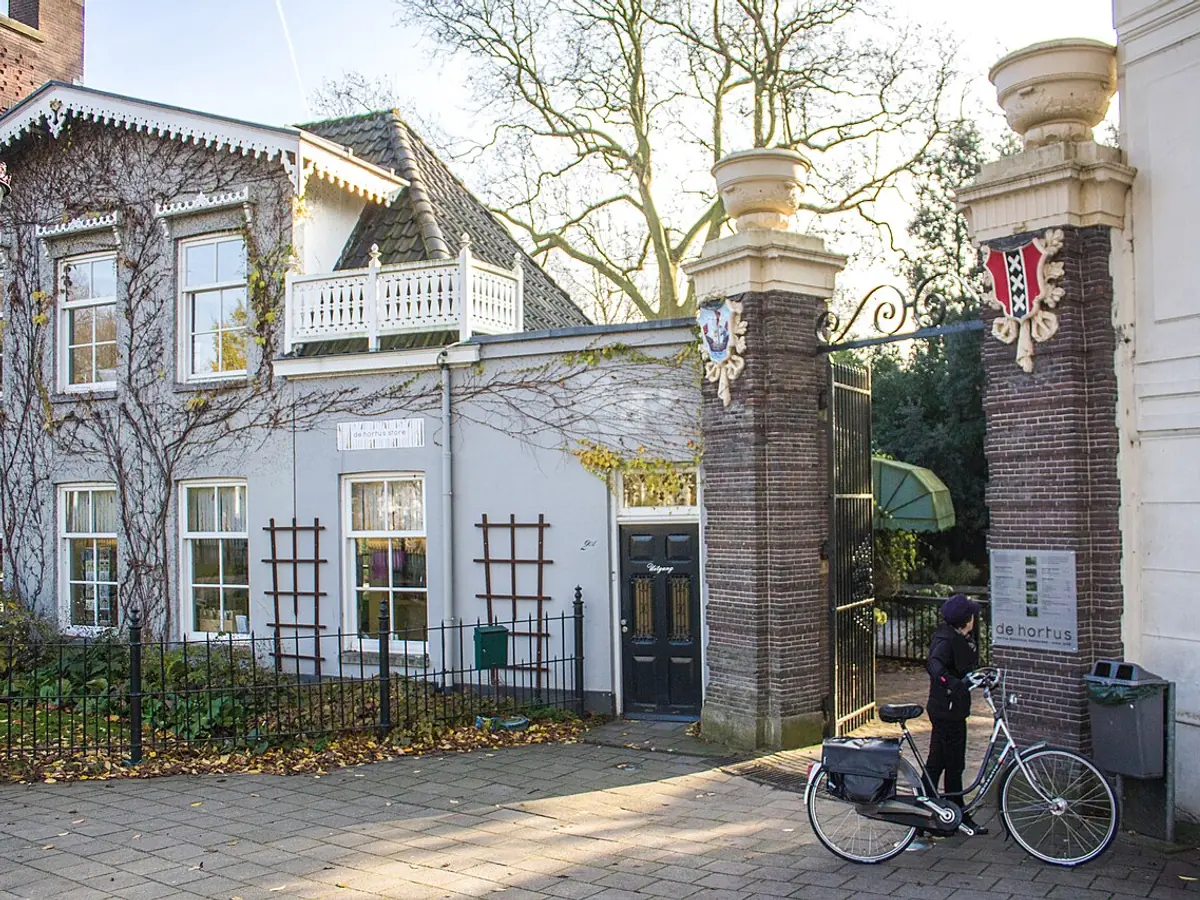
Hortus Botanicus, Amsterdam
Hortus Botanicus is Amsterdam’s botanical garden, a living collection of tropical and native plants in the Plantage district. The garden began in 1638 as the Hortus Medicus, created to supply doctors and apothecaries with medicinal plants and to train them in their use. During the seventeenth century, traders brought seeds and plants from overseas, and the collection became a place where medicine and commercial ambition met.
A coffee plant grown here became the parent of coffee cultivation across Central and South America. A pair of oil palms from Mauritius produced descendants that spread across Southeast Asia, becoming a major revenue source in the Dutch East Indies and modern Indonesia. Today, more than six thousand tropical and native trees and plants grow across the garden’s area of about 1.2 hectares.
The Palm House dates from 1912, while the former Hugo de Vries Laboratory dates from 1915. De Vries directed the garden from 1885 to 1918 and brought it international attention. His research helped make this garden famous, but its most striking story may still be botanical: a living collection here helped shape entire agricultural cultures far beyond Amsterdam.
.jpg)