Hala Stulecia, Wrocław
Updated
Listen to how the story begins
0:00 / 0:45
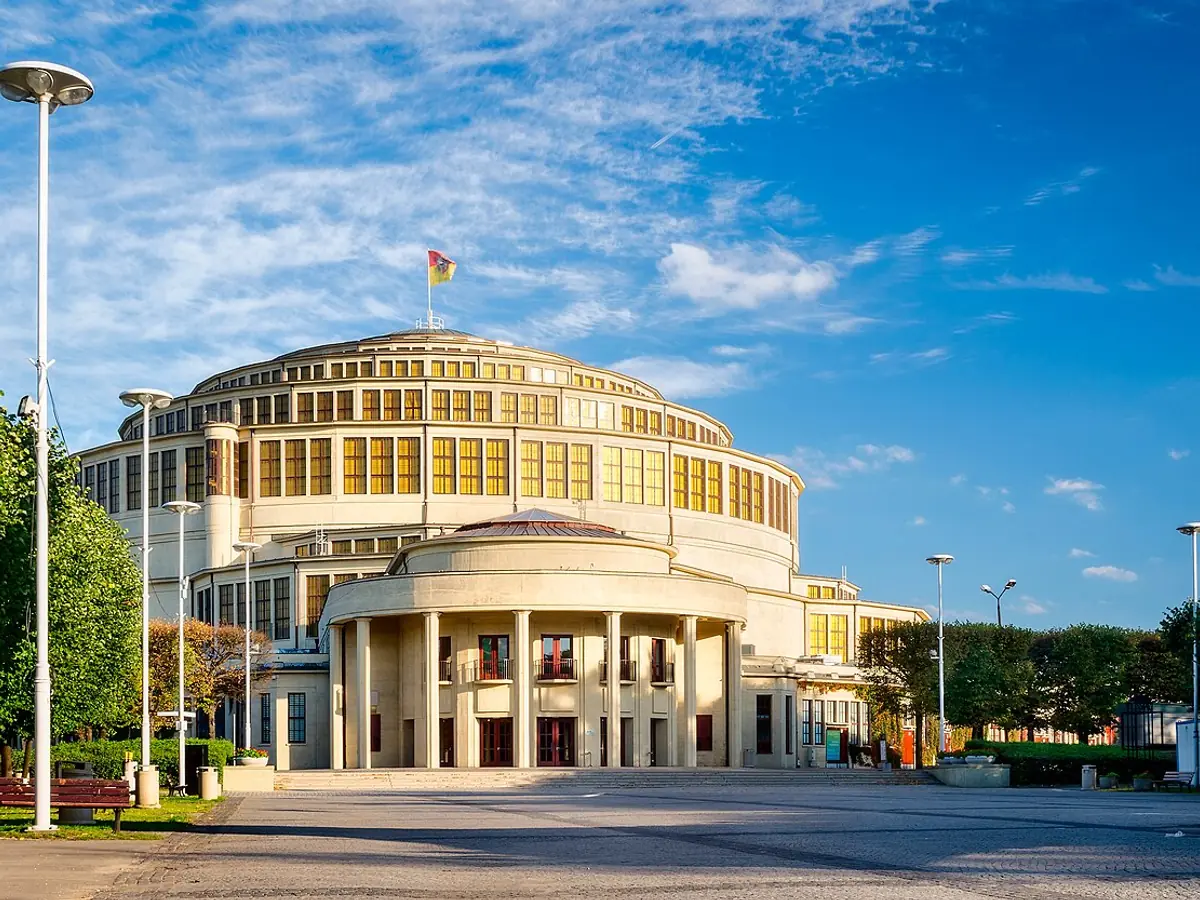
Hala Stulecia is the historic events hall before you, created by Max Berg between 1911 and 1913. Its purpose was ambitious from the outset: one building for exhibitions, concerts, theatre, opera, and sport. The great dome gathers the whole structure into a single monumental space.
This was an early breakthrough in reinforced-concrete construction, and its sixty-nine-metre inner span made it the largest building of its kind when it was completed. The hall’s original German name marked the hundredth anniversary of Napoleon’s defeat at Leipzig in 1813. After Wrocław became part of Poland in 1945, the building was renamed Hala Ludowa, or People’s Hall; Hala Stulecia later became the official name.
It has remained remarkably close to Berg’s original idea: concerts, sporting fixtures, and business summits still fill the arena. The hall joined Poland’s national Historic Monuments in 2005 and became a UNESCO World Heritage Site the following year. It is not simply a relic of a grand exhibition; it is a concrete experiment from the early twentieth century that still performs its original public role.