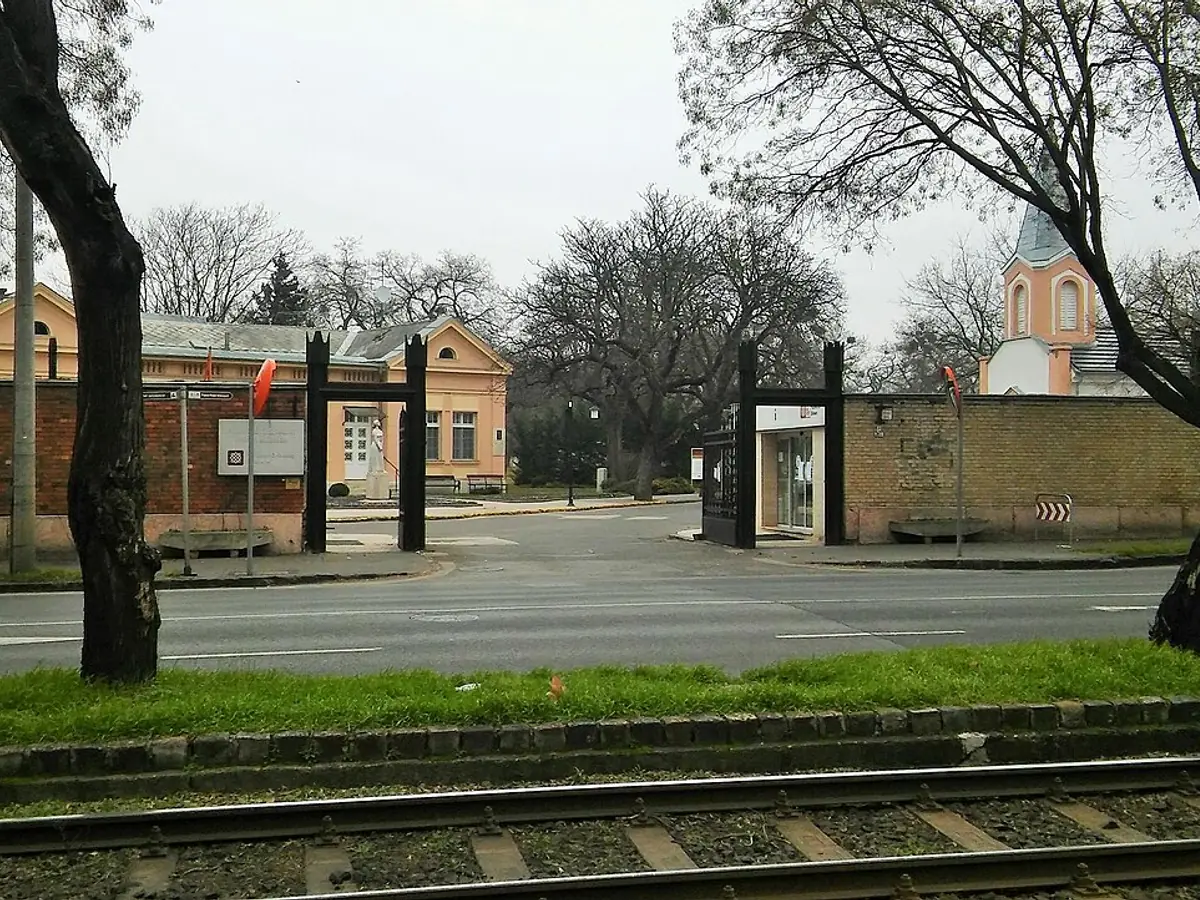
Fiumei úti sírkert, Budapest
Fiumei úti sírkert is a vast historic cemetery, known in everyday speech as Kerepesi Cemetery. Opened in 1849, it is Budapest’s most famous cemetery and has remained remarkably intact. Its grounds form a monumental outdoor landscape of graves, mausoleums, sculptures, and long arcades built between 1908 and 1911 in a Northern Italian manner.
The cemetery covers about 56 hectares, making it one of Europe’s largest national pantheons and its largest outdoor statue park. The arcades are among its most distinctive features: their repeated bays and sheltered passages give the burial ground an architectural rhythm unusual for a cemetery. Mihály Vörösmarty was buried here in 1855, and his tomb remains among the oldest surviving graves on the grounds.
You can also associate this place with Hungary’s political and cultural history through the mausoleums of Lajos Batthyány, Ferenc Deák, and Lajos Kossuth, alongside the graves of poets, scientists, artists, composers, and architects. A special plot created in 1874 received people denied a church funeral, including those who had been executed or had taken their own lives. This is a cemetery where national memory is expressed through stone, sculpture, and carefully shaped parkland.