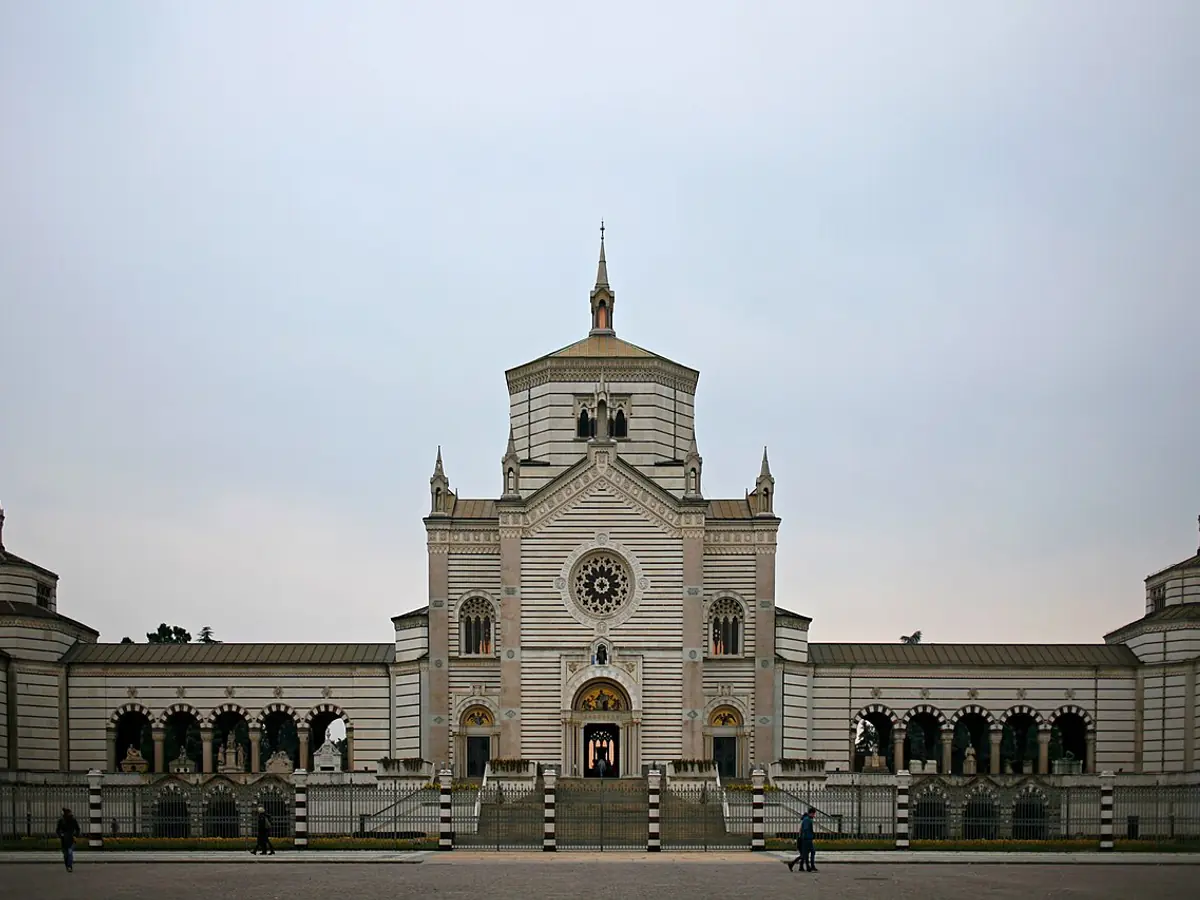
Cimitero Monumentale, Milan
Cimitero Monumentale is a cemetery celebrated for its wealth of artistic tombs and memorials. Carlo Maciachini designed it in architettura eclettica, bringing together forms with Byzantine, Gothic, and Romanesque references. The project gathered burial grounds that had been scattered around Milan, and the cemetery opened in 1866.
Its entrance is the Famedio, a monumental marble-and-stone hall containing the tomb of Alessandro Manzoni. Beyond it, you can encounter Greek-style temples, elaborate obelisks, and a reduced version of Trajan’s Column among the funerary works. Sculptors and designers represented here include Adolfo Wildt, Giò Ponti, Arturo Martini, Lucio Fontana, Medardo Rosso, Giacomo Manzù, and Giò Pomodoro.
The site also contains the Crematorium Temple, opened in 1876 as the first crematorium in the Western world; it remained in use until 1992 and now serves as a columbarium. In the Jewish section, Carlo Maciachini designed the grounds, which opened in 1872. Along its paths are family shrines, columbaria, ossuaries, and monuments, including memorials to people killed in Nazi concentration camps. This is a cemetery conceived as an open-air museum, where architecture and remembrance occupy the same space.