Cimitero delle Fontanelle, Naples
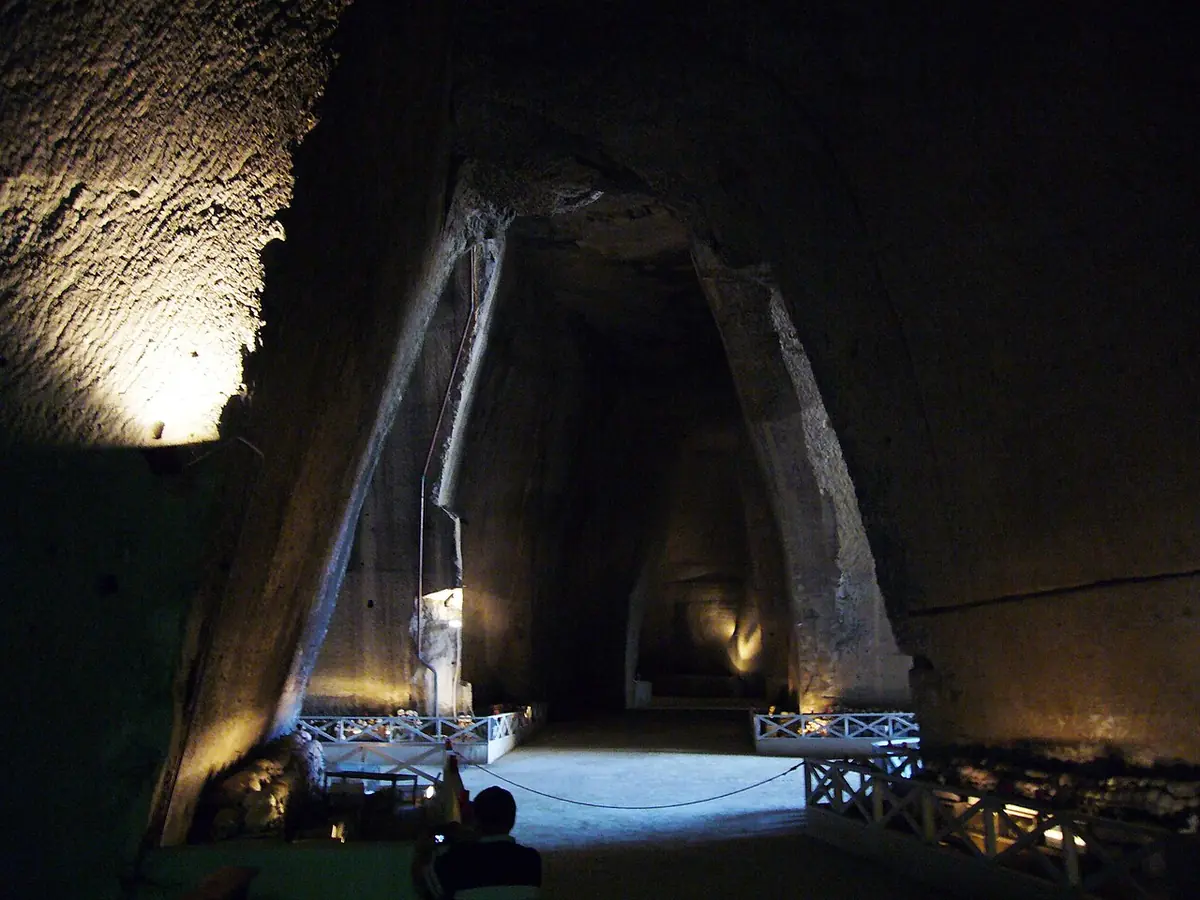
The Fontanelle Cemetery is an underground ossuary carved into the tuff hillside of Materdei: a vast chamber where anonymous human remains became the focus of a powerful Neapolitan devotion. The site holds about 40,000 remains, including victims of the plague of 1656 and the cholera epidemic of 1836. Its name recalls the springs that once existed in this area.
The story began when churches ran out of room for new burials. Earlier remains were moved into these caves, and thousands of plague victims joined them in 1656. After a flood brought bones out into the streets, the remains were gathered back inside.
The place later served as a cemetery for people too poor to afford burial, and this role was formally recognized during French rule. Look at the long galleries and the dense arrangements of skulls, tibias, and femurs. In 1872, Father Gaetano Barbati had the scattered bones reorganized and recorded.
Devotees then adopted individual skulls, caring for them, giving them names revealed in dreams, and asking them for protection. This practice, known as the rite of the “anime pezzentelle,” continued into the twentieth century. In 1969, Cardinal Ursi ordered the cemetery closed because the devotion had become fetishistic. After restoration, the former paupers’ cemetery returned as a historical site, where the human cost of epidemic and poverty remains vividly present.