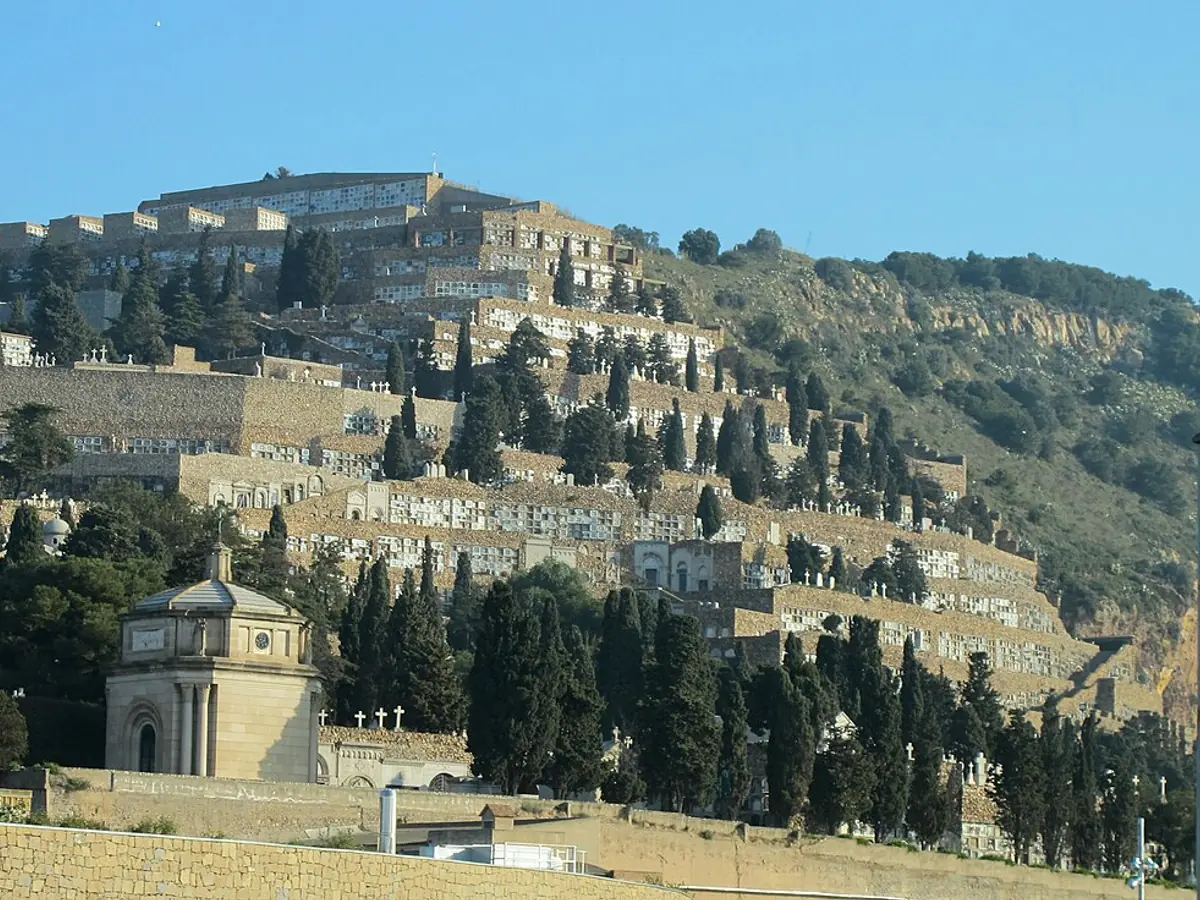
Cementiri de Montjuïc, Barcelona
Cementiri de Montjuïc is a vast hillside cemetery, spread across the rocky slopes of Montjuïc. Its winding routes and terraces of burial niches give the site a distinctive, layered shape, while monuments, carved stone, ironwork and sculptural details bring Catalan modernisme into funerary architecture. The cemetery opened on 17 March 1883, created as Barcelona’s population and building growth made its older burial grounds too limited.
Leandre Albareda designed and planned the new necropolis. It covers about 568,000 square metres and contains roughly 153,000 graves, making it the largest cemetery within Barcelona’s municipal boundary. From the paths, you can see how the steep terrain determines the whole composition: levels, retaining structures and memorials follow the mountain rather than flattening it.
The site also preserves an old pond, and archaeological remains found within the grounds belong to Bronze Age, Iberian, Roman and medieval periods. A commemorative plaque marks the inauguration, and the cemetery includes areas intended for people of different religious confessions, including Protestants and Jews. Its cultural importance is recognised through urban-planning protection, and since 2008 the grounds have been opened to visitors as a place of architectural and historical interest. The result is both an active cemetery and an extensive outdoor record of Barcelona’s artistic and social history.