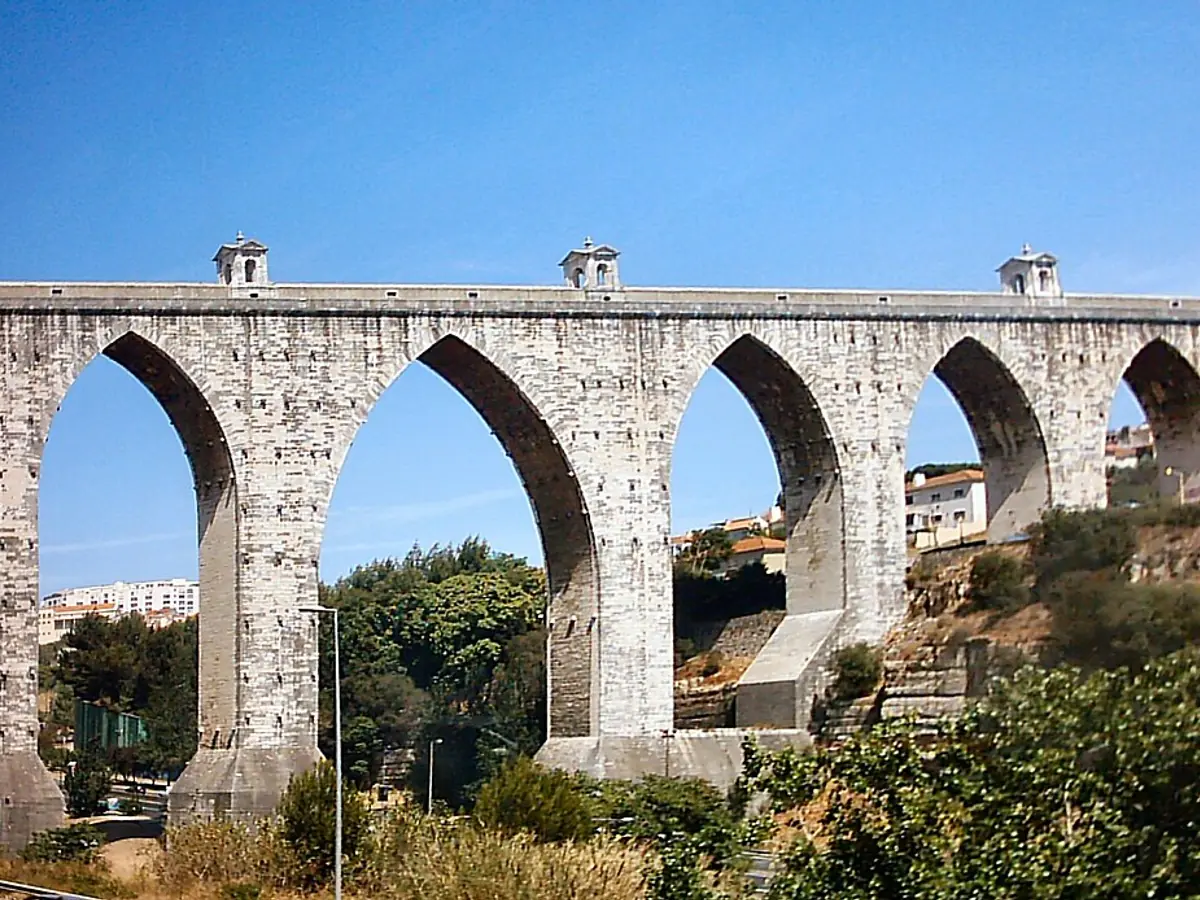
Aqueduto das Águas Livres, Lisbon
Aqueduto das Águas Livres is a historic aqueduct system, and its great stone arcade is the structure associated with this Lisbon landmark. The project was commissioned by King João V in the eighteenth century to bring drinking water into the city from springs near Belas, in Sintra. Antonio Canevari was its architect, and the work belongs to the Portuguese baroque tradition.
The scale of the system is striking: its network eventually gathered water from fifty-eight springs, with galleries and channels extending across about fifty-eight kilometres. The main route reaches the reservoir at Mãe d’Água das Amoreiras after about fourteen kilometres. Water moved by gravity to public fountains throughout Lisbon, turning an engineering project into part of daily urban life.
Look at the arcade itself: its repeated stone arches carry the aqueduct across the Alcântara valley. The structure survived the earthquake of 1755 without damage. It remained in service until 1967, and Lisbon’s water company finally deactivated it in 1968. Today, guided walks can take you along the valley arcade, where the practical purpose of this monumental work remains legible in its long, measured rhythm.

.jpg)